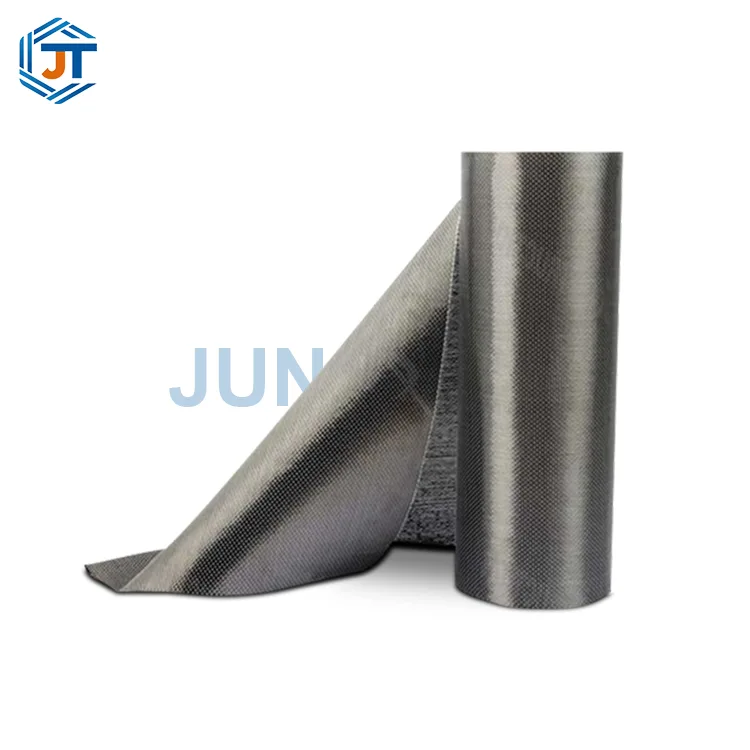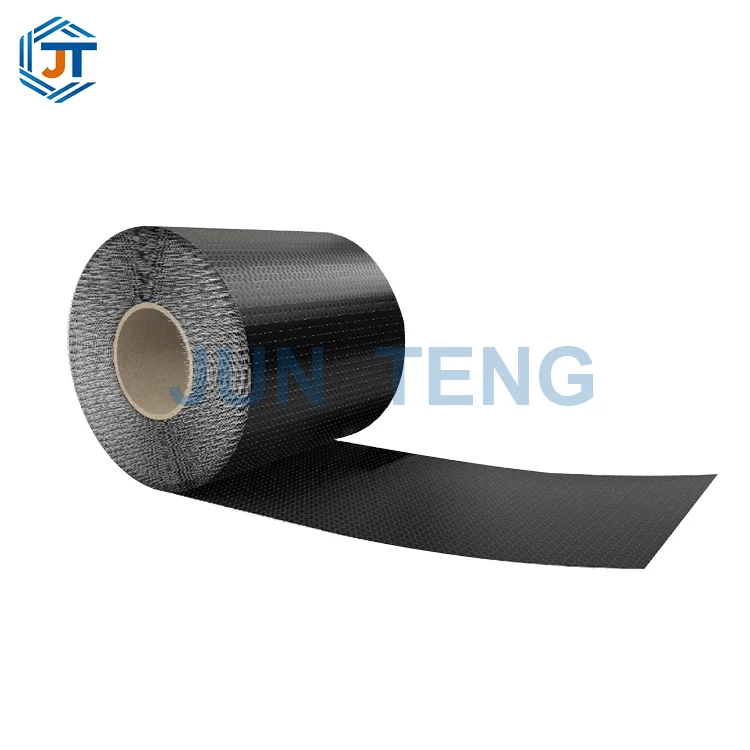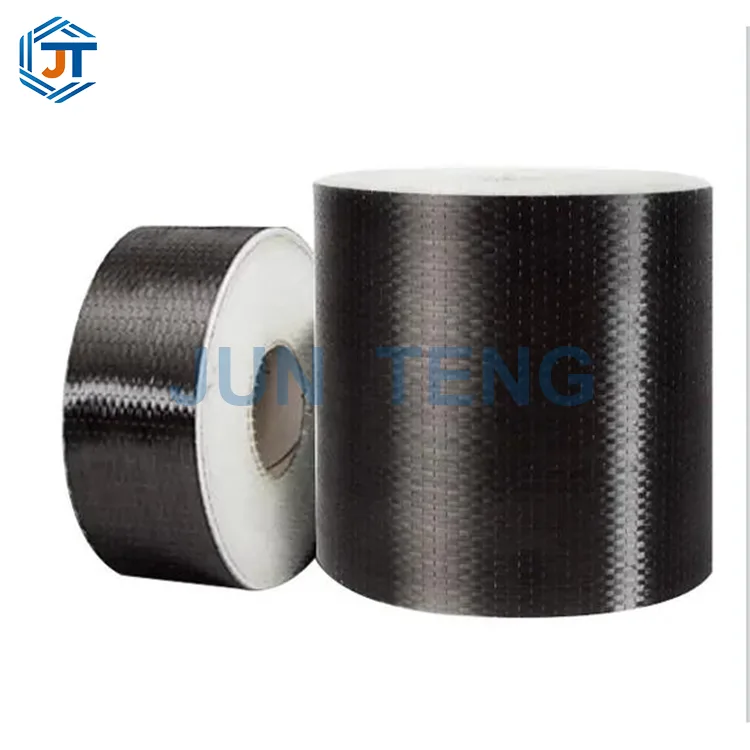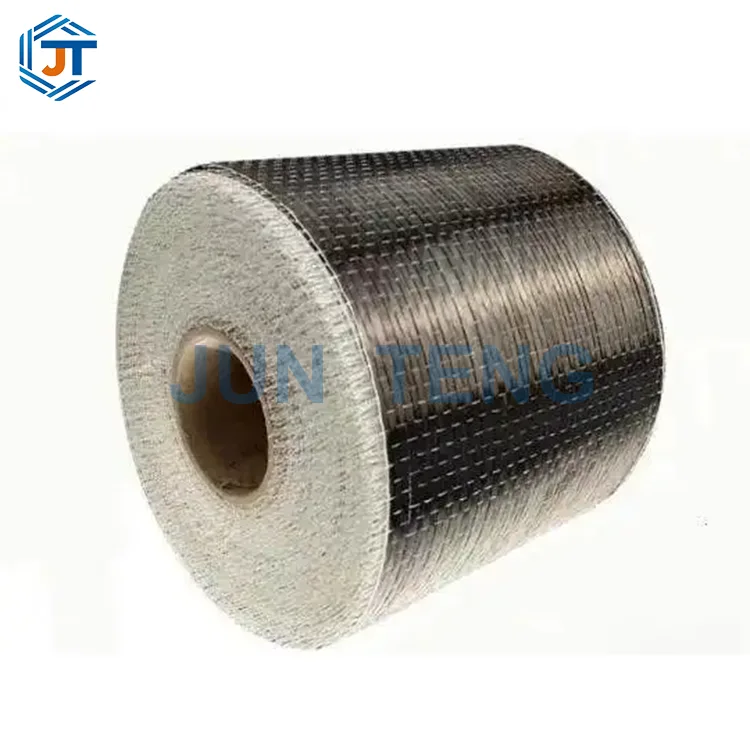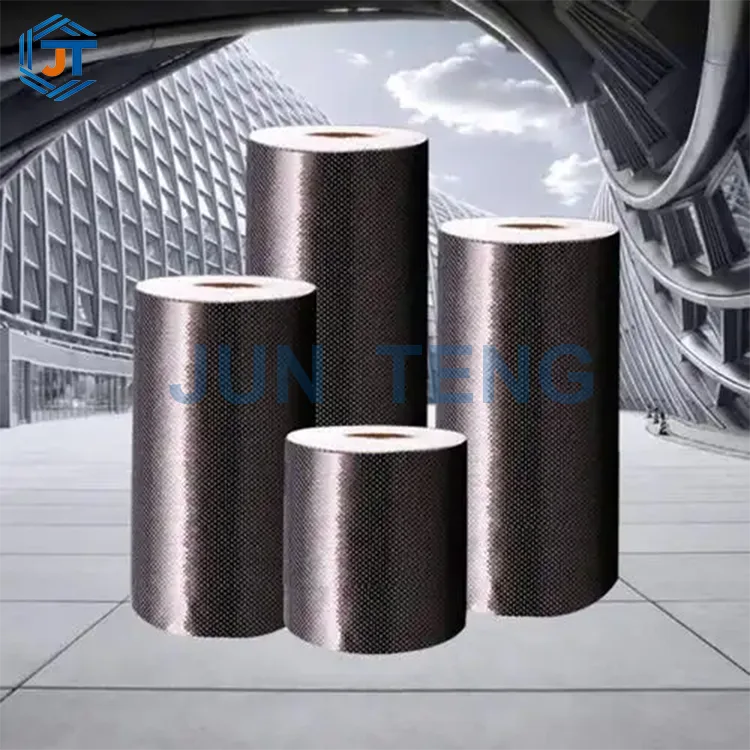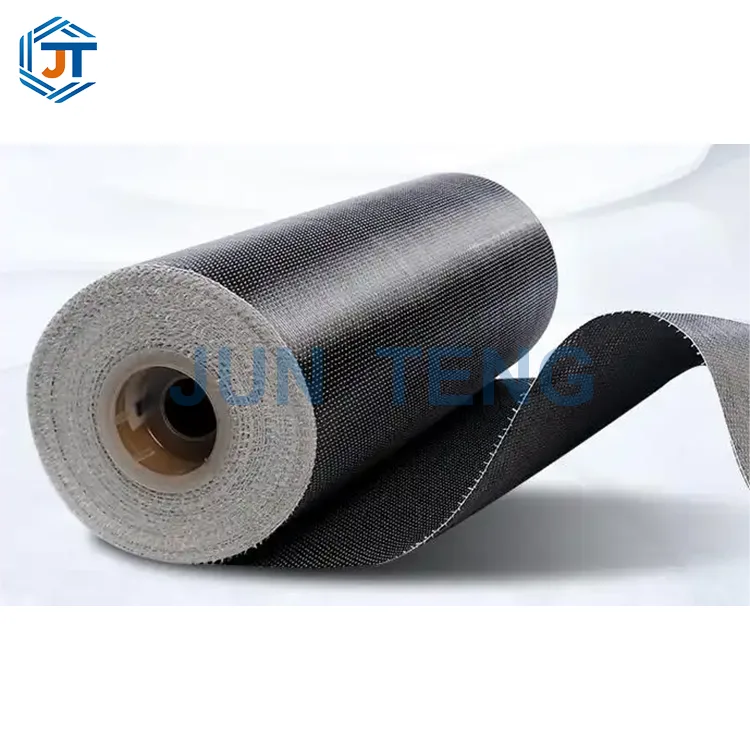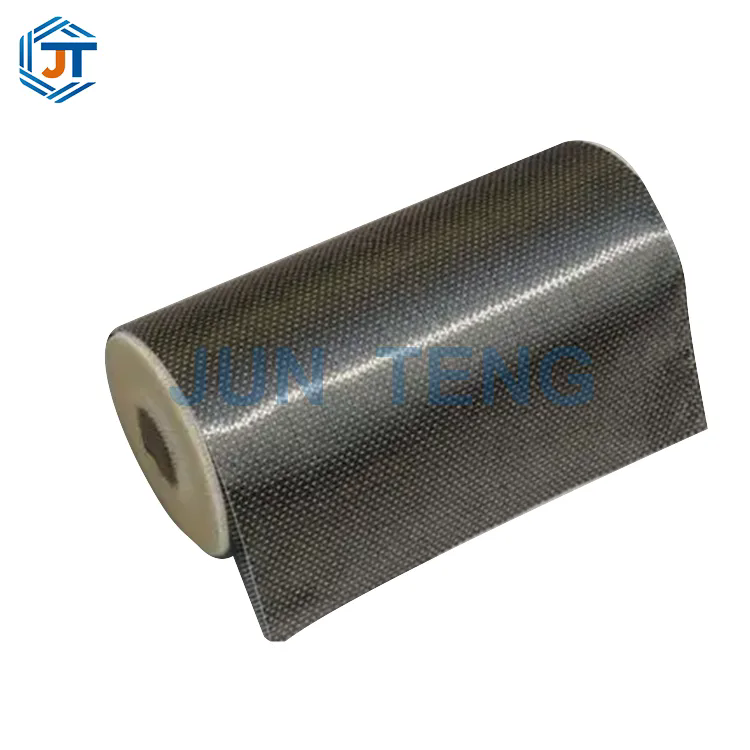

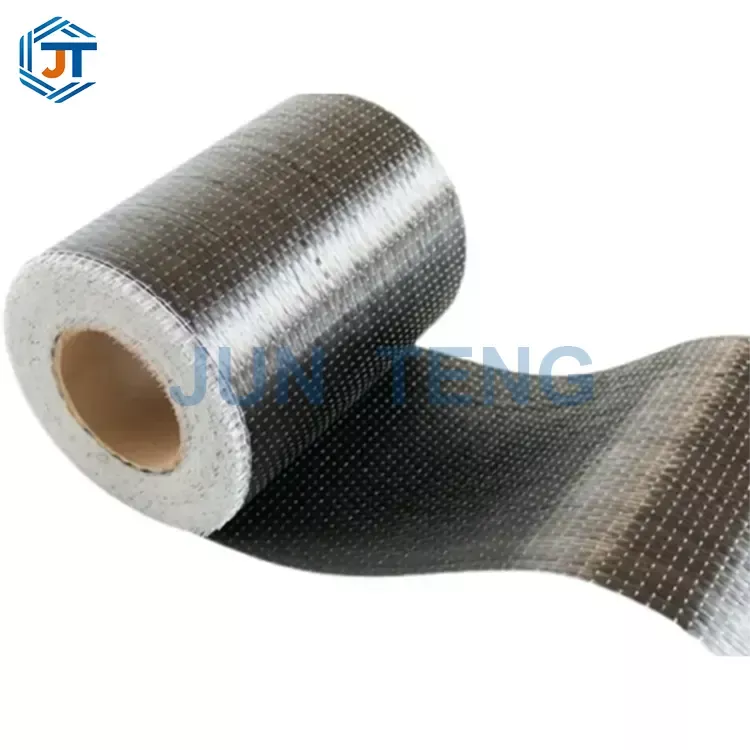
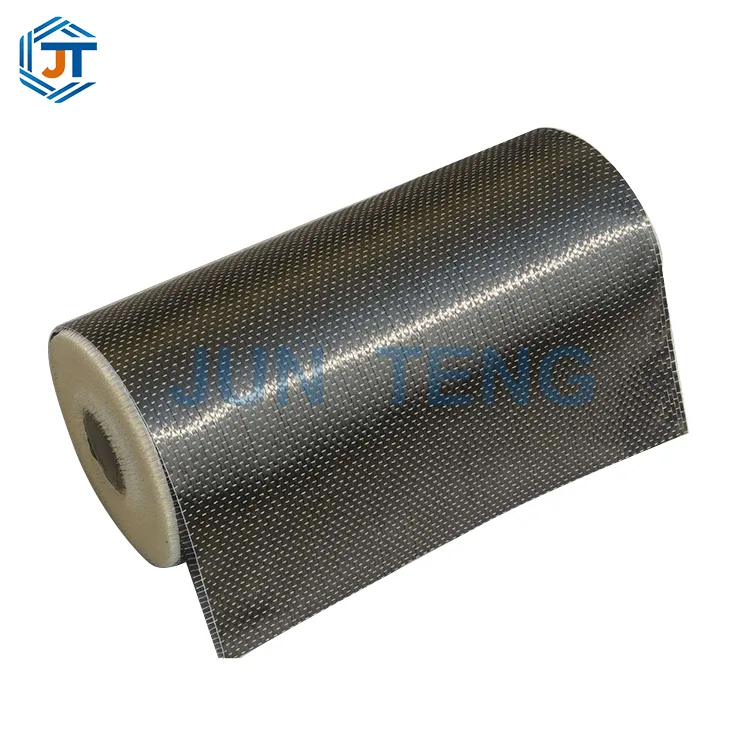
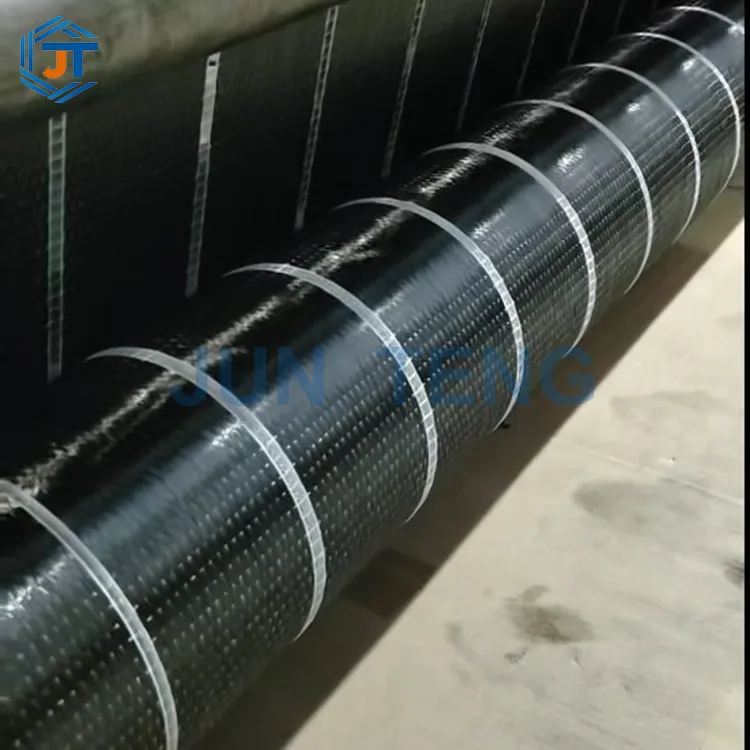
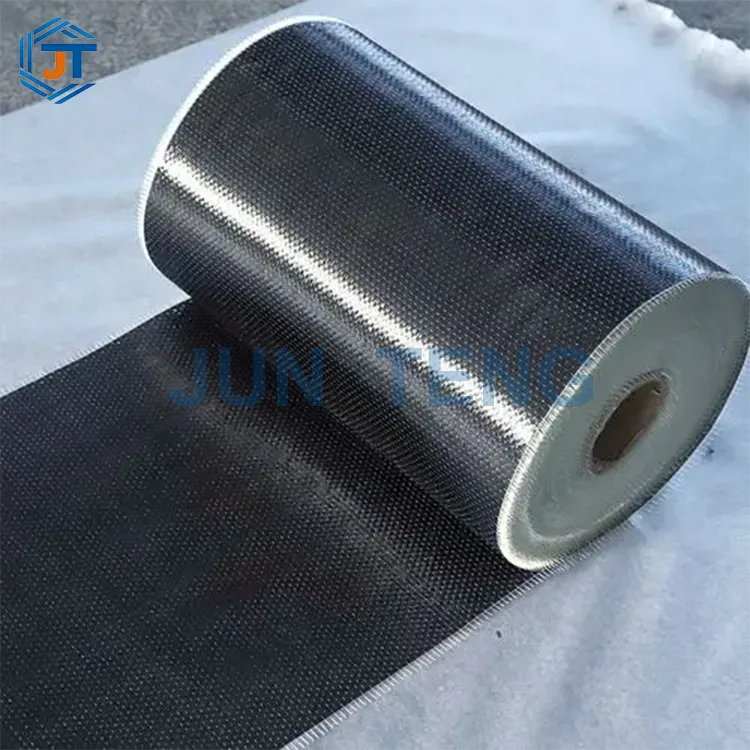
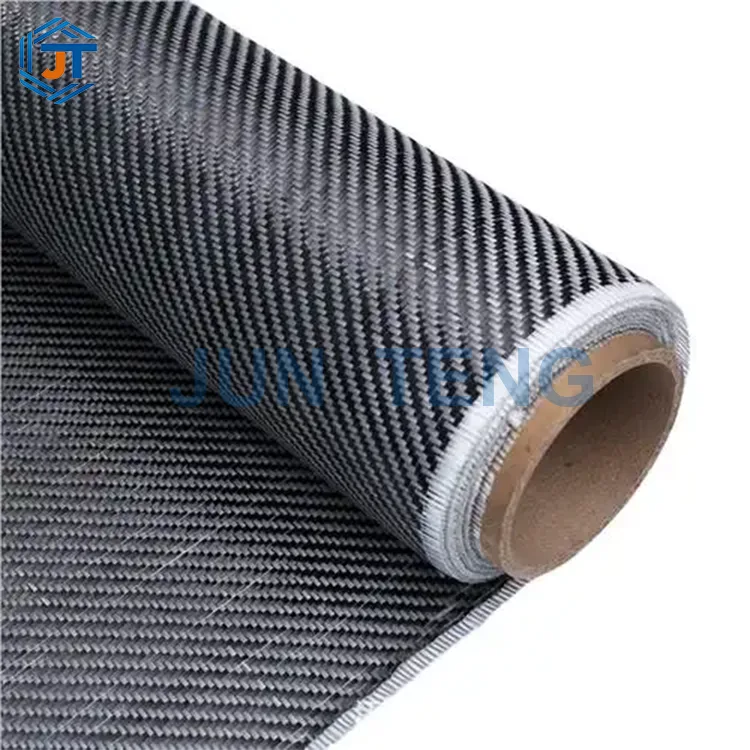
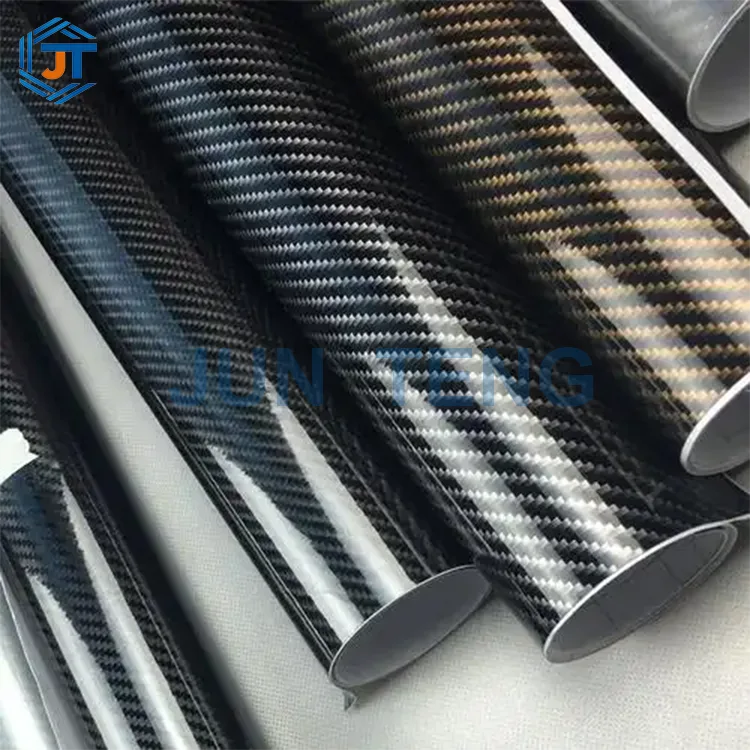
12K Unidirectional Carbon Fiber Fabric
JUN TENG boasts 18 years of professional experience in manufacturing carbon fiber cloth. We offer direct sales of 12K Unidirectional Carbon Fiber Fabric from our source factory, strictly adhering to national standards in production. Our cloth is woven with brand-new T700 raw silk, ensuring stable and authoritative mechanical properties. Our products are lightweight, high-strength, corrosion-resistant, and easy to construct, making them suitable for reinforcing various buildings and bridges, and fully practical.
Most procurement customers tend to confuse the specifications of 12K and 24K carbon fiber filaments when selecting materials, and are unclear about which conventional reinforcement conditions are suitable for 12K unidirectional cloth. JUN TENG has been deeply involved in the manufacturing of 12K Unidirectional Carbon Fiber Fabric for 18 years, focusing on the actual needs of frontline engineering to create standardized 12K unidirectional carbon fiber cloth, covering the vast majority of conventional reinforcement projects in civil repair, factory renovation, and municipal bridges.
The production and testing of our products are all conducted in accordance with the dual national standards of "GB50367-2013 Code for Design of Concrete Structure Reinforcement" and "GB50728-2011 Technical Code for Safety Appraisal of Engineering Structural Reinforcement Materials". Unlike the market, where low-priced non-standard carbon cloth is often made with stolen carbon filaments or mixed with recycled materials, our factory's 12K unidirectional cloth uniformly uses brand-new T700 grade 12K PAN-based precursor filaments. Each batch is retained for testing samples, and third-party testing reports with CMA certification are issued with the goods. All parameters are measured and publicly disclosed, making it directly applicable for supervision inspection and project filing. It is a universally high-adaptability main material for design institutes, small and medium-sized reinforcement engineering companies, and maintenance stores.
Professional Analysis & Weaving Process of 12K Specification
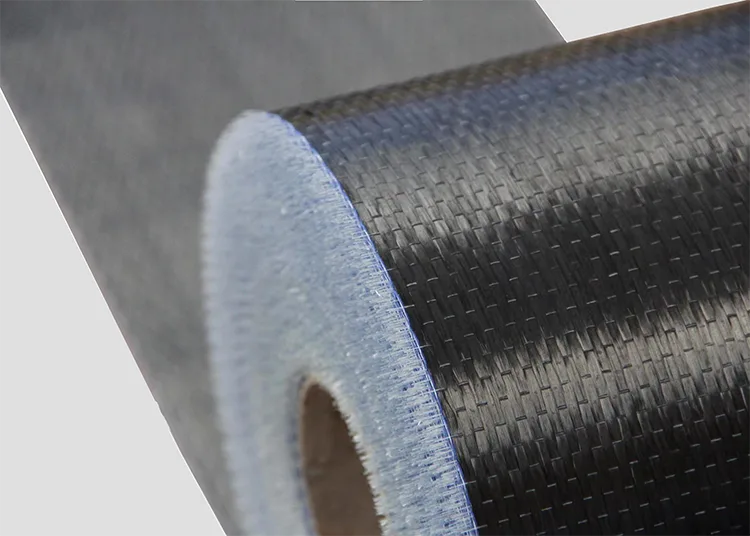
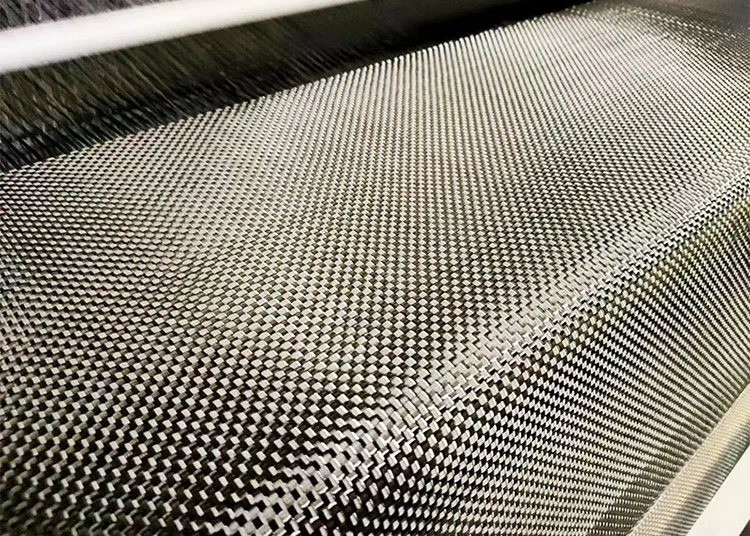
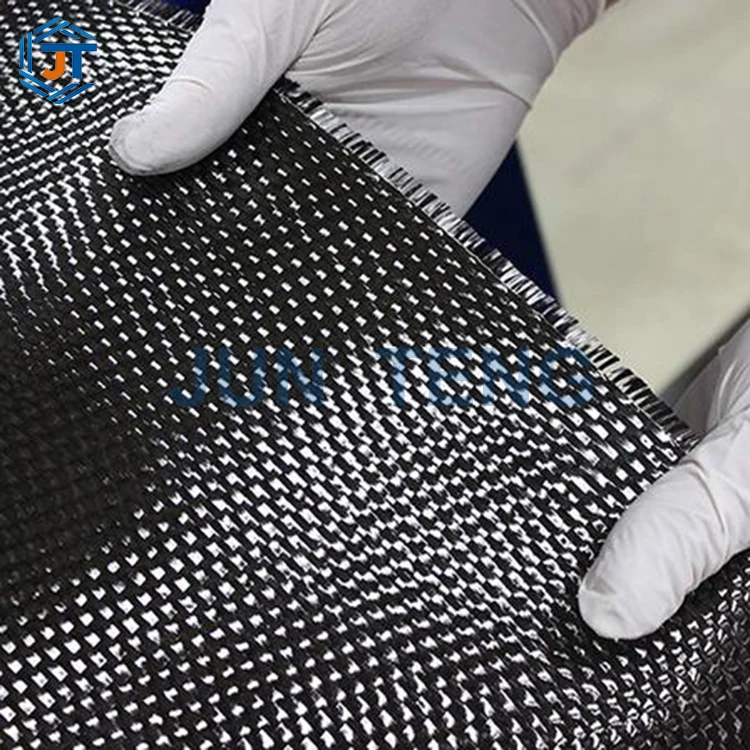
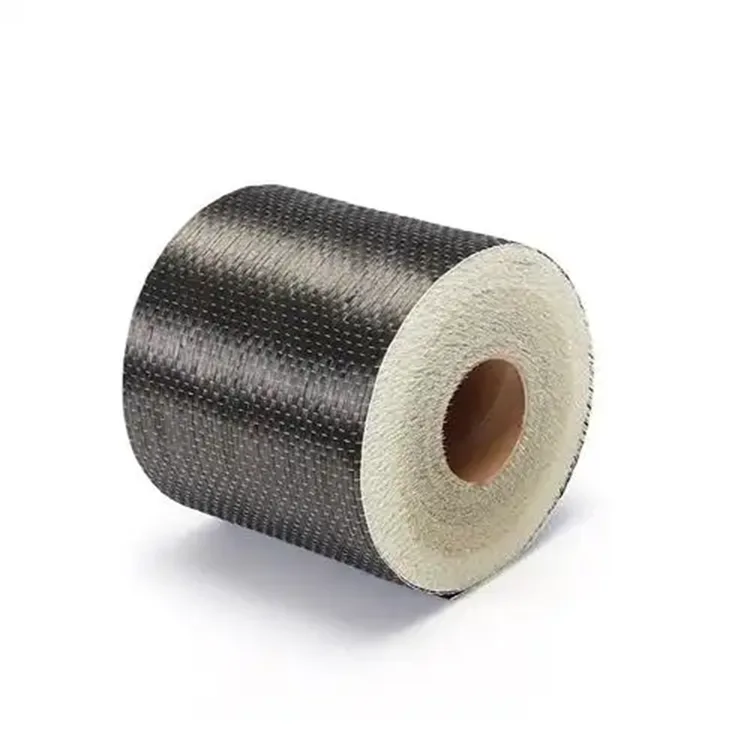
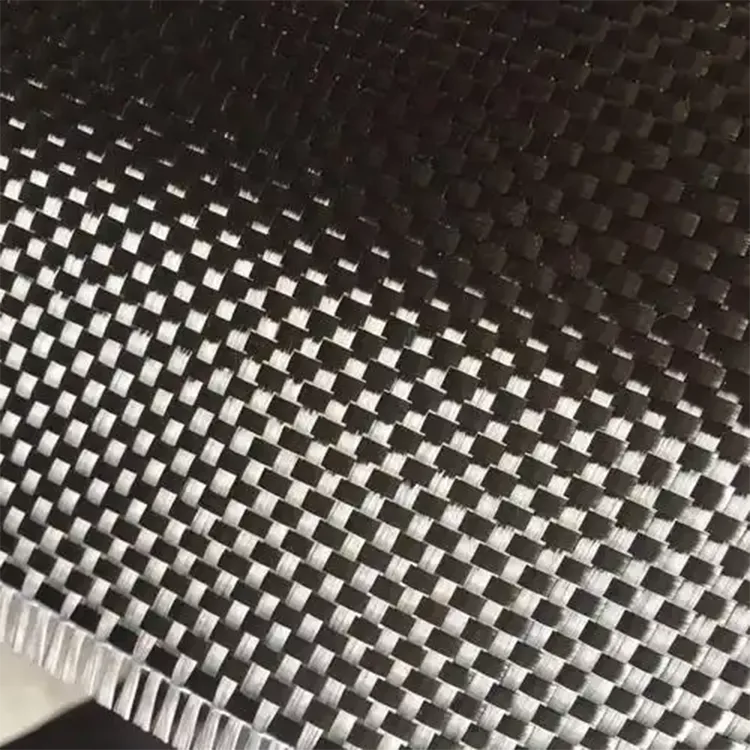
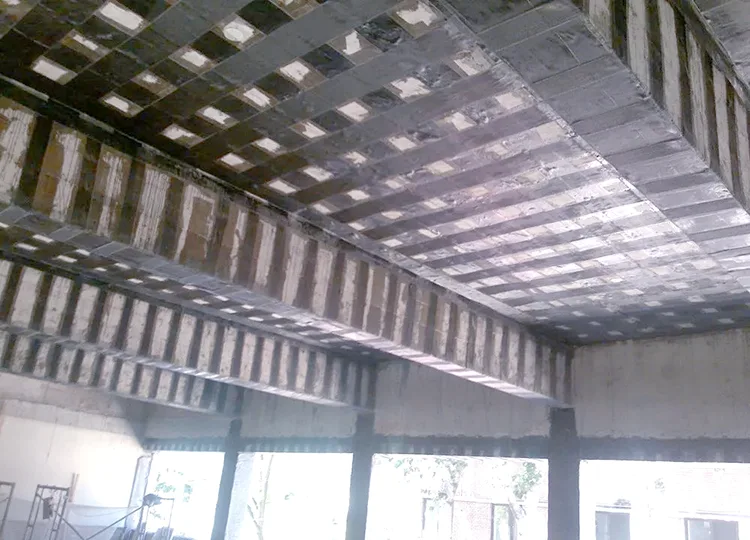
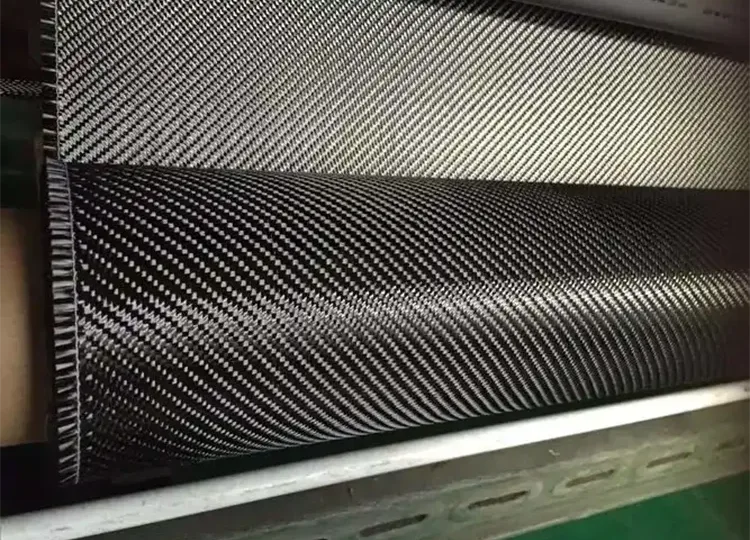
12K is a commonly used industry specification for carbon fiber thread, representing a single bundle of carbon fiber containing 12,000 continuous filaments. It balances strength and flexibility, making it the most versatile basic specification for engineering reinforcement. It is available in two common weights, 200g and 300g, allowing for flexible selection based on load requirements. This product adopts a pure unidirectional weaving process, with over 95% of the 12K carbon fibers arranged longitudinally along the direction of stress, and only very thin hot-melt yarn used for fixation in the transverse direction, ensuring that the tensile load-bearing capacity is not dispersed. The fully automated, constant temperature, and dust-free weaving equipment is used for mass production, strictly controlling three common defects: broken fibers, fuzzing, and thickness deviation. The fabric surface is smooth and flat, and the edges are not prone to fuzzing after cutting. Compared to bidirectional carbon fiber fabric, 12K unidirectional carbon fiber fabric concentrates stress, enhancing the reinforcement effect by more than 35% under the same weight. It is suitable for most reinforcement scenarios such as beam and column bending resistance, floor crack resistance, and bridge pier shear resistance.
Comparison Table of Mainstream Gravity-Based Mechanical Properties
|
Test Item |
Minimum Standard Valueof Grade I National Standard |
Average Test Value JUNTENG 12K-200g |
AverageT estValue JUNTENG 12K-300g |
Unit |
|
Areal Density |
190~210 / 290~310 |
200 |
300 |
g/㎡ |
|
Single-Layer Thickness |
0.105~0.115 / 0.165~0.175 |
0.111 |
0.167 |
mm |
|
Tensile Strength |
≥3400 |
3620 |
3652 |
MPa |
|
Elastic Modulus |
≥230 |
238 |
239 |
GPa |
|
Elongation at Break |
≥1.6 |
1.78 |
1.77 |
% |
|
Linear Tensile Capacity |
≥377 / ≥566 |
402 |
605 |
kN/m |
|
Strength Retention Rate under Acid & Alkali Environment |
≥90 |
96.8 |
97.3 |
% |
Practical Advantages
1. Highly versatile, one set of materials covers multiple types of projects. 12K Unidirectional Carbon Fiber Fabric offers a balanced strength and flexibility, with 200g suitable for conventional crack repair and general residential reinforcement; 300g suitable for load-increasing in factories and heavy-load reinforcement of bridges. Small and medium-sized construction teams do not need to stock multiple specifications, reducing inventory pressure.
2. Lightweight and thin layer, without altering the original structural load of the building. Carbon fiber has a density only 1/4 of steel, and the thickness of the pasted molding is thin, which will not increase the self-weight of beams and columns, nor will it occupy indoor clear height. It can be safely used in load-sensitive projects such as renovation of old residential areas and repair of cultural relic buildings, avoiding the hidden dangers of weight increase caused by section enlargement and steel bonding.
3. Resistant to corrosion and weathering, reducing long-term operation and maintenance costs. The carbon wire itself is rust-resistant, salt spray-resistant, and resistant to acids and alkalis, making it suitable for stable use in coastal, underground, and mildly corrosive chemical environments. When paired with matching impregnating glue to form a protective layer, the reinforced system design has a service life of 50 years, eliminating the need for regular anti-corrosion maintenance after completion.
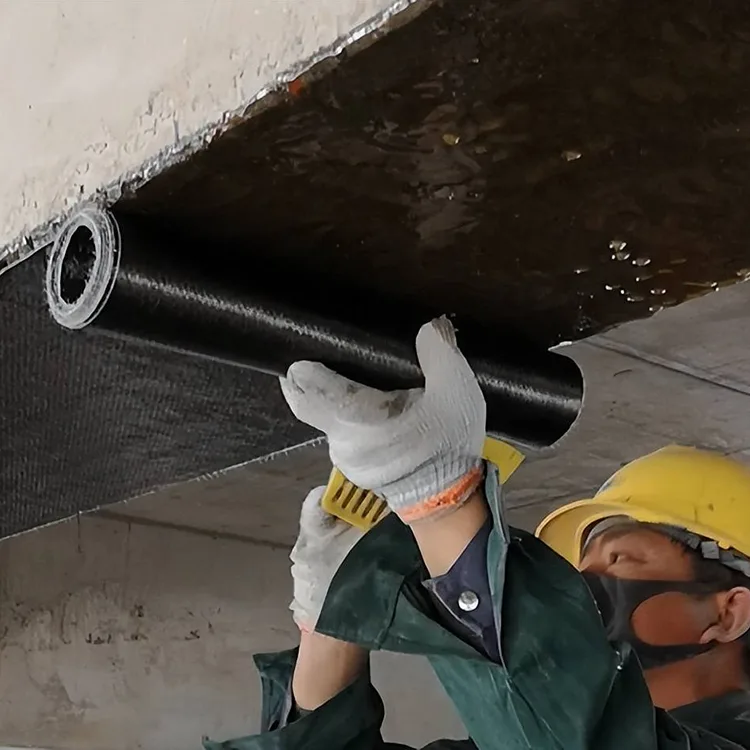
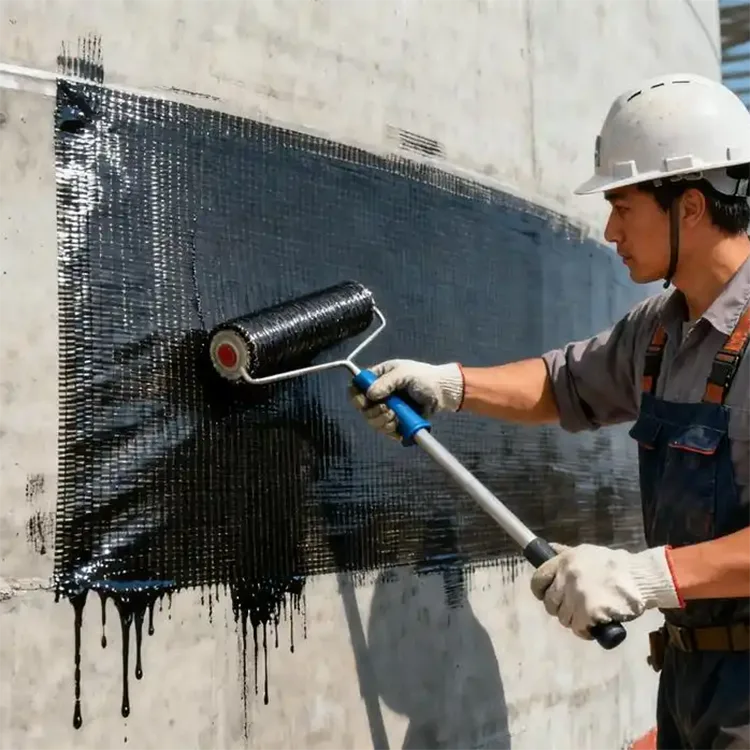
4. The construction threshold is low, allowing for independent operation by a single person. The fabric is flexible and bendable, ensuring tight fit with beam and column corners, curved piers, and irregular floor slabs, reducing the likelihood of hollowing. No large equipment is required for construction, and no hot work cutting is involved, resulting in minimal dust and noise. Even workers with no prior experience can start construction after simple training.
5. Environmental compliance ensures hassle-free acceptance across all scenarios. Free of formaldehyde and low in volatile substances, it meets flame retardant performance standards, making it suitable for construction in densely populated buildings such as residences, schools, hospitals, and shopping malls. With a comprehensive set of qualification documents, the project has a high pass rate for supervision and acceptance.
Precisely adapting to engineering scenarios
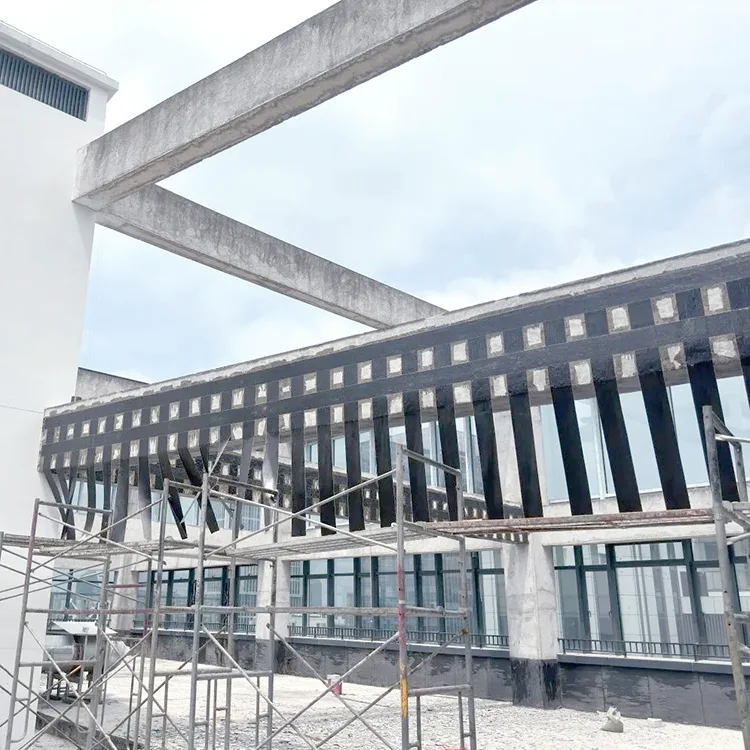
1.Civil minor repairs: self-built houses, crack repairs in community floor slabs, reinforcement of balconies and staircase load-bearing structures
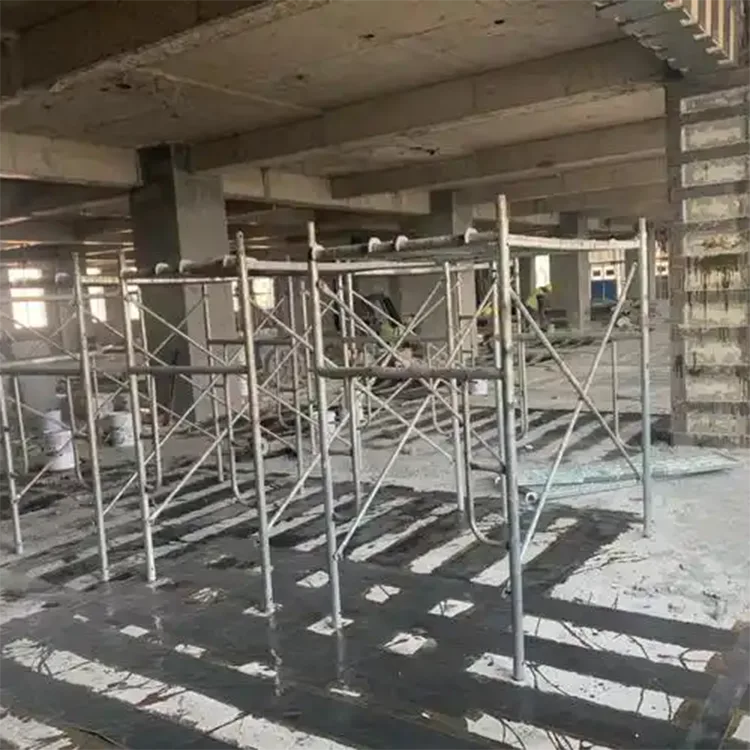
2.Industrial plant renovation: reinforcement of beams and columns in ordinary plants, medium-load flooring, and seismic strengthening of workshops;
3. General municipal infrastructure: Improvement of conventional bearing capacity of urban overpasses, ordinary river-crossing bridges, tunnels, and culverts;
4. Special mild corrosion engineering: structural repair of inland reservoirs, ordinary docks, and underground garages.
Why Source 12K Unidirectional Carbon Fiber Fabric Directly from JUN TENG?
As an ISO-certified weaving facility with 18 years of continuous operation, JUN TENG eliminates distributor markups by connecting your project budget directly to our production lines. Every roll of 12K unidirectional fabric we ship comes from our own dust-free workshops — not traded, not resold, not outsourced.
1. One roll, wholesale price — no MOB pressure
Whether you are procuring for a municipal bridge project requiring hundreds of rolls or a maintenance shop needing just a single roll for a weekend repair, you receive the same factory-direct base pricing. We do not enforce minimum order quantities, so small-batch buyers are never penalized with inflated rates.
2. Ready inventory with custom slitting
Our warehouse maintains a buffer stock of over 1,000 rolls in standard 100m lengths and 100mm/200mm/300mm/500mm widths. For non-standard job requirements, we offer precision slitting to any custom width, custom roll lengths, and even private-label packaging with your brand identity — all without extended lead times.
3. Test-before-you-buy sample program
Uncertain about bonding performance with your chosen epoxy system? Request a complimentary sample cut directly from our current production batch. You can conduct your own tensile pull tests, thickness measurements, and wet-out trials before committing to volume orders. This eliminates specification guesswork and ensures resin compatibility upfront.
4. Matched resin system — single-source material compatibility
We supply a fully coordinated material ecosystem: 12K unidirectional fabric paired with our proprietary impregnating epoxy, primer, and leveling putty. Because all components are formulated together, you avoid the common field failures — delamination, void formation, and edge lifting — that arise when mixing adhesives from different manufacturers. One purchase order covers your entire reinforcement material list.
5. Engineering backstop — from layup guidance to on-site troubleshooting
Our technical support extends beyond the sale. Senior composites engineers provide:
Real-time remote consultation for mixing ratios, cure cycles, and void detection
Customized reference reinforcement schemes tailored to your structural load calculations
On-site practical training sessions at our facility or your job site, covering substrate preparation, adhesive application, fabric placement, roller consolidation, and quality inspection protocols
24/7 availability for urgent field questions via phone or digital channels
Every buyer gains direct access to our engineering team — not a call center, not a third-party representative. This ensures your 12K unidirectional carbon fiber installation performs to specification, regardless of your crew's prior experience with composites.
FAQ
Q1: What does "12K" mean in carbon fiber fabric, and why does it matter for my reinforcement project?
"12K" indicates that each carbon fiber tow contains 12,000 individual continuous filaments. In practical terms, 12K represents the optimal balance between strength and flexibility for structural reinforcement. Smaller tow sizes like 3K or 6K are more expensive and typically used in aerospace applications, while larger tows like 24K or 48K are stiffer and harder to conform to tight radii. For building and bridge reinforcement, 12K is the industry-preferred specification because it delivers excellent tensile performance while remaining flexible enough to wrap around beam corners, column edges, and curved pier surfaces without lifting or bridging.
Q2: Can 12K unidirectional carbon fiber fabric be used outdoors or in wet environments?
Yes. Carbon fiber itself is inherently corrosion-resistant and does not rust or degrade when exposed to moisture, salt spray, or mild chemical environments. However, the overall durability of the reinforcement system depends on the impregnating adhesive as well. Our 12K unidirectional fabric is surface-sized specifically for compatibility with moisture-tolerant epoxy systems, and when properly installed with our matching adhesive system, the composite layer forms a sealed protective barrier. This system achieves a design service life of 50 years for outdoor applications including coastal bridges, waterfront structures, sewage treatment facilities, and underground utility tunnels, with no routine anti-corrosion maintenance required after installation.
Q3: How many layers of 12K unidirectional fabric are typically required for structural reinforcement?
The number of layers depends entirely on your specific load increase requirements, substrate strength, and design calculations. As a reference point: one layer of 12K-300g fabric provides approximately 605 kN/m of tensile capacity per unit width, while one layer of 12K-200g fabric provides approximately 402 kN/m. Many conventional reinforcement projects achieve their design targets with a single layer of 300g fabric or two layers of 200g fabric. However, we strongly recommend consulting a qualified structural engineer to perform the necessary design calculations, as over-reinforcement can be as problematic as under-reinforcement. Our technical team can provide reference design schemes to assist in your planning.
Q4: What is the difference between 12K unidirectional fabric and 12K bidirectional (plain weave) fabric for reinforcement?
This is a critical distinction. In bidirectional fabric, fibers run in both the warp and weft directions with equal density, providing balanced strength in two perpendicular directions. However, the vast majority of structural reinforcement applications — bending strengthening of beams, shear reinforcement of columns, crack control in slabs — involve forces acting primarily along a single axis. In 12K unidirectional fabric, over 95% of the carbon fibers are concentrated along this primary load-bearing axis, while only ultra-fine hot-melt yarns are used in the transverse direction for stabilization during handling. This means that for the same areal weight, unidirectional fabric delivers more than 90% of its tensile strength exactly where you need it — along the stress direction — while bidirectional fabric wastes approximately half of its fiber strength in the non-stressed direction. For structural reinforcement applications, unidirectional is almost always the correct choice.
Q5: How should I verify that the delivered 12K carbon fiber fabric meets the specified performance standards?
Every batch shipped from JUN TENG includes three levels of quality verification. First, we conduct internal in-process inspections — areal weight, thickness uniformity, and visual defects — during weaving. Second, each batch undergoes destructive mechanical testing in our independent laboratory, measuring tensile strength, elastic modulus, elongation at break, and interlaminar shear strength. Third, we send retained samples from every batch to a nationally accredited third-party testing institution (CMA-certified) for independent verification. The shipment you receive includes the full test report package with CMA stamp, factory certificate of conformity, and product warranty. You can also request random on-site sampling and testing at any accredited facility. If our measured values fall below the Grade I requirements of GB50728-2011, we provide a full refund or replacement and cover all testing costs.
Q6: Can I use 12K unidirectional fabric with epoxy adhesives from other manufacturers?
While our 12K unidirectional fabric is compatible with most quality epoxy impregnating adhesives on the market, we strongly recommend using our complete material system — fabric, primer, impregnating epoxy, and leveling putty — for three reasons. First, our surface sizing (the proprietary coating applied to the fibers during weaving) is specifically formulated to achieve optimal wet-out and adhesion with our matching adhesive. Second, when you use components from different manufacturers, any delamination, void formation, or bonding failure becomes difficult to trace and resolve. Third, our one-source supply ensures all components share the same design basis, cure cycle, and service life assumptions, giving you predictable, repeatable installation results. If you choose to use a third-party adhesive, we recommend performing a small trial layup to confirm wet-out, curing behavior, and bond strength before proceeding with full-scale application.
JUN TENG boasts 18 years of experience in the independent production of 12K Unidirectional Carbon Fiber Fabric. It possesses its own standardized dust-free workshop and independent mechanical testing laboratory, ensuring traceability throughout the entire process from raw material procurement, weaving, to testing. JUN TENG has served thousands of reinforcement companies, repair shops, and design institutes across the country, successfully implementing tens of thousands of civil and municipal reinforcement projects. All product parameters are openly and transparently displayed, without exaggerating performance or mixing recycled waste materials. Customers are welcome to conduct random sampling and inspection. If any indicators fall below the national standard Level I, JUN TENG will unconditionally provide a full refund or replacement, while bearing all testing costs. This commitment has earned the trust of many loyal customers!
Hot Tags: 12K unidirectional carbon fiber fabric, manufacturer, supplier
Send Inquiry
Contact Info
-
Address
East of Chongde 11th Road, East Zone, Economic and Technical Development Zone Project, Dezhou City, Shandong Province, China
-
Tel
-
E-mail
Welcome global purchasers to submit your demand via this inquiry page of JUN TENG carbon fiber supplier in China. You can leave your requirements on carbon fiber reinforcement fabric, woven carbon fiber fabric, carbon-carbon materials, specification customization, sample service and bulk order price. Our professional engineers will reply with tailored solutions and quotation within 24 hours.