
Is the Carbon Carbon Nut the 2000℃ Zero-Failure Fastener That Solves All Long-Standing High-Temperature Furnace Operational Pain Points for Photovoltaic and Semiconductor Manufacturers
For high-temperature furnace operators in photovoltaic, semiconductor, powder metallurgy and aerospace thermal test industries, the long-term fastening stability of internal fasteners under extreme high temperature, frequent cold-hot cycling and ultra-high purity atmosphere requirements has long been one of the core pain points restricting production line uptime, product yield and long-term operation cost control. Ordinary graphite nuts are extremely prone to cracking and thread slipping under thermal cycling, while traditional molybdenum alloy nuts soften at high temperatures and release volatile heavy metal impurities that contaminate precision wafers and finished workpieces. As a professional 18-year experience carbon carbon composite material manufacturer with full independent industrial chain, JUNTENG has launched the industry-leading Carbon Carbon Nut, which is precision-engineered with 3D interwoven preform structure and multiple cycles of CVD densification process. This blog will comprehensively introduce its core technical advantages, complete standard parameter specifications, clear performance comparison with traditional graphite and molybdenum fasteners, strict 6-step integrated production process and wide practical application scenarios, demonstrating how this product can help high-temperature equipment users reduce shutdown maintenance frequency and significantly lower long-term comprehensive operation costs while ensuring zero impurity contamination of precision products. You can access the full official product details page to get more exclusive technical data and free sample application information via the dedicated anchor link Carbon Carbon Nuts.
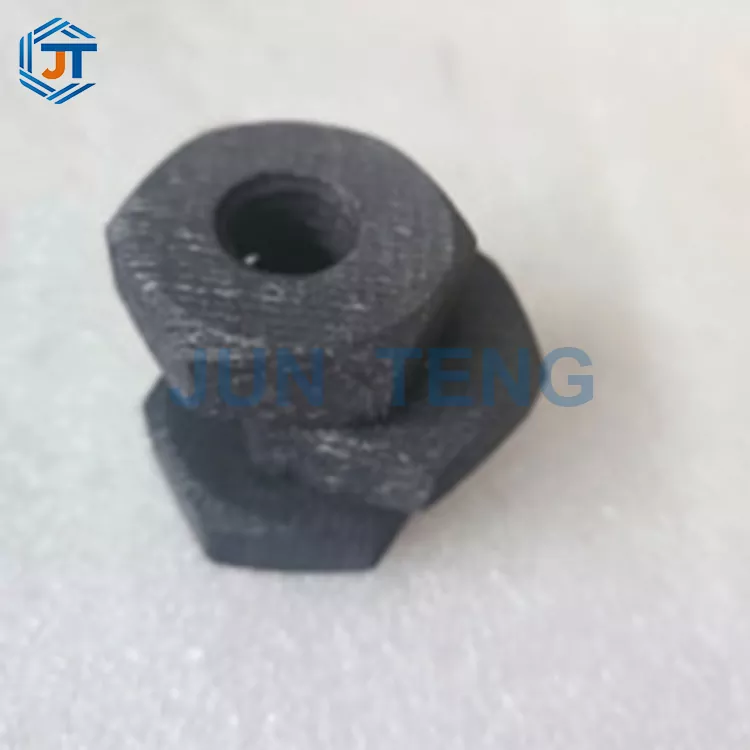
Table of Contents
- What Exactly Is JUNTENG Carbon Carbon Nut?
- 7 Unmatched Core Product Advantages That Completely Eliminate Procurement Pain Points
- Complete Standard Technical Parameters Reference and Performance Comparison Table
- Strict 6-Closed-Loop Precision Process for Integrated Molding Manufacturing
- 5 Typical High-Value Industrial Application Scenarios
- Frequently Asked Questions
What Exactly Is JUNTENG Carbon Carbon Nut?
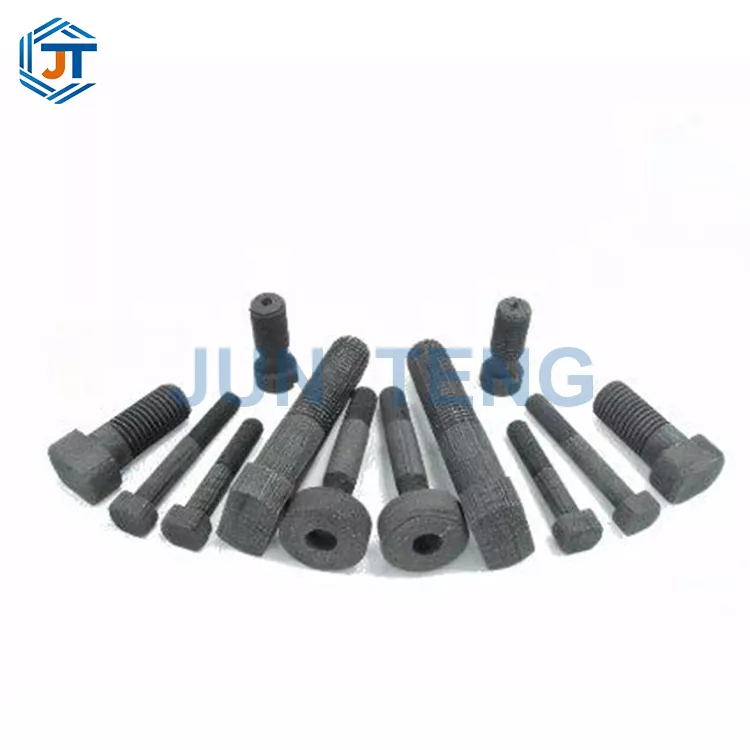
JUNTENG's Carbon Carbon Nuts are precision-engineered companions to the brand's C/C bolts and screws, designed for 2000°C+ inert atmospheres and high-purity industrial production requirements. Different from ordinary carbon carbon nuts on the market that are simply cut from existing carbon carbon sheets and lathed into shape with many internal layered pores and poor mechanical strength, JUNTENG's nuts are manufactured from 3D interwoven carbon fiber preforms and densified through 4 independent cycles of CVD pyrolytic carbon deposition instead of simple sheet cutting. This integrated one-piece densely formed structure makes the product tightly interlocked with matching carbon carbon screws, resistant to high temperatures of 2000℃ without loosening, excellent resistance to extreme cold and hot impacts, and far less prone to cracking issues compared with traditional alternatives. As a professional factory direct sales product with sufficient spot stock and competitive pricing, it is specially optimized for various high-temperature furnace equipment in photovoltaic, semiconductor, powder metallurgy and aerospace fields, and the professional JUNTENG technical team provides users with completely free selection and assembly technical guidance for all purchasing and sample testing demands.
7 Unmatched Core Product Advantages That Completely Eliminate Procurement Pain Points
Every structural design and process optimization of JUNTENG Carbon Carbon Nuts is targeted to solve the actual procurement pain points collected from years of consulting data with high-temperature equipment manufacturers, forming 7 customer-centric core advantages that cannot be matched by ordinary graphite or molybdenum nuts:
- Integrated High Strength Molding Eliminates High-Temperature Slippage and Cracking The 3D solid interlocked body structure has extremely low thermal expansion coefficient, which stays firmly fastened in 2000℃ inert environment for long periods without loosening, dramatically reducing the frequency of equipment shutdown for re-tightening and avoiding unexpected production downtime losses.
- Ultra-High Purity Without Metal Precipitation Eliminates Workpiece Contamination The all-carbon composite material does not contain any heavy metal elements, with extremely low ash impurity content that meets strict semiconductor high-purity standards, generating no volatile heavy metal impurities that would contaminate silicon wafers or chips during high-temperature operation and steadily improve finished workpiece production yield.
- Factory Direct Supply with Sufficient Stock Delivers Outstanding Cost-Effectiveness The fully self-owned complete industry chain production line eliminates all middleman markup layers, standard specification products are permanently in stock and can be shipped out within 48 hours, and large volume wholesale buyers can enjoy exclusive long-term bulk order discounts, with one-stop shopping for matching carbon carbon bolts, flat washers and spring washers.
- Full Specification Flexible Customization Adapts to All Non-Standard High-Temperature Furnaces The product supports full customization of inner thread diameter, total thickness, flange outer dimension and thickened load-bearing structure, can provide both standard 650℃ bare material and 1600℃ SiC anti-oxidation coating options, no strict large minimum order quantity restrictions for small batch experimental samples or non-standard fasteners for large-scale production furnaces.
- Ultra-Lightweight Design Dramatically Reduces Equipment Energy Consumption The bulk density is only 1/6 of molybdenum alloy and 1/4 of steel, large scale assembly effectively reduces the total load of furnace insulation components and carbon carbon plates, lowering equipment heating energy consumption and extending the overall service life of the entire thermal field system.
- Free Sample Testing Fully Eliminates Large-Scale Procurement Quality Risk All new customers can apply for a free complete sample set of nuts and bolts, the raw materials, densification process and thread processing standards of samples are 100% identical with bulk production orders, and third-party tensile testing and thermal shock performance verification before bulk purchasing is fully supported.
- Complete Bidding Qualifications Guarantee Smooth Equipment Acceptance The full set of qualification documents covers ISO9001 international quality management system certification, national non-metallic composite materials testing center third party reports, high temperature carbon composite material industry access certificates and CE export certification, all required materials for photovoltaic, semiconductor and aerospace project bidding are ready for immediate use without additional repeated testing.
Complete Standard Technical Parameters Reference and Performance Comparison Table
JUNTENG has formulated strict standardized national grade technical parameters for the Carbon Carbon Nut product line, and has conducted comprehensive multi-dimensional performance comparison with traditional graphite nuts and molybdenum alloy nuts, the complete reference data is shown in the table below:
| Test Item / Comparison Dimension | JUNTENG Carbon Carbon Nut | Ordinary Graphite Nut | Molybdenum Alloy Nut |
|---|---|---|---|
| Substrate Structure | 3D interlocked integral woven carbon-carbon composite preform (GB/T 39852-2021 standard) | Simple lathing of extruded graphite block | Metal forging molding |
| Bulk Density | 1.50~1.70g/cm³, customizable density | 1.8g/cm³ | 10.2g/cm³ |
| Interlaminar Shear Strength | ≥12MPa (GB/T 1447-2005 standard) | ≤5MPa | ≥20MPa |
| Long-Term Temperature Resistance | Dimensionally stable without creep at 2000℃ in inert atmosphere | Prone to fragmentation above 800℃ after thermal cycles | Softens above 1000℃, pre-tightening force drops sharply |
| Thermal Shock Resistance | Remains intact after 1000 high-low temperature cycles | Edge cracking occurs after only 300 cycles | Thread deformation and seizing under sudden temperature difference |
| Impurity Precipitation Risk | Ash content ≤600ppm standard grade, ≤100ppm semiconductor high-purity grade, no heavy metal volatilization | Low precipitation but extremely brittle and fragile | High-temperature metal vapor severely contaminates wafers and silicon slices |
| Standard In-Stock Thread Sizes | M8, M10, M12, M16, M20, M24 (ordinary round, flange, thickened load-bearing styles available) | Limited standard stock, long customization lead time | High processing difficulty with surcharge for customization |
| Typical Service Life | 3-5 years long-term stable operation | Needs scrapped replacement every 3-6 months | High raw material cost, frequent failure under variable temperature conditions |
Strict 6-Closed-Loop Precision Process for Integrated Molding Manufacturing
Every single JUNTENG Carbon Carbon Nut delivered to customers goes through 6 fully controlled closed-loop integrated production processes with segmented quality inspection throughout the whole workflow, which fundamentally improves the overall structural strength of the product from the very beginning of raw material processing:
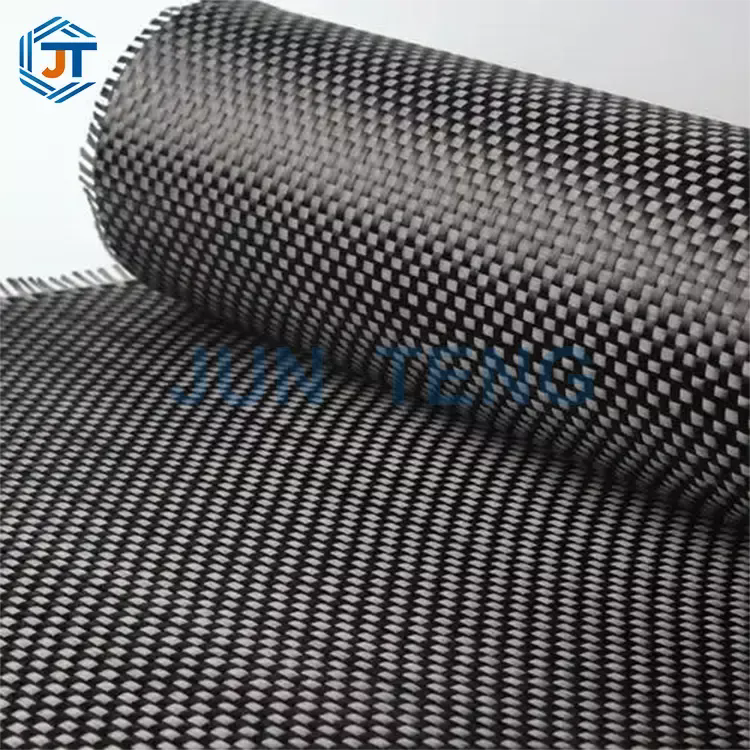
- High purity 3D preform weaving: Brand new 12K PAN carbon fiber is used for 3D interlocking integrated weaving forming, making the whole nut body uniformly stressed and fundamentally preventing thread delamination and fracture failure during later stage service.
- 450℃ constant temperature pre-oxidation shaping: This process step completely eliminates residual internal fiber stress generated during weaving, prevents the billet from deforming during subsequent high-temperature densification treatment, and stabilizes the precise processing size benchmark for all subsequent procedures.
- Multi-cycle CVD gas phase densification core process: 4 independent cycles of pyrolytic carbon deposition are carried out to fill all tiny internal pores inside the carbon billet, significantly improving the overall bulk density, interlayer bonding force and thread bite wear resistance of the finished nut.
- 2400℃ ultra-high temperature graphitization purification: This extreme high temperature process removes all residual trace impurities inside the billet, greatly improving the purity of the carbon matrix, effectively reducing high-temperature impurity precipitation and fully adapting to the strict high-purity requirement of semiconductor production environments.
- Five axis CNC integrated precision turning: Special composite material cutting tools are used to process internal threads and flange end faces in one single clamping setup, ensuring every tooth profile is complete without burrs or broken edges, and the matching degree with JUNTENG factory carbon bolts reaches 100% perfect fitting.
- Customized SiC anti-oxidation coating treatment: For working conditions with frequent intermittent aerobic door opening operation, a dense silicon carbide protective layer is sprayed on the product surface, significantly raising the anti-oxidation maximum service temperature to 1600℃ from the original 650℃ of bare material.
Before leaving the factory, every production batch of carbon carbon nuts will be randomly sampled for tensile testing, cold-hot impact testing and thread wear resistance testing. Any non-conforming units will be fully reworked or scrapped, and will never be delivered to customers as formal wholesale and bulk orders.
5 Typical High-Value Industrial Application Scenarios
The excellent performance characteristics of JUNTENG Carbon Carbon Nut make it irreplaceable in 5 major high-temperature industrial scenarios, creating outstanding operation value for different industry users:
- Photovoltaic New Energy Thermal Field Equipment Used as supporting fastening nuts for carbon carbon insulation cylinders in single crystal furnaces, polycrystalline silicon reduction furnaces and silicon wafer sintering furnaces, no metal contamination occurs during long-term operation to guarantee final silicon wafer purity, and this product is already adopted for stable long-term bulk procurement by many leading domestic photovoltaic equipment manufacturers.
- Semiconductor Wafer Manufacturing Equipment Serves as internal fastener matching nuts for wafer annealing furnaces, ion implantation equipment and CVD reaction chambers, features ultra-high purity and extremely low impurity precipitation, perfectly adapts to vacuum plasma corrosion working conditions and will never cause damage to chip substrates.
- Powder Metallurgy and Hard Alloy Sintering Furnaces Used for matching nuts of alloy sintering push plates and vacuum bell cover furnace high-temperature fixtures, excellent cold and hot impact resistance completely avoids frequent nut breakage accidents that cause unexpected production line shutdown losses.
- Aerospace High Temperature Thermal Protection Test Fixtures Applied as supporting connectors for aircraft thermal protection test pieces and engine high temperature simulation fixtures, it combines ultra-lightweight property and 2000℃ high temperature erosion resistance, fully meeting the rigorous high temperature testing standards of aerospace research institutions.
- Laboratory Research Small High-Temperature Equipment Perfect as supporting nuts for laboratory tube furnaces and small vacuum sintering test benches, it fully supports customized micro non-standard sizes, and can respond and deliver small batch sample orders extremely quickly for scientific research projects.
Frequently Asked Questions
We have collected and sorted out the most common questions from global high-temperature equipment purchasers about JUNTENG Carbon Carbon Nut products, to help you clear all possible doubts before procurement and field installation:
Q1: Should bare material or SiC coated carbon carbon nuts be selected for photovoltaic and semiconductor operating conditions?
A1: Using standard bare materials for continuous inert environments with nitrogen, argon, and vacuum throughout the process, resulting in lower procurement costs; The equipment frequently opens doors for air intake and operates under intermittent aerobic conditions, requiring customized SiC anti-oxidation coating with an anti-oxidation resistance temperature increased to 1600℃.
Q2: Can non-standard special thicknesses and flange sizes be customized, and what is the minimum order quantity?
A2: There is no minimum order quantity for standard spot specifications, and one set of nuts and bolts can be purchased; Minimum order quantity for customized products with non-standard thickness, special flanges, and oversized/mini inner diameters is 10 sets. OEM OEM packaging services can be negotiated.
Q3: What are the long-term advantages of Carbon Carbon Nuts compared to graphite nuts?
A3: Under the same operating temperature and frequency of cold and hot cycles, the service life of Junteng integrated dense carbon nuts is 3-5 times that of ordinary graphite nuts, significantly reducing the frequency of consumable replacement and downtime for maintenance, and lowering long-term comprehensive operating costs.
Q4: Can I apply for sample testing before purchasing? Is the sample quality consistent with the bulk order?
A4: All new customers can apply for Free Sample, which is processed uniformly from mass-produced prefabricated bodies. The raw materials, densification process, and thread processing standards are completely consistent with Bulk Order bulk orders, and customers can submit them to third-party organizations for performance verification.
Q5: Do you provide full after-sales technical guidance for on-site assembly and usage?
A5: Composite material professional engineers provide free guidance on the entire process of working condition selection, assembly torque, furnace heating process, nut installation and maintenance; For large-scale photovoltaic and semiconductor production line projects, engineers can be arranged to provide on-site technical support.
No matter you are a high-temperature equipment manufacturer looking for high-performance zero-failure fastening solutions to upgrade the service life of your thermal field system and reduce long-term operation and maintenance costs, a production line operation manager who wants to eliminate unexpected downtime losses caused by nut breakage and improve production workpiece yield, or a global carbon composite material importer looking for stable long-term qualified supplier for export business, JUNTENG can provide you with full one-stop professional services including free technical consultation, free sample testing, full set of qualification document provision and exclusive large project customized production support, with 18 years of deep industry experience and complete full independent industrial chain capacity to guarantee every delivered product meets the highest national standard requirements, contact us now to get the latest product quotation, detailed third-party testing report and exclusive high-temperature fastener solution tailored perfectly for your high-temperature furnace production project!
Related News
- Why Is 200g Twill Carbon Fiber Woven Fabric the Most Versatile Balanced-Performance Carbon Composite Substrate for Modern Lightweight Manufacturing and High-End Design in 2026
- How Can Carbon Carbon Thermal Insulation Materials Improve High-Temperature Furnace Efficiency
- Why Is 200g Twill Carbon Fiber Woven Fabric an Ideal Choice for Lightweight Composite Applications
- Why Are Carbon Carbon Studs Becoming the Preferred Fastening Solution for Ultra-High-Temperature Applications
- How Does Jacquard Carbon Fiber Fabric Improve Performance and Design Possibilities?
- How Does Unidirectional Carbon Fiber Fabric Improve Composite Performance?
Leave me a message