
Carbon Fiber Woven Fabric Manufacturer Providing Superior Products
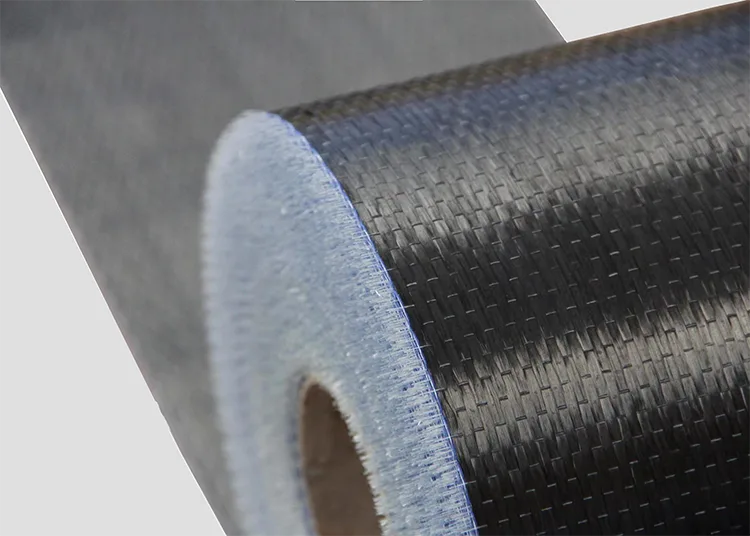
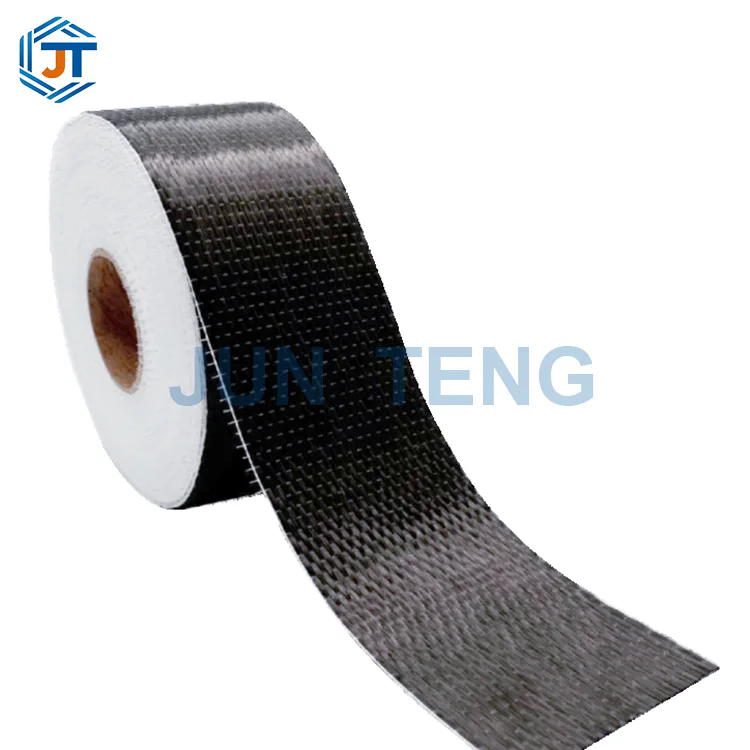
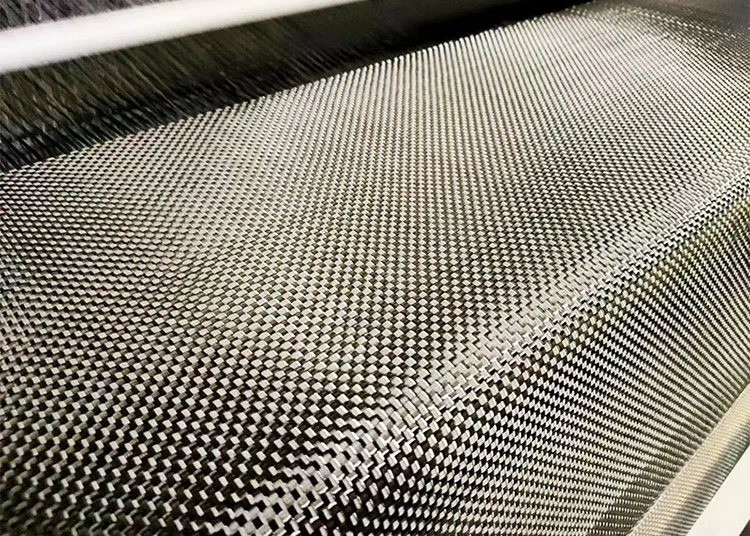
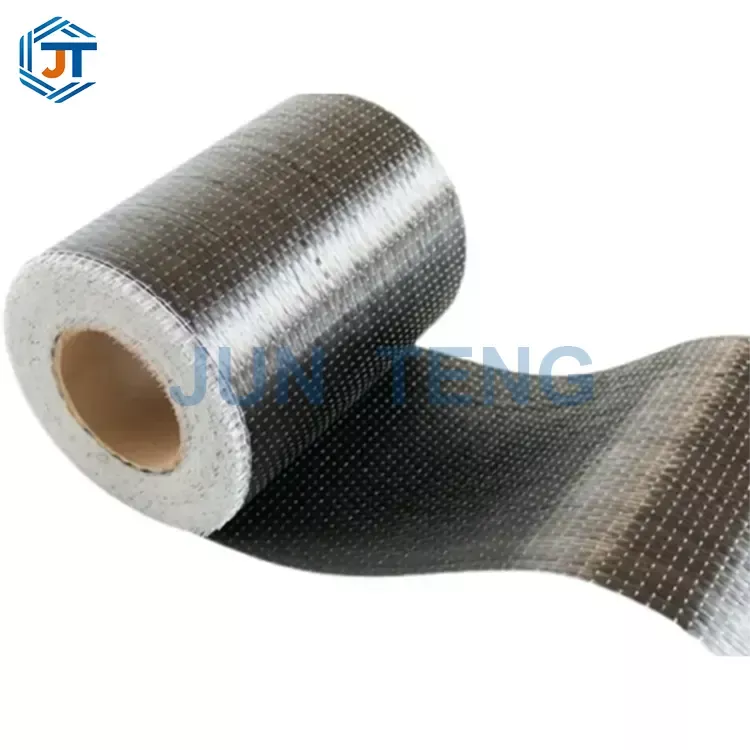
Carbon Fiber Woven Fabric, also commonly referred to by customers as bidirectional carbon fiber cloth or woven carbon fiber reinforcement cloth, it is a high-performance reinforcement material with strong universality in building structure reinforcement, industrial equipment reinforcement, and bridge and tunnel repair. Unlike Unidirectional Carbon Fiber Fabric, which only supports single directional force, Carbon Fiber Woven Fabric adopts a warp and weft bi-directional weaving process, which ensures balanced bi-directional force, stronger toughness, and better adhesion. It is particularly suitable for overall reinforcement and strengthening of irregular structures, curved components, and multi-directional stress cracking areas.
What are the core parameters?
For the convenience of project selection, the following are the conventional parameters of Junteng's mainstream carbon fiber woven fabric, covering the vast majority of reinforcement conditions:
| Product Specification | Weight | Core Advantages | Application Scenarios |
| Bidirectional Woven Cloth | 200g/㎡ | Lightweight, flexible, high fitting degree, cost-effective | Anti-crack reinforcement for floors, walls and small components |
| Bidirectional Woven Cloth | 300g/㎡ | Higher strength, stronger bearing capacity, excellent stability | Beam and column reinforcement, bridge strengthening, load upgrade projects |
| Custom Woven Cloth | Customizable | Custom width, weight and roll length on demand | Special-shaped engineering and non-standard customized projects |
How to choose between bidirectional carbon fiber woven fabric and unidirectional carbon fabric?
Choose according to the direction of force. Unidirectional carbon cloth focuses on unidirectional high strength, suitable for unidirectional bending and tensile reinforcement; Carbon fiber woven fabric is balanced in both directions, with consistent strength in both horizontal and vertical directions, making it suitable for multi-directional reinforcement of wall cracking, floor cracking, curved components, and irregular structures. The overall crack resistance effect is more comprehensive.
Will woven fabric construction easily cause loose threads and pilling?
A: Junteng technology effectively eliminates the problem of loose threads. Low end woven fabrics on the market are loosely woven, and after cutting, they are prone to shedding yarn and fibers, which affects the quality of construction. Junteng adopts high-density lock edge weaving technology, with a tight and flat fabric surface, neat cutting edges, and a construction process that is not prone to fuzzing or loose threads. The glue is evenly impregnated, and the overall flatness is higher after molding.
What are the advantages of Junteng?
1. Bi directional balanced force, more comprehensive reinforcement
The warp and weft are evenly interwoven in both directions, with consistent mechanical properties in both directions. It can simultaneously resist horizontal and vertical structural tensile forces, effectively solving the problems of wall mesh cracking, multi-directional cracks in floor slabs, and uneven stress distribution of curved components. The overall structural integrity is stronger, and the reinforcement fault tolerance is higher.
2. High density weaving process, with a flat and compact fabric surface
Based on 18 years of weaving experience, the factory adopts stable tension control equipment for production, with uniform fiber arrangement, no breakage, no thinning, and no tightness. The fabric has uniform thickness, high flatness, and a tight fit with the base surface, without common construction problems such as local hollowing or suspension, greatly improving the qualification rate of reinforcement projects.
3. Strong flexibility and fit, suitable for complex irregular surfaces
Carbon fiber woven fabric has a soft texture, can be bent and folded, and has excellent extensibility. It can perfectly fit complex base surfaces such as beam and column corners, circular arc structures, arched tunnels, and irregular surfaces. Compared to hard reinforcement materials, it does not require complex polishing treatment and is suitable for the vast majority of complex construction conditions.
4. Corrosion and weather resistance, with a long service life
The product itself is free from rust, oxidation, acid and alkali resistance, salt fog resistance, aging resistance, and is not affected by damp, high temperature, low temperature, and underground corrosive environment. After reinforcement, it does not increase the self weight of the structure, does not change the appearance of the building, and can provide long-term stable protection for the building structure. One reinforcement, long-lasting protection.
5. Simple and efficient construction, no need for large equipment
The entire construction process is carried out at room temperature, without the need for open flames, welding, or large machinery. It only requires the use of carbon fiber reinforced adhesive to complete roll coating, bonding, and impregnation molding. The construction process is simple and the construction period is short, suitable for renovation projects in old residential areas that do not stop production or disturb residents.
6. Factory direct supply, stable quality, high cost-effectiveness
Junteng has its own weaving production line, which controls the entire process of raw silk procurement, weaving, inspection, and rewinding, and refuses to recycle silk, mixed silk, and defective raw materials. Each batch of products can provide formal testing reports, which can be sent for inspection and accepted. At the same time, it supports large-scale wholesale, instant delivery of spot goods, and non-standard customization.
What adhesive is needed to use with carbon fiber woven fabric?
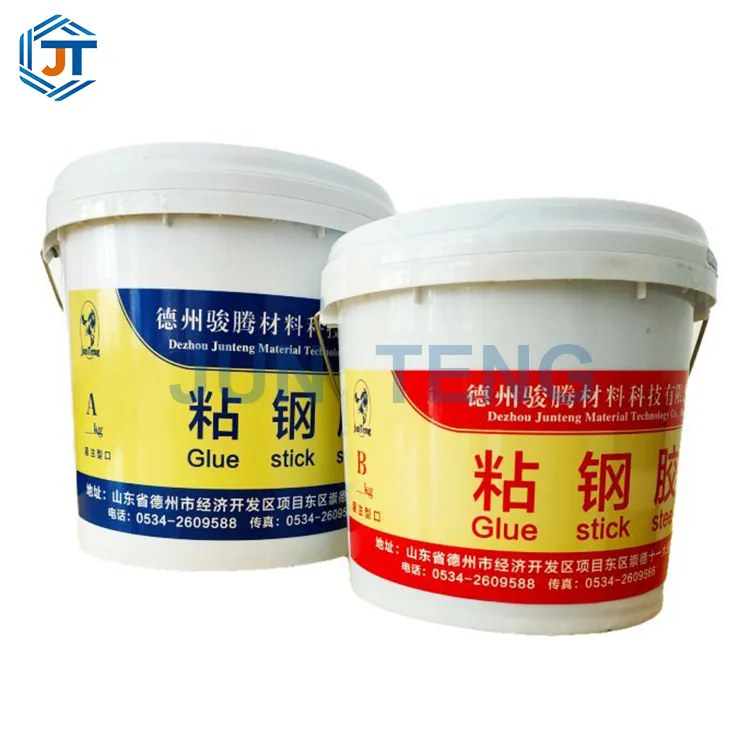
Suggest using the entire set together. The construction sequence uses bottom glue to penetrate the base surface, leveling glue to repair pits and grooves, and impregnating glue to infiltrate woven fabrics. The combination of the three can maximize the bonding strength and prevent later problems such as hollowing, delamination, and peeling. Junteng can provide a complete set of supporting reinforcement adhesive for one-stop procurement.
Will woven fabric reinforcement increase the weight of the wall?
Almost no weight gain. Carbon fiber woven fabric has an extremely light weight and a thin reinforcement layer, which will not increase building loads or compress the foundation structure. It is the preferred material for lightweight reinforcement and renovation.
What are the main engineering scenarios used?
1. Civil building reinforcement: renovation of old buildings, repair of wall cracks, crack resistance of floor slabs, overall reinforcement of beams and columns, seismic upgrading
2. Municipal transportation engineering: bridge deck, box girder, pier column repair, tunnel lining reinforcement, culvert structure reinforcement
3. Industrial plant renovation: workshop load lifting, crane beam reinforcement, post fire component repair, roof structure reinforcement
4. Special engineering: Lightweight reinforcement and repair of irregular curved structures, arched buildings, and retro buildings
Why choose Junteng?
Junteng has been deeply involved in the reinforcement materials industry for 18 years, focusing on the research and development, weaving, customization, and bulk supply of Carbon Fiber Woven Fabric. It is a mature source production factory in the industry. The product strictly follows the national reinforcement engineering standards for production, with stable mechanical properties, no easy detachment, and high permeability of impregnation. It is widely used in various reinforcement and renovation projects such as civil buildings, municipal bridges, industrial plants, and water conservancy tunnels. It is a long-term preferred brand for construction units, engineering general contractors, and building materials wholesalers.
What are the strengths and after-sales support of Junteng?
Having been deeply involved in the industry for 18 years, Junteng has always taken "stable quality, compliant engineering, and high cost-effectiveness" as its core advantages, serving thousands of reinforcement construction enterprises and engineering units across the country. We do not produce disposable low-priced and low-quality products. We insist on weaving with original silk from the factory, strictly inspecting each batch of products, ensuring that the data meets the standards, the information is complete, and the acceptance is worry free.
The company has sufficient stock of regular specifications, supports wholesale and customization, and can provide one-stop services such as technical selection, construction guidance, and scheme suggestions according to customer engineering needs, fully assisting in the efficient implementation and smooth acceptance of major reinforcement engineering projects.
- View as
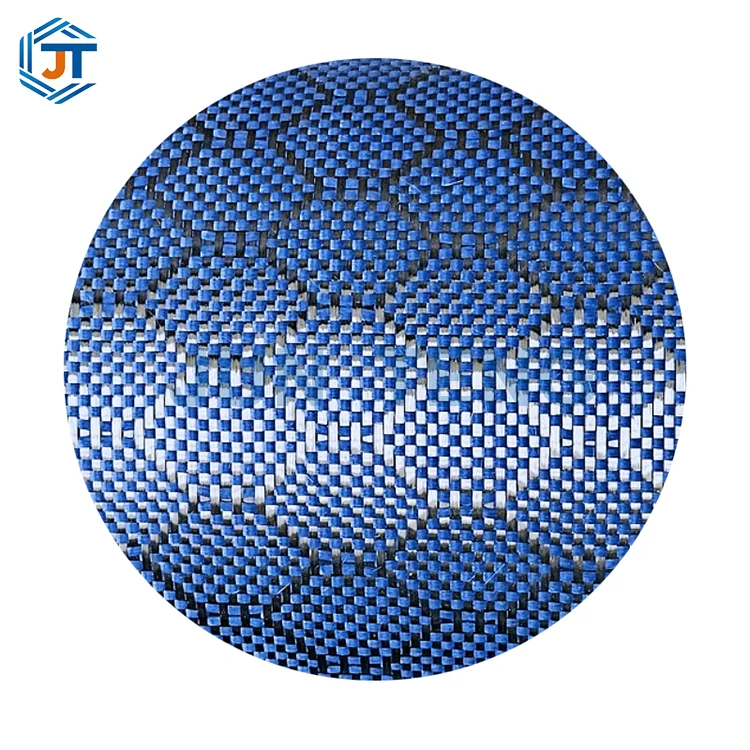
3K Blue Woven Carbon Fiber Fabric
JUNTENG is a professional manufacturer and exporter of 3K Blue Woven Carbon Fiber Fabric. We have developed our own high-temperature color locking and mixing weaving process, resulting in a transparent and bright blue color for our finished products. The resin immersion does not cause color leakage, while also considering high strength and lightweight characteristics. Our products are available in stock all year round and can handle bulk orders. If you have wholesale purchasing needs, please feel free to inquire immediately.
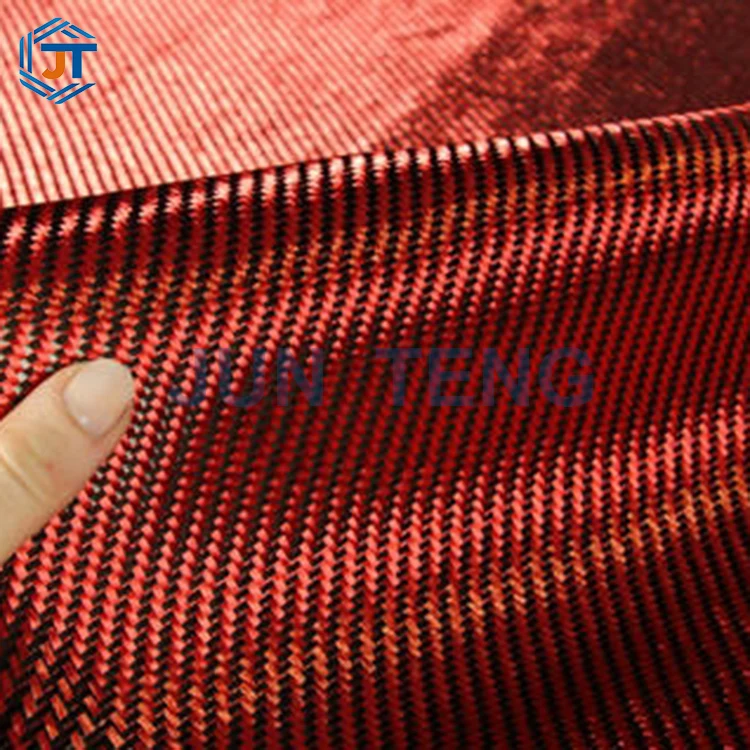
3K Red Woven Carbon Fiber Fabric
JunTeng is a professional factory direct manufacturer of 3K Red Woven Carbon Fiber Fabric, with original high-temperature curing process, bright red curing without color bleeding, high strength and lightweight, suitable for automotive modification, digital trendy products, and sports equipment. This product has sufficient stock in stock and supports bulk order bulk procurement, customized weight and door width. We provide free sample samples and a complete set of quality inspection reports with reliable and stable quality. If you have wholesale or procurement needs, please feel free to consult and negotiate immediately.
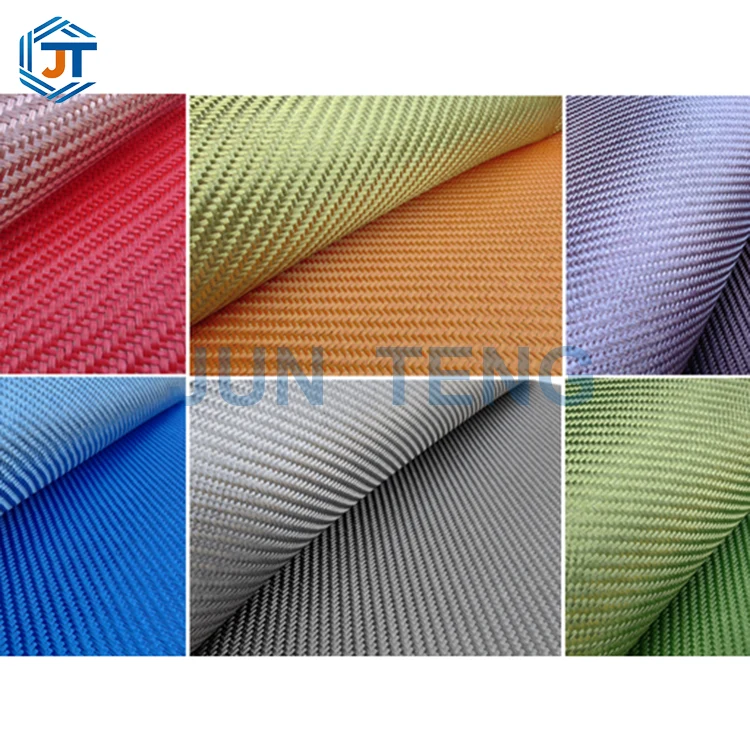
3K Colored Woven Carbon Fiber Fabric
JunTeng is a manufacturer of high-quality 3K colored woven carbon fiber fabric, crafted from a blend of 3K carbon fiber and colored fibers. This fabric offers vibrant, durable colors alongside high strength, lightweight properties, and a unique contrasting weave pattern. Produced under rigorous multi-stage quality control, the fabric features a smooth surface with minimal fuzz and ensures uniform resin penetration, making it ideal for exterior components in modified vehicles, digital devices, and sports equipment. Customization options for color and weight are available, and ample stock is maintained. Please contact us directly for samples or purchasing inquiries.
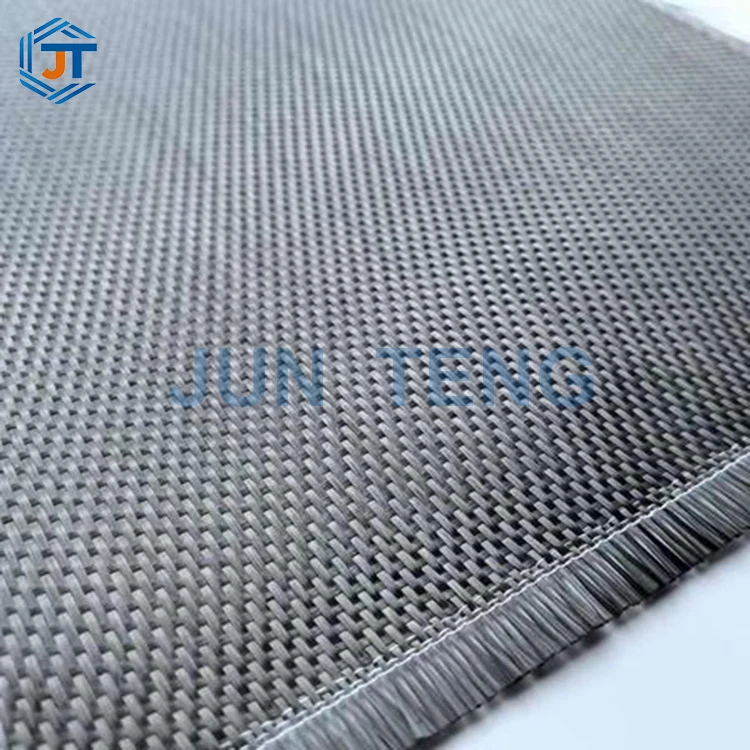
Satin Weave Carbon Fiber Fabric
JUNTENG has been deeply involved in carbon fiber weaving for 18 years and directly supplies Satin Weave Carbon Fiber Fabric from the original factory. Selected high-quality 3K raw silk for precision weaving, the fabric surface is smooth, high gloss, and has good wetting properties. It is not easy to loose during cutting, and it balances high strength, lightweight, and high-end mirror texture. There is sufficient stock of conventional specifications, and support for customized heavy-duty door widths. If you have sample or procurement needs, please feel free to consult and negotiate directly.
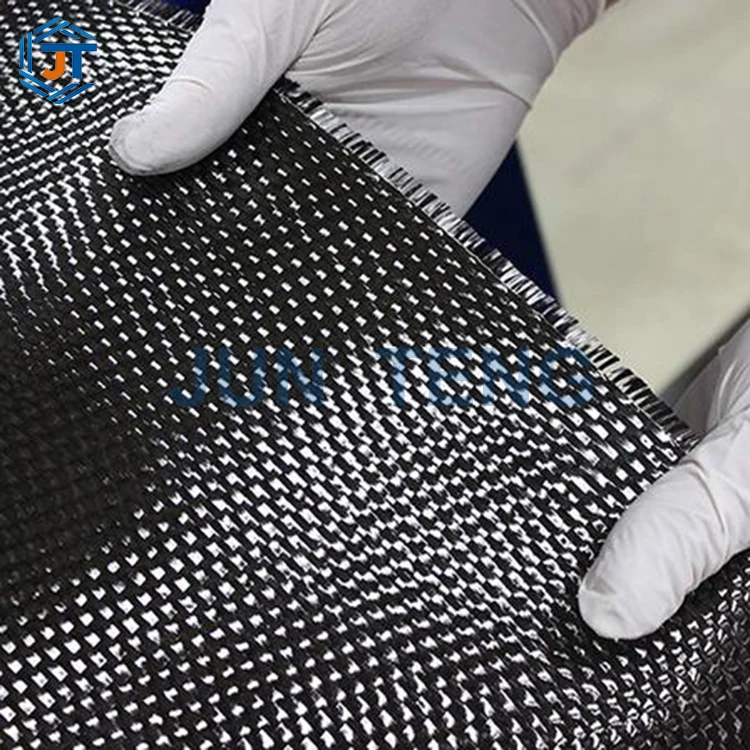
3K Satin Carbon Fiber Fabric
JunTeng is a professional manufacturer and supplier of 3K satin carbon fiber fabric in China. Woven from high-quality raw filaments, the fabric features a satin weave with long floats that create a smooth, lustrous surface; upon molding, it yields a premium, mirror-like matte finish. It offers a high strength-to-weight ratio and excellent corrosion resistance, ensures uniform resin impregnation, and resists fraying during cutting, making it ideal for applications such as automotive modifications, high-end equipment, and digital device casings. Please contact us directly for purchasing inquiries or sample requests.
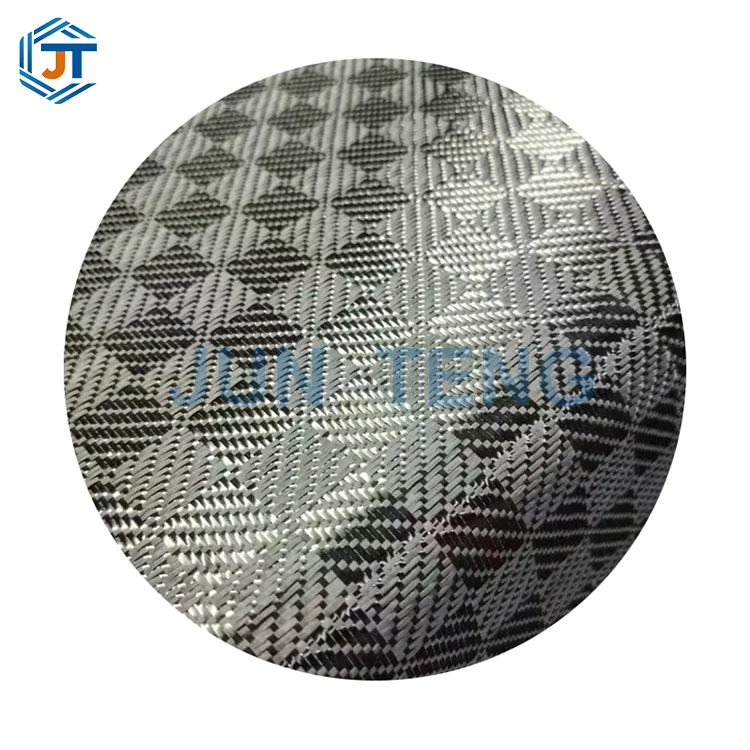
3K Jacquard Carbon Fiber Fabric
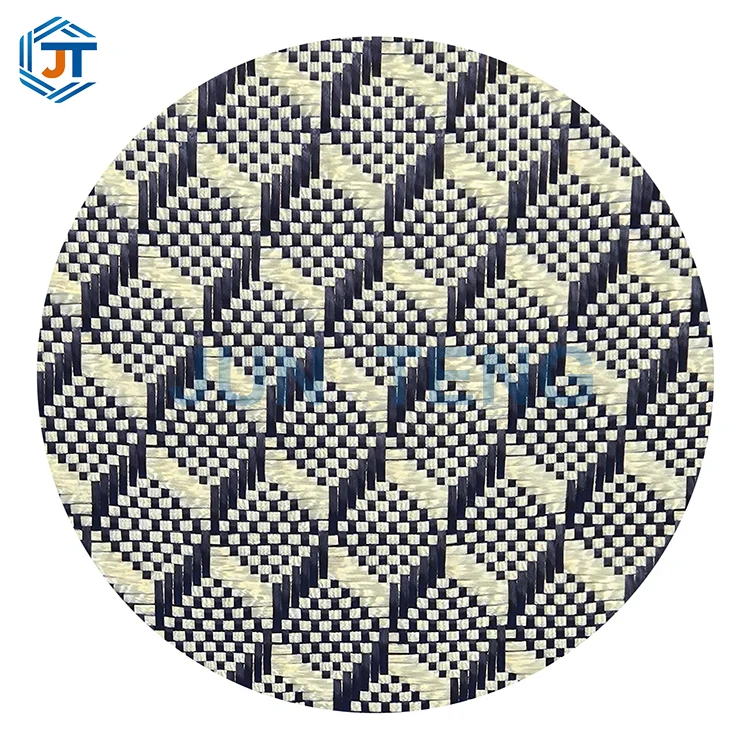
JunTeng's source factory has independently developed 3K Jacquard Carbon Fiber Fabric, selected high-quality raw silk, special jacquard weaving, and three-dimensional high-end patterns. Lightweight and high tensile strength, excellent permeability, less prone to loose threads during cutting, corrosion-resistant and fatigue resistant. We offer stable stock supply and outstanding cost-effectiveness. If you have purchasing needs, please feel free to consult and negotiate directly.
JUN TENG is a professional Carbon Fiber Woven Fabric manufacturer and supplier in China. We warmly welcome you to wholesale high quality products at competitive price from our factory.