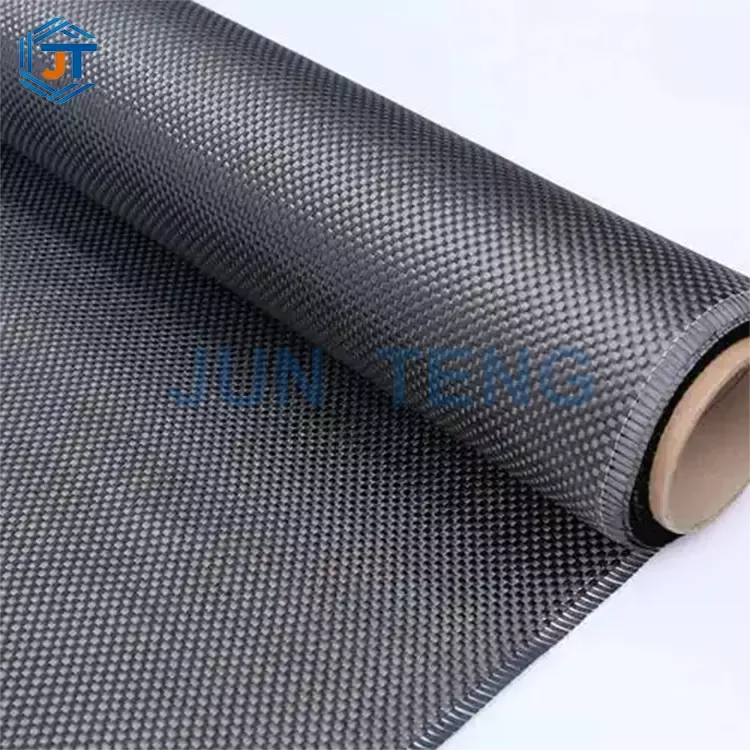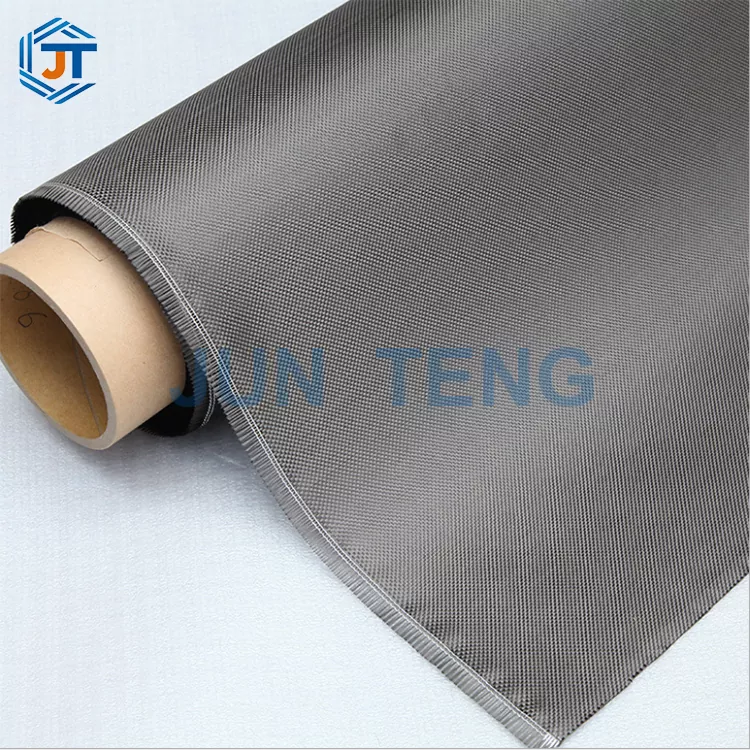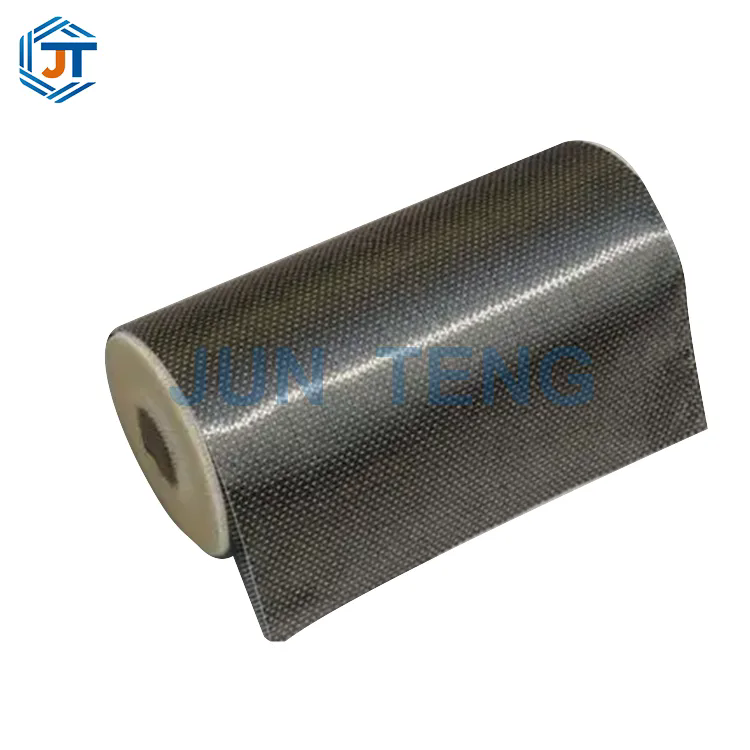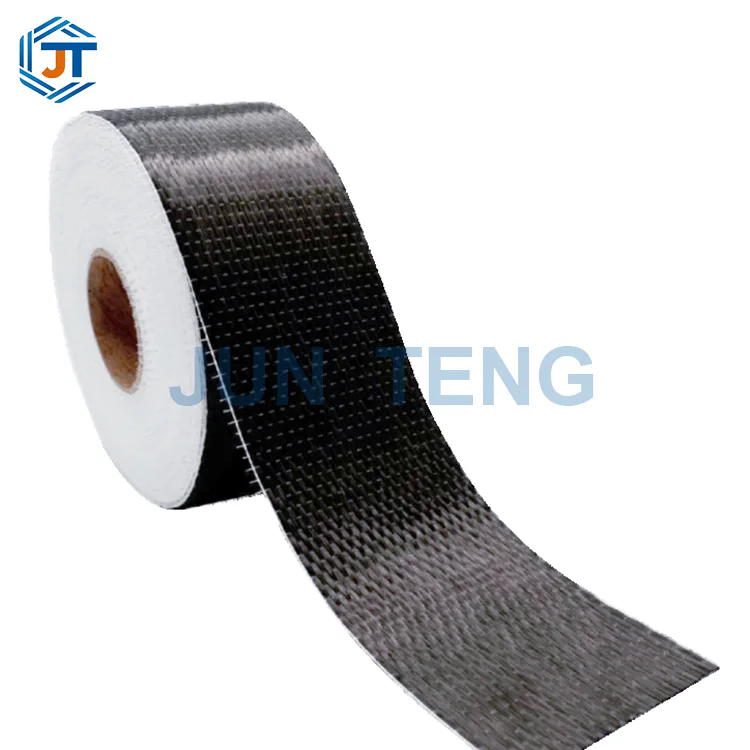

Engineering Grade Carbon Fiber Fabric for Structural Reinforcement
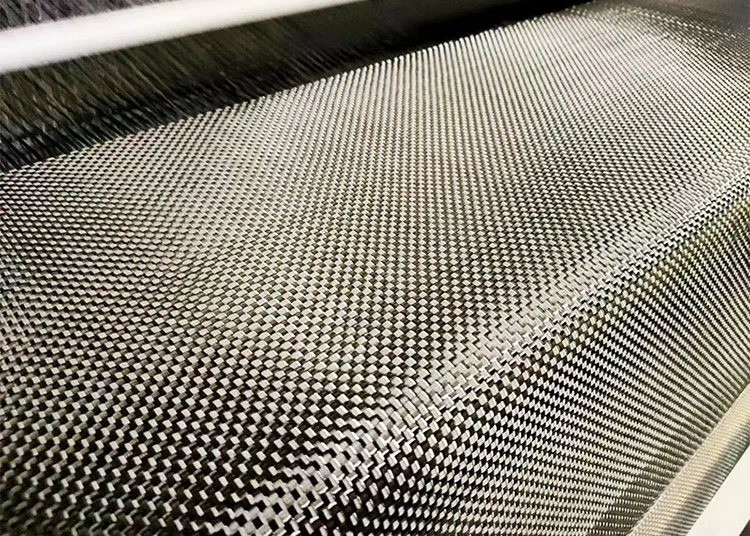
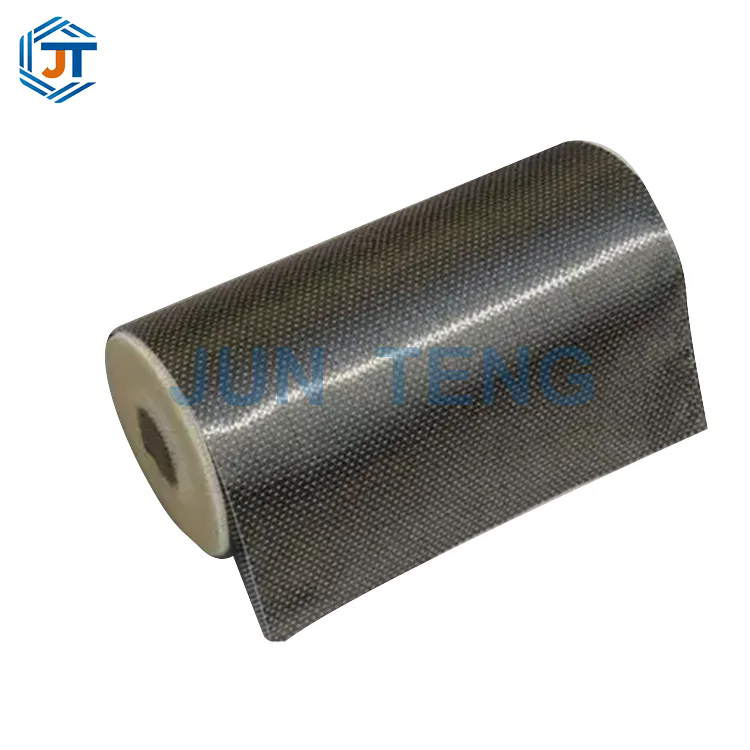
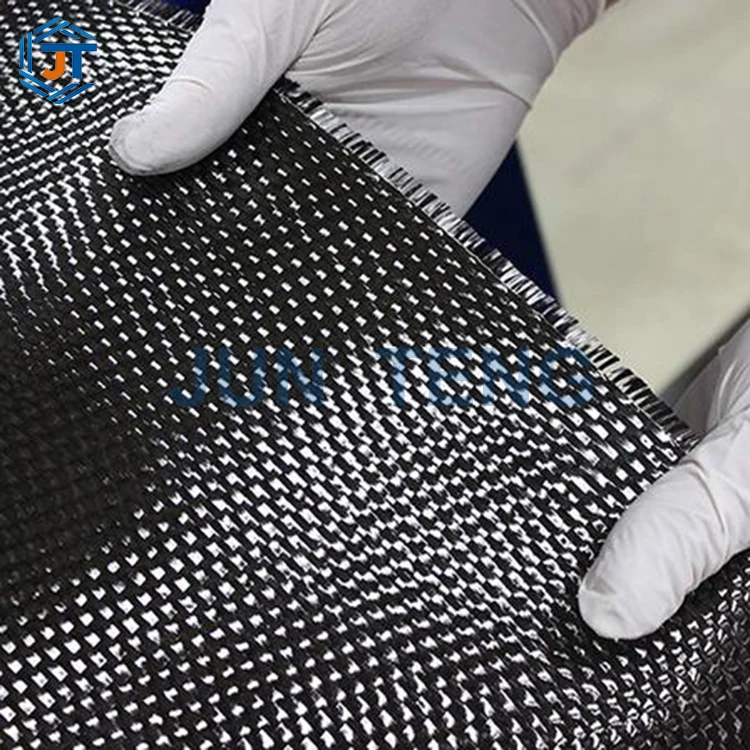
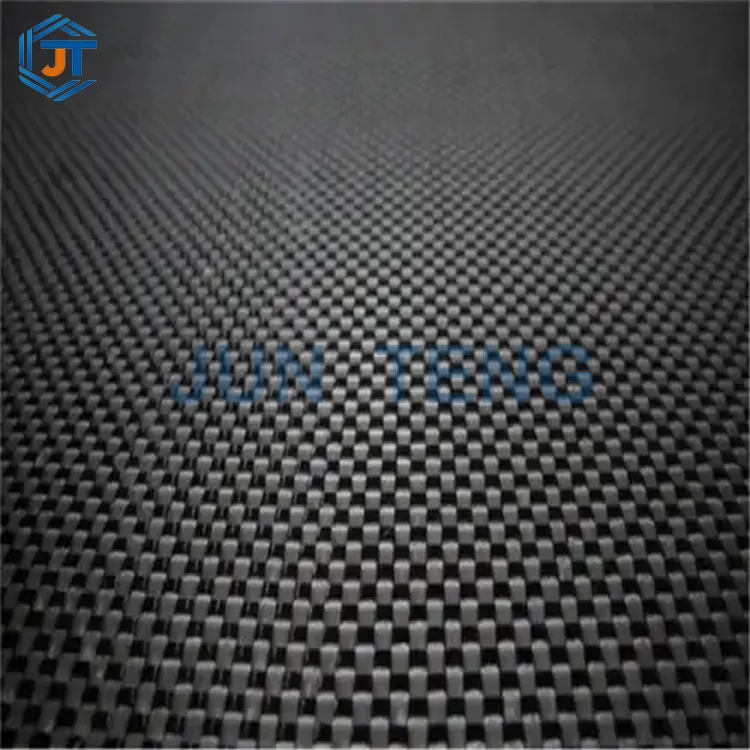
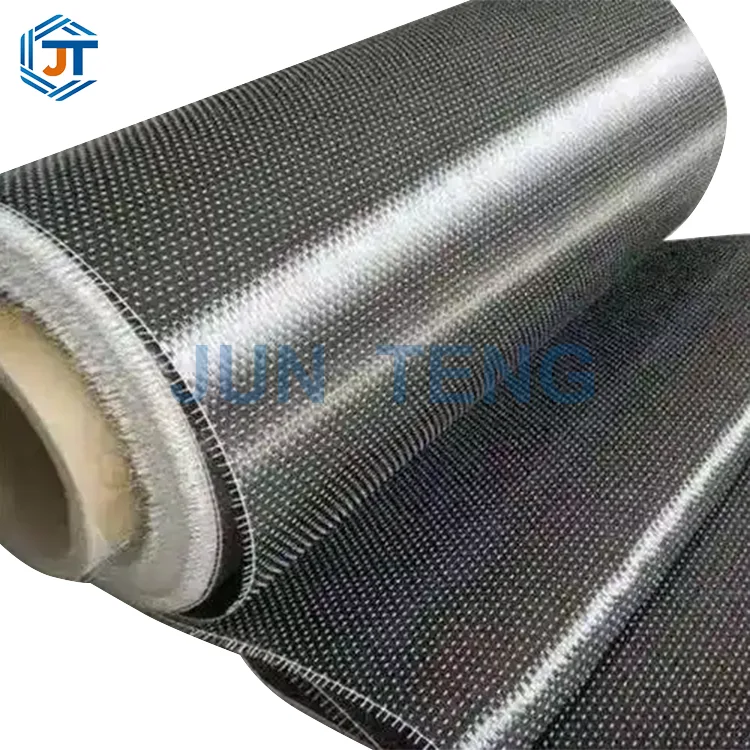
With 18 years of deep expertise in the carbon fiber weaving industry, JUN TENG specializes in the R&D and production of Engineering Grade Carbon Fiber Fabric for Structural Reinforcement. Our fabric features a smooth, dense surface and uniform load distribution across both warp and weft directions; it offers stable strength, durability, and aging resistance. Manufactured in strict accordance with national reinforcement standards and available for both wholesale and retail, our products are highly trusted and favored by clients in the structural reinforcement sector both domestically and abroad.
While most carbon fabrics on the market are unidirectional—suitable only for single-axis load reinforcement—they often fail when applied to complex scenarios such as curved floor slabs, beam-column joints, irregular components, or structures with bidirectional cracking. These failures manifest as uneven stress distribution, localized delamination (voids), and ineffective reinforcement. Drawing on 18 years of weaving experience and a precise understanding of industry pain points, JUN TENG is one of the few domestic manufacturers with full-chain capabilities—encompassing proprietary weaving, formula optimization, finished product testing, and practical engineering application. We do not engage in OEM rebranding or repackaging/reselling; quality is fully controlled at every stage.
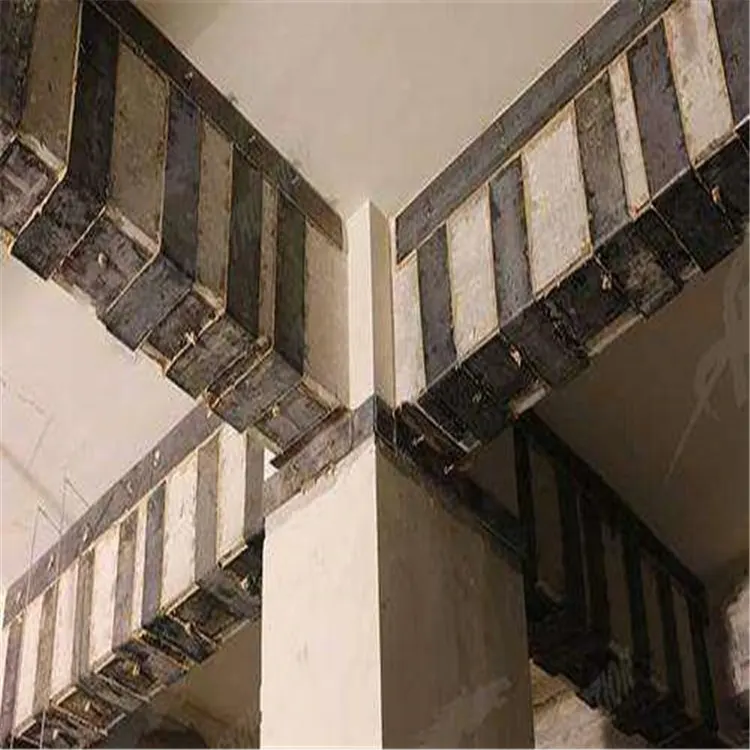
Core Product Performance Parameter Table
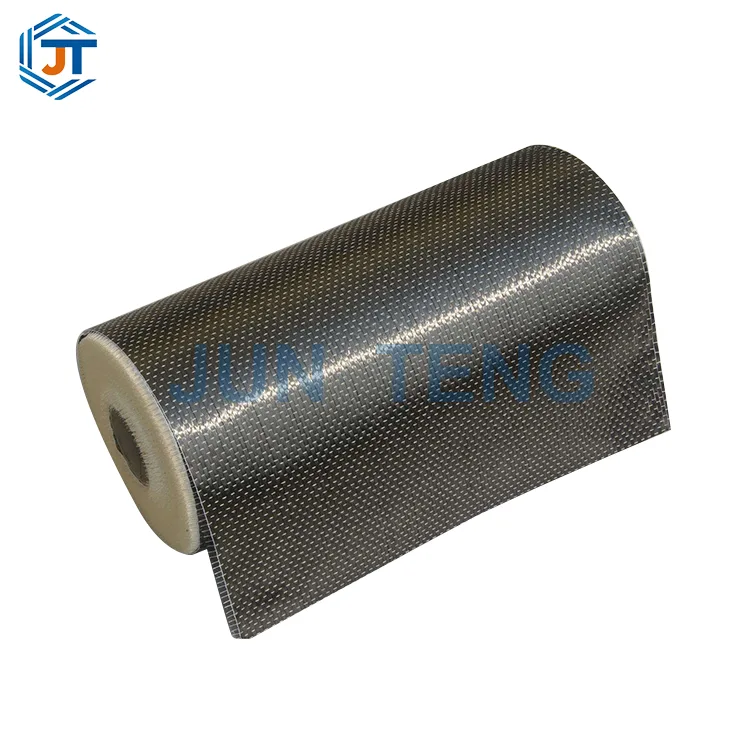
This product is an Engineering Grade Carbon Fiber Fabric for Structural Reinforcement, which is uniformly stressed in both directions and is compatible with perfect infiltration of epoxy impregnating adhesive. The following are the national standard compliant measured parameters, and the data is true and can be sent for inspection, pulled, and accepted:
|
Test Item |
National Standard |
JUN TENG Test Data |
Practical Engineering Advantages |
|
Weaving Process |
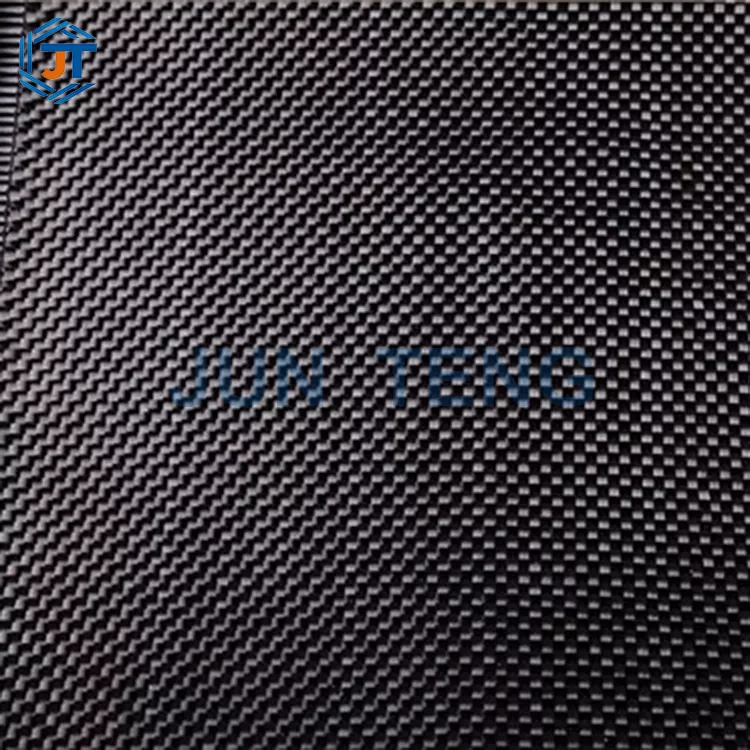
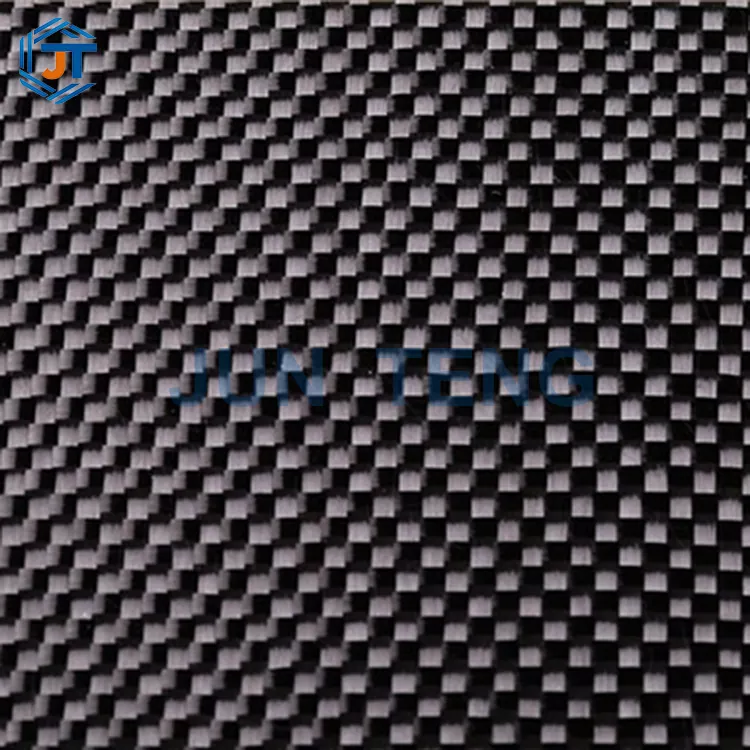
Plain bidirectional weaving |
Precision balanced warp-weft weaving |
Neat texture without deviation, ultra-high structural stability |
|
Bidirectional Tensile Strength |
≥3400MPa |
3680MPa |
Balanced horizontal & vertical strength, no partial load under multi-directional force |
|
Elastic Modulus |
≥2.35×10⁵MPa |
2.46×10⁵MPa |
Synchronized deformation, adaptable to micro structural displacement |
|
Elongation at Break |
≥1.7% |
1.85% |
Excellent toughness and fatigue resistance, not prone to brittle fracture |
|
Grammage Tolerance |
≤±5% |
≤±2% |
Uniform thickness for the whole roll, no local strength difference during construction |
|
Resin Penetration & Fitting |
Full penetration without blank area |
100% fiber penetration & wrapping |
No hollowing or bubbling, forming integrated reinforcement layer |
|
Acid & Alkali Aging Resistance |
Long-term stable strength |
Strength attenuation ≤5% |
Stable performance for long-term service in humid and corrosive environments |
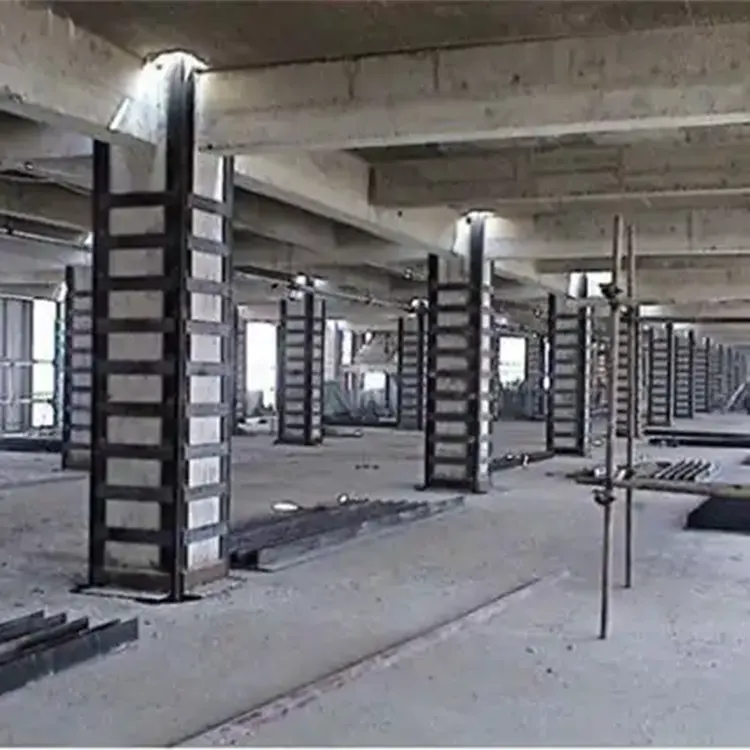
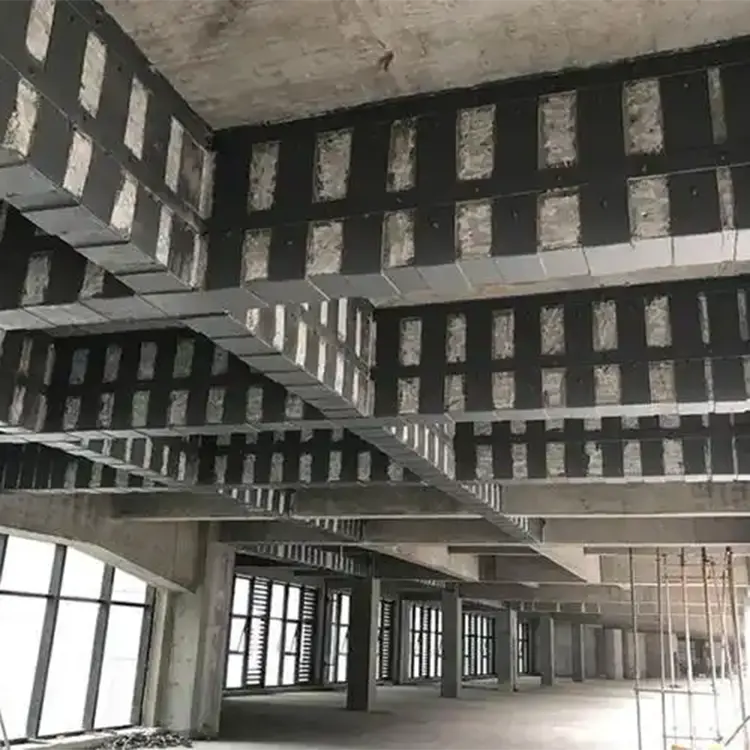
Differentiated core advantages
Compared to conventional reinforcement materials on the market, JUN TENG's Engineering Grade Carbon Fiber Fabric for Structural Reinforcement focuses on "multi-directional balancing, irregular adaptation, and high construction fault tolerance" to solve complex reinforcement problems:
1. Bidirectional balanced stress, eliminating local reinforcement shortcomings: Adopting a symmetrical weaving structure in both directions of latitude and longitude, the strength is uniform in the 0°and 90°vertical directions, completely avoiding the defects of unidirectional carbon cloth only being stressed in one direction and prone to cracking in the horizontal direction. It perfectly adapts to building components with bidirectional loads, cross stress, and irregular cracking, making reinforcement without weak blind spots.
2. Highly flexible and adaptable to irregular surface construction: The plain weave interwoven structure has high toughness and good ductility, and can tightly adhere to curved beams, columns, curved floor slabs, node corners, and irregular components. It is laid flat without wrinkles or rebound, solving the industry problem of complex structures that cannot be fully covered and reinforced. Its construction adaptability far exceeds that of ordinary carbon cloth.
3. Weaving is dense and not loose, and the impregnation effect is more stable: the weaving density is independently optimized, and the fiber arrangement is tight and uniform, without any looseness, jumping or breakage problems. When combined with our factory's carbon fiber impregnation adhesive, it can quickly and completely penetrate, and after curing, form a high-strength overall stress layer, which is resistant to peeling, fatigue, and aging. The reinforced service life can reach more than 30 years.
4. High cost performance factory direct supply, flexible procurement without threshold: 18 years of self production and self sales by the source factory, eliminating the premium of intermediaries, high-quality benchmarking industry high-end products, and affordable prices. The warehouse has a full range of stock available, supporting bulk wholesale of engineering projects and retail of small repairs. New customers can apply for free sample testing.
5. Full compliance with qualifications, worry free bidding and acceptance: Each roll of product comes with a certificate of conformity, batch testing report, and factory quality assurance certificate. All parameters can be sent for inspection and verified, suitable for formal engineering projects such as municipal, school, factory, and old renovation, with no acceptance risk throughout the process.
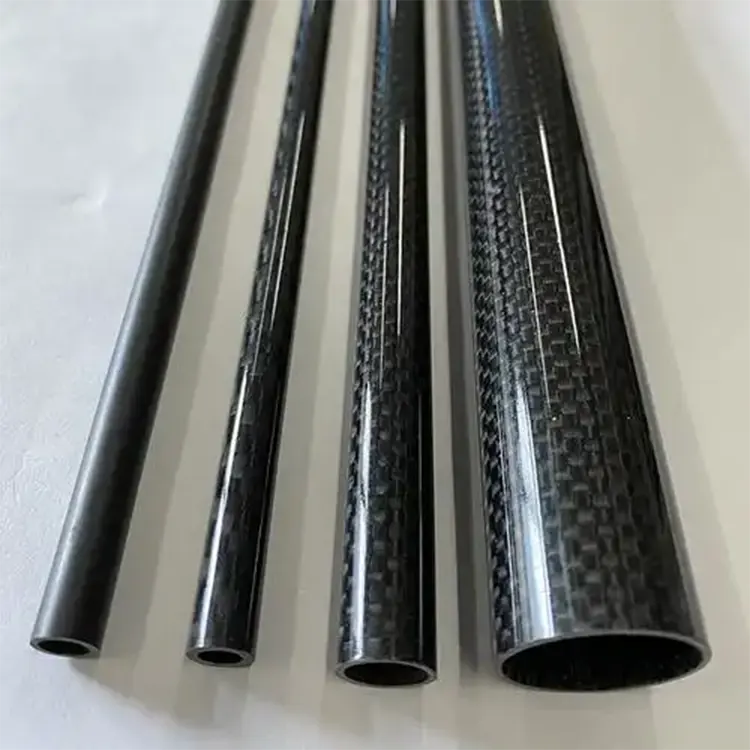
Accurate applicable scenarios
This product is not limited to conventional planar reinforcement, but focuses on reinforcing complex irregular structures. It is a complementary upgraded material for unidirectional carbon cloth, and its core applicable scenarios are as follows:
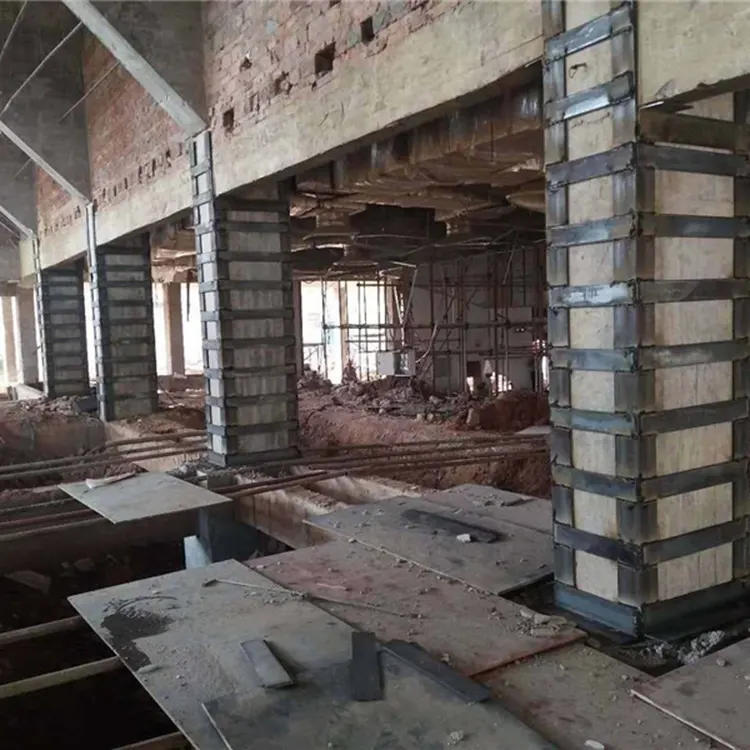
1. Reinforcement of irregular structures in buildings: bi-directional force reinforcement of circular beams and columns, curved floor slabs, corner nodes, and irregular components;
2. Multi directional crack repair project: closure and reinforcement of floor mesh cracks, cross cracks between beams and columns, and irregular cracks in walls;
3. Renovation of old civilian buildings: overall seismic reinforcement of old residential areas, self built houses, and school buildings, multi-dimensional improvement of structural stability;
4. Industrial special reinforcement: Comprehensive reinforcement of irregular equipment bases, curved concrete components, and corroded structures in the factory building;
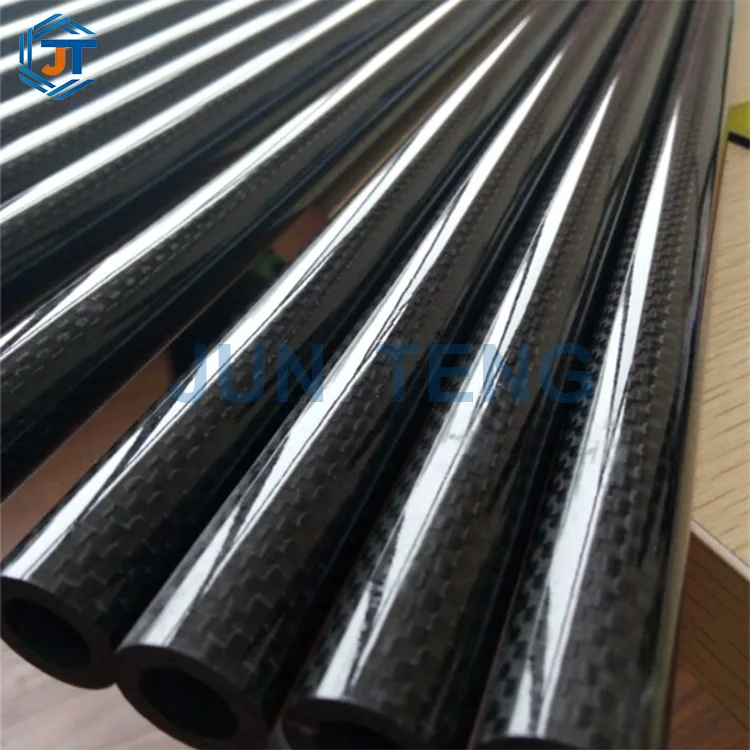
5. Application of composite materials: Industrial molds, lightweight components, and woven reinforcement of irregular composite product substrates.
Construction suggestion: Use JUN TENG special impregnating adhesive, base adhesive, and repair adhesive together. After polishing the base surface flat, lay it to maximize the adhesion and reinforcement strength, and prevent hollowing and delamination problems.
Key points of standardized construction
Engineering Grade Carbon Fiber Fabric for Structural Reinforcement has higher flexibility and stronger adhesion. The construction focus is on complete infiltration and wrinkle free paving. The core process is simple and efficient:
1. Base surface treatment: Polish and remove floating dust, oil stains, and loose surfaces, repair cracks and potholes, and ensure that the base surface is flat and solid;
2. Brushing bottom glue: evenly roll coat the matching epoxy bottom glue, seal the loose base surface, and improve the adhesion between the glue and the base layer;
3. Cutting carbon cloth: Accurately cut according to the dimensions of the irregular structure, leaving a bonding margin to avoid pulling and deformation;
4. Glue blending and impregnation: Mix the impregnating glue according to the standard ratio, evenly apply the base surface and carbon cloth to ensure complete fiber infiltration;
5. Laying and rolling: Adhere to curved surfaces, corners, and irregular base surfaces, repeatedly roll with a dedicated roller to remove all bubbles and excess colloids;
6. Curing: Allow to stand at room temperature for 24 hours for initial curing, and fully cure within 7 days to achieve the designed bi-directional stress strength.
Factory Advantages
Our facility is equipped with a full suite of automated warp-and-weft weaving machines, tension calibration equipment, areal weight testers, and aging resistance testing machines. Production strictly adheres to the GB 50367 Code for Design of Strengthening Concrete Structures. Every roll of our Engineering Grade Carbon Fiber Fabric for Structural Reinforcement undergoes a rigorous three-step quality inspection process: tension balance testing, warp/weft strength verification, and resin penetration/bonding testing.
Leveraging years of practical engineering experience, we have optimized the plain weave density and fiber alignment structure. This resolves common issues found in standard bidirectional fabrics, such as loose weaves, fiber misalignment, poor resin impregnation, and wrinkling. Over the past 18 years, our products have been successfully applied in thousands of complex structural reinforcement projects—including curved components, irregular beams and columns, joint strengthening, and multidirectional crack repair. Proven through long-term real-world application, our fabrics deliver stable reinforcement performance and ensure trouble-free project acceptance.
JUN TENG steadfastly upholds the production principles of "precision weaving, transparent specifications, and controllable quality," eliminating industry malpractices such as skipped stitches, uneven weave density, and inflated strength ratings.
All our carbon fiber fabrics are woven from virgin carbon fiber filaments—free from recycled waste or blended impurities. Each batch is sampled and archived to ensure full traceability. We offer a one-stop solution combining procurement and technical services, featuring immediate shipment from stock and flexible purchasing options; for large-scale projects, we provide comprehensive documentation for tender qualification. Both new and existing clients can request free samples for testing. Our professional engineers offer one-on-one online guidance to address installation challenges—such as working with complex curved surfaces, ensuring compatibility with multi-axial loading, and managing intricate application techniques. Operating on a direct-from-factory model that balances high quality with cost-effectiveness, we are a trusted choice for structural reinforcement and complex composite material projects worldwide.
FAQ
Q1: Plain weave vs. twill vs. satin—what's the difference? Which one should I choose?
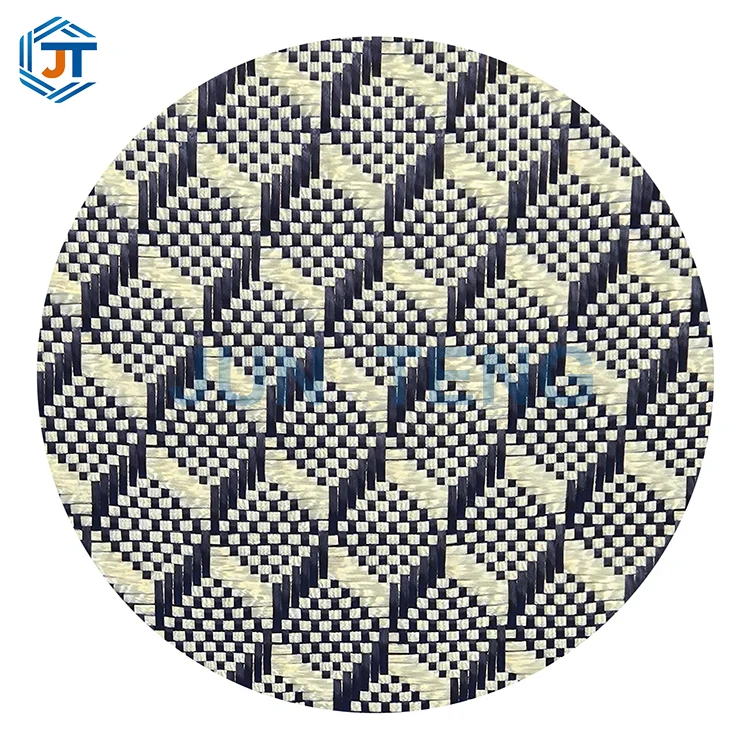
Plain weave (our product): fibers cross over and under alternately—flattest surface, best stability, ideal for curved surfaces and thin shells where smooth finish matters.
Twill weave: fibers float over 2-3 threads—better drape, moderate surface smoothness, good for general-purpose complex curves.
Satin weave: fibers float over 4+ threads—lowest crimp, highest strength conversion, best drape, but surface is less flat.
Choose plain weave when surface flatness, void-free bonding on curves, and decorative finish are priorities. Choose satin for maximum strength on flat or large-radius components.
Q2: Can plain weave bidirectional fabric be used for curved surfaces and irregular components?
Yes—that's its core advantage. The plain weave structure creates a stable, flat fabric surface that conforms tightly to curved beams, circular columns, arch surfaces, and beam-column joints without wrinkling or bridging. Its balanced crimp provides enough flexibility for complex shapes while maintaining surface flatness for full resin penetration and void-free bonding.
Q3: Plain weave vs. unidirectional—when to use which?
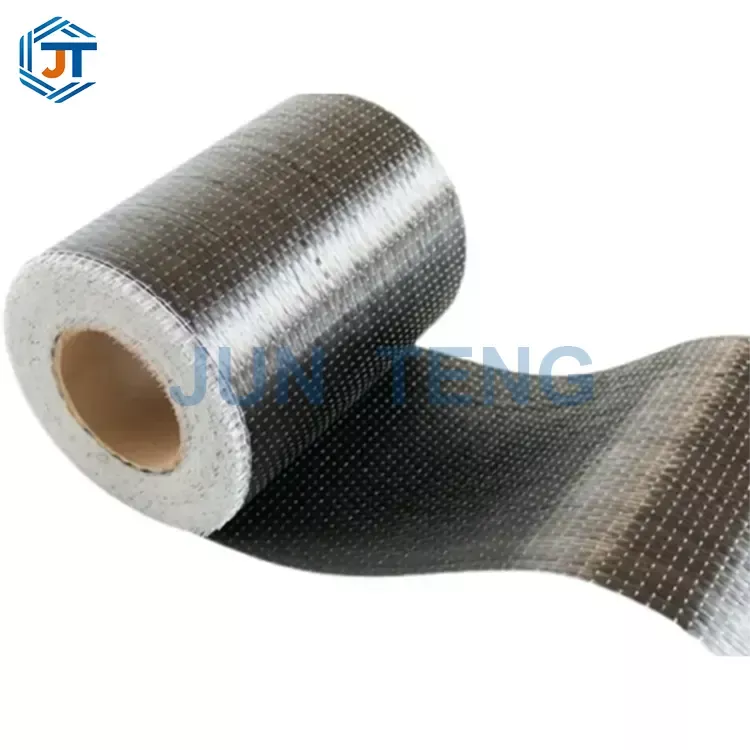
Unidirectional for clear single-direction stress (beam bending, column shear)—puts maximum strength along one axis.
Plain weave bidirectional for multi-directional or unclear stress (floor slabs, shear walls, curved surfaces, crack repair)—provides balanced strength in both warp and weft directions.
Quick rule: one clear stress direction→unidirectional. Multiple or unknown directions→bidirectional plain weave.
Q4: What is the surface flatness advantage of plain weave?
Plain weave has the flattest surface among all weave types. This ensures:
- Full resin penetration with no dry spots
- Void-free bonding even on curved surfaces
- Smooth finish after plastering or painting—no texture bleed-through
- No localized stress concentration from uneven fabric surface
Hot Tags: Engineering Grade Carbon Fiber Fabric for Structural Reinforcement, Manufacturer, Supplier, Wholesale
Send Inquiry
Contact Info
-
Address
East of Chongde 11th Road, East Zone, Economic and Technical Development Zone Project, Dezhou City, Shandong Province, China
-
Tel
-
E-mail
Welcome global purchasers to submit your demand via this inquiry page of JUN TENG carbon fiber supplier in China. You can leave your requirements on carbon fiber reinforcement fabric, woven carbon fiber fabric, carbon-carbon materials, specification customization, sample service and bulk order price. Our professional engineers will reply with tailored solutions and quotation within 24 hours.