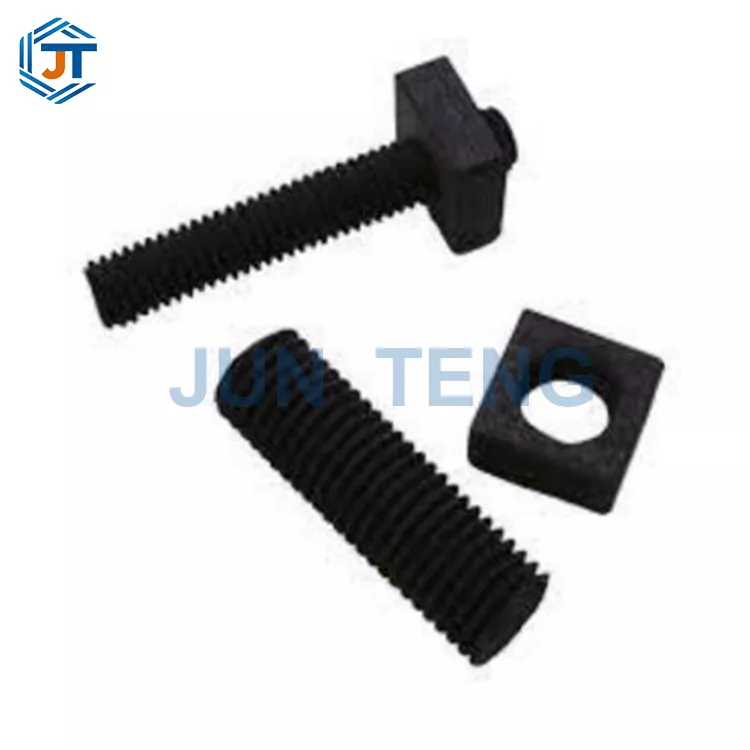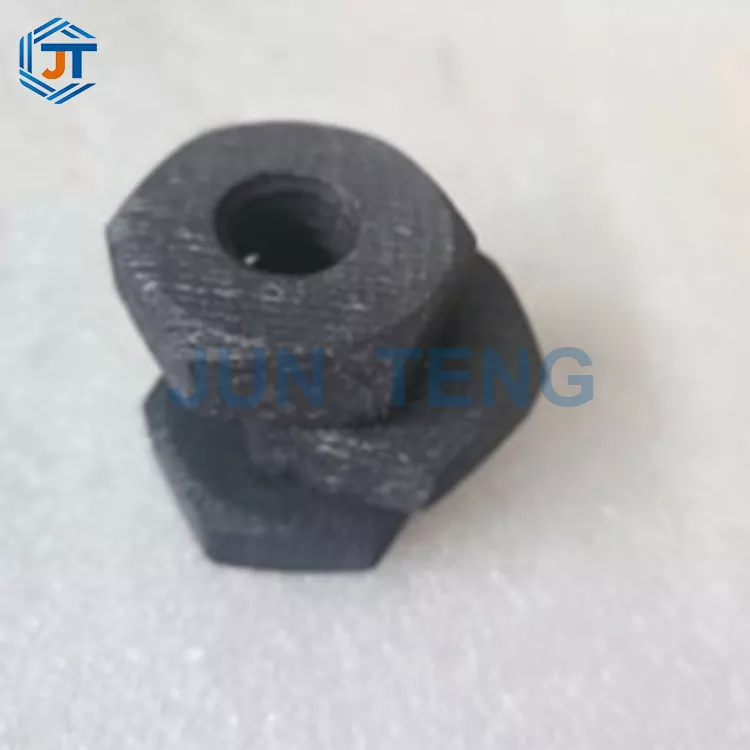


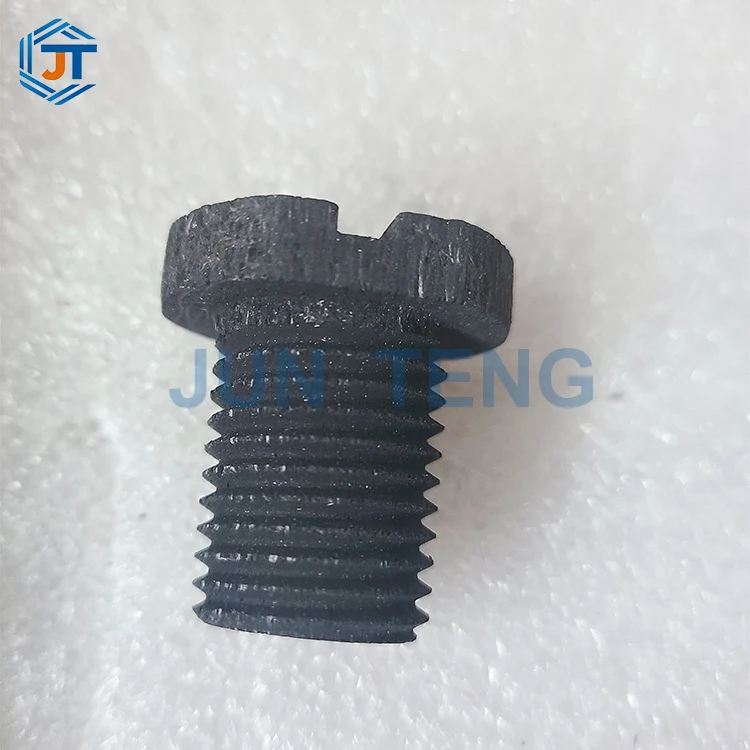
Carbon Carbon Bolts
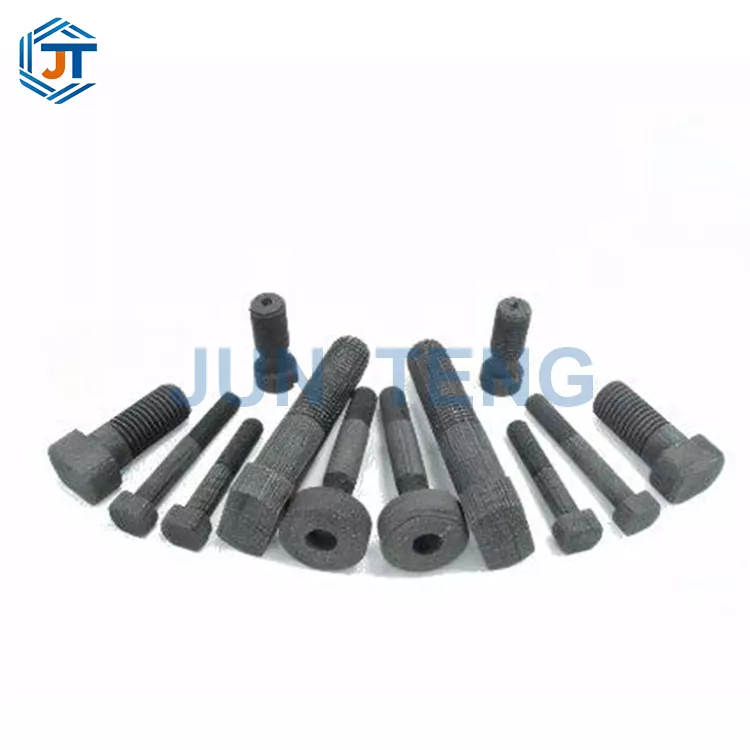
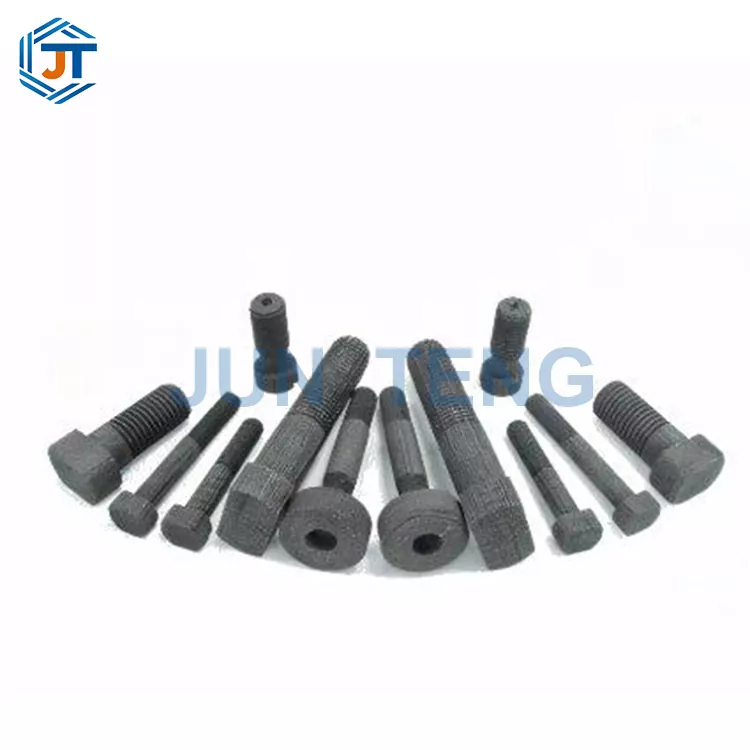
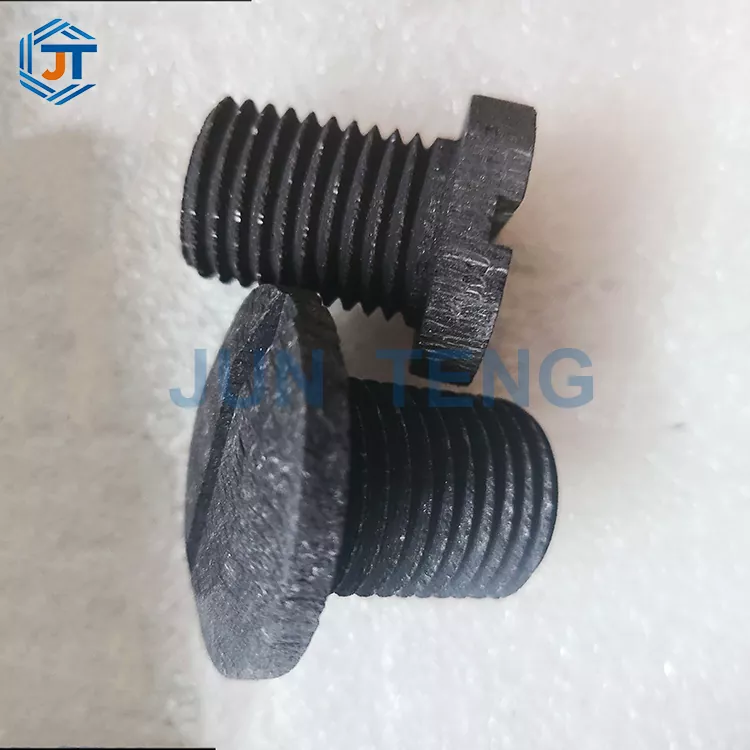
JUN TENG has 18 years of experience in carbon material production, specializing in the supply of high-temperature resistant Carbon Carbon Bolts, suitable for high-temperature thermal field fastening scenarios such as single crystal furnaces and vacuum heat treatment. The product has undergone multiple graphitization and purification processes, with low thermal expansion, high purity without metal contamination, lightweight and heat-resistant. It is precision CNC machined with threads that are not easy to slip, ensuring stable and reliable quality.
Carbon Carbon Bolts, also known as Carbon Carbon Composite High Temperature Tightening Bolts, are made by integrating continuous carbon fiber preforms and high-purity matrix carbon through multiple impregnation, carbonization, and graphitization processes. They are specialized fasteners for vacuum and inert gas environments above 1000℃, distinguishing them from ordinary carbon fiber plastic bolts and metal high-temperature bolts.
Our factory is a domestic source manufacturing factory for carbon and carbon materials, with a complete set of carbon and carbon forming and precision CNC machining production lines. Our R&D team has been focusing on the research and development of high-temperature carbon and carbon fasteners for 12 years, and has completed over 300 customized projects for single crystal furnaces, vacuum sintering furnaces, and aviation thermal fields. We have launched a standardized and customized series of carbon and carbon bolts to replace molybdenum bolts, tungsten bolts, and high-temperature alloy bolts, greatly reducing equipment weight and maintenance costs.
Core Technical Parameters Table
|
Test Item |
Unit |
Tested Value of Standard Carbon-Carbon Bolt |
Contrast: 310S Superalloy Bolt |
|
Bulk Density |
g/cm³ |
1.62~1.70 |
7.98 |
|
Normal Temperature Tensile Strength |
MPa |
≥72 |
520 |
|
High-temperature Compressive Strength (1800℃, Inert Atmosphere) |
MPa |
≥135 |
Failure & Softening |
|
Interlaminar Shear Strength |
MPa |
≥8.5 |
No delamination risk |
|
Thermal Expansion Coefficient |
10⁻⁶/K |
0.8~1.3 |
16.5 |
|
Long-term Service Temperature (Inert Atmosphere) |
℃ |
2200 |
≤850 |
|
Ash Content |
ppm |
≤600 |
High metal impurities |
|
Conductive Property |
- |
Conductive & Non-magnetic |
Magnetic, easy to cause electromagnetic interference |
|
Single Weight (M8×50mm) |
g |
3.2 |
26.7 |


Five core advantages and selling points of the product
1. Ultra high temperature resistance, stable use in an inert environment of 2200℃. Metal high-temperature bolts undergo creep, softening, and fracture at 800℃. This Carbon Carbon Bolt has undergone three rounds of graphitization purification, and has been used in single crystal furnaces and vacuum heat treatment furnaces for a long time without deformation or creep. More than a thousand photovoltaic single crystal enterprises have undergone thermal field transformation and testing, and its service life has been increased by more than four times.
2. Extremely lightweight, with a weight reduction of over 70% and a density of only 1/5 of stainless steel, significantly reducing the overall weight of the high-temperature thermal field, minimizing furnace load deformation, and reducing the load on equipment lifting mechanisms. Fasteners are the preferred choice for thermal protection of aircraft and lightweight retrofitting of new energy high-temperature reactor components.
3. Extremely low thermal expansion, preventing high temperature looseness. The thermal expansion coefficient is close to graphite, and it has a high degree of thermal matching with graphite crucibles and carbon plates. Under temperature changing environments, there will be no problem of increased thread clearance or bolt loosening, and there is no need for frequent secondary tightening, reducing the frequency of equipment shutdown and maintenance.
4. High purity, no impurities, zero metal pollution, all carbon components, no metal precipitation, suitable for semiconductor CVD chambers and photovoltaic monocrystalline silicon growth environments, avoiding molybdenum and iron metal impurities from contaminating silicon wafers, greatly improving product yield.
5. Strong resistance to chemical corrosion, resistant to acid and alkali/molten media, does not react with strong acids, weak bases, molten silicon, or metal vapors, no volatilization or precipitation under vacuum, argon, or nitrogen atmospheres, suitable for corrosive high-temperature reaction equipment.


Introduction to the complete production process
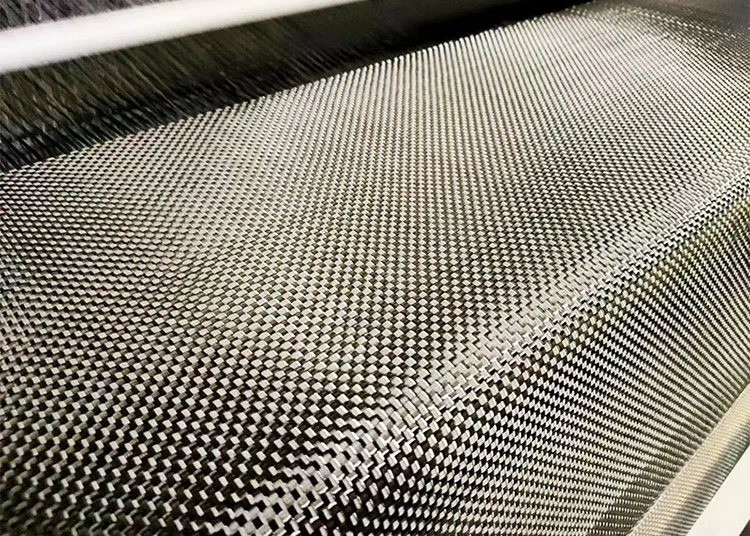
1. Carbon fiber prefabricated weaving molding: 12K continuous polyacrylonitrile based carbon fiber three-dimensional weaving is selected to ensure fiber continuity without cutting, improve overall tensile and shear performance, and distinguish low-end products molded from crushed fibers.
2. Multiple asphalt impregnation+carbonization: high-pressure vacuum impregnation of asphalt matrix carbon, segmented carbonization at 1000℃, filling fiber gaps, improving overall density, and reducing porosity.
3.2800℃high-temperature graphitization purification: Ultra high temperature graphitization removes sulfur and metal ash impurities, increasing carbon purity to over 99.9%, suitable for high-purity high-temperature conditions.
4. Five axis CNC precision thread machining: Special diamond cutting tools are used for low-speed milling of threads, with complete thread profiles and no broken edges. The matching carbon nut is tightly engaged without slipping.
5. Optional SiC anti-oxidation coating process: Customized silicon carbide coating can be used under aerobic conditions to increase the oxidation temperature to 1600℃and expand the application scenarios.


Mainstream application scenarios and segmented uses
1. Photovoltaic semiconductor high-temperature equipment
Usage: Fixing of graphite thermal field in single crystal furnace, fastening of polycrystalline silicon reduction furnace bracket, internal connection of CVD deposition chamber, bolts for graphite insulation felt pressure plate; Solve the problem of impurity contamination of silicon material and high-temperature creep loosening pain points in metal bolts.
2. Industrial vacuum heat treatment furnace
Usage: Fixing internal fixtures and jigs for vacuum sintering furnaces, carbonization furnaces, and graphitization furnaces; Replace molybdenum screws, reduce procurement costs, and prevent molybdenum volatilization from contaminating workpieces.
3. Aerospace hypersonic thermal field
Usage: Engine combustion chamber insulation, aircraft thermal protection layer fastening; Dual requirements of lightweight and high temperature resistance, reducing the overall load of the machine.
4. New energy and fuel cell equipment
Usage: Fixed bipolar plates for high-temperature fuel cells and sintering fixtures for solid-state batteries; Non magnetic, conductive, corrosion-resistant, suitable for electrical and chemical high-temperature environments.
5. Special metallurgy and laboratory high-temperature instruments
Usage: Molten metal crucible bracket, high-temperature atmosphere tube furnace, internal fastening component of scientific research thermogravimetric analyzer.


Standard usage and installation instructions
1. Before assembly, clean the graphite dust in the threaded holes of bolts and nuts, and apply high-purity graphite lubricating powder thinly to the threads to reduce meshing friction damage.
2. Torque wrenches must be used, and brute force wrenches and pneumatic tools are strictly prohibited; The tightening torque of carbon bolts of the same specification is only 1/3 of that of metal bolts to prevent thread cracking.
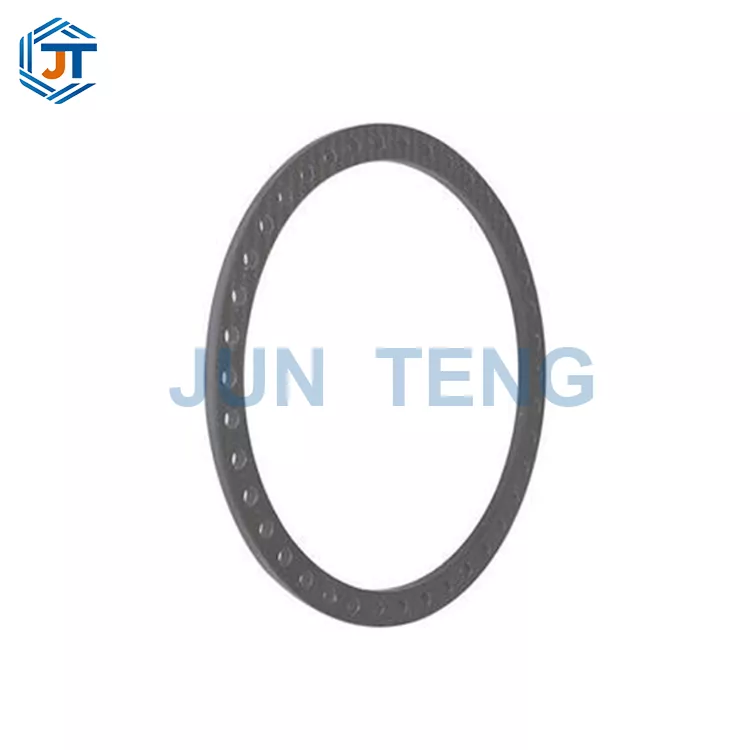
3. Carbon carbon gaskets and graphite soft pads are preferred for matching gaskets. It is forbidden for hard metal gaskets to directly contact the bolt head to avoid stress concentration and cracking.
4. Tighten multiple bolts symmetrically, apply force evenly in 2-3 times, with a single torque not exceeding 60% of the rated value, to avoid uneven stress on the plate.
5. SiC coated products should be selected for long-term use in aerobic environments, while uncoated products can only be used in vacuum and inert gas environments.


Precautions for use
1. The material properties are brittle, and it is forbidden to strike or impact the bolt shaft and threads, as it may cause hidden cracks when dropped.
2. Long term use in air or oxygen-containing atmospheres above 800℃without protection is prohibited, as it will slowly oxidize and cause damage.
3. It is not suitable for frequent and repeated disassembly and assembly, as multiple disassembly will wear the threads. It is recommended to use it with disposable graphite gaskets.
4. Do not directly assemble with stainless steel or titanium alloy metal parts, as they are prone to galvanic corrosion at high temperatures and require the installation of graphite isolation gaskets.
5. The storage environment should be kept dry and moisture-proof. Long term humidity can adsorb water vapor, and there is a risk of slight expansion and cracking when used at high temperatures.
Customer core concerns pain points and corresponding solutions
|
Customer Pain Points |
Solutions |
|
Frequent fracture and creep loosening of high-temperature metal bolts |
Carbon-carbon bolts achieve zero creep at 2200℃ with low thermal expansion, keeping stable after one-time fastening |
|
Silicon wafer and semiconductor wafer contamination caused by metal fasteners |
Full high-purity carbon structure with ash content ≤600ppm, no metal ion precipitation |
|
Excessive thermal field weight leading to high equipment lifting load |
70% weight reduction reduces furnace bearing load and extends mechanical service life |
|
High cost and long lead time of molybdenum & tungsten fasteners |
In-house mass production with stock standard parts, 7-day customization lead time, 50% lower comprehensive usage cost |
|
Thread seizure and difficult disassembly under high temperature |
Professional high-purity graphite lubrication process prevents thread adhesion for smooth disassembly |
Authoritative qualifications and testing certification
1. Third party material mechanical performance testing report (complete set of data on tension, compression, and thermal expansion, stamped with CNAS laboratory seal)
2. Certificate of purity and ash content testing for carbon carbon materials, which can provide a factory inspection certificate for accompanying goods
3. High temperature working condition temperature resistance simulation test report (stability test at 1800℃for 200 hours)
4. ISO9001 Production Quality Management System Certification, Factory Safety Production Standardization Certificate
5. Qualification for admission and filing of aerospace new material suppliers, and certification of qualified suppliers for photovoltaic equipment manufacturers
6. Each batch of products comes with a factory size and appearance sampling record form, supporting customer incoming material re inspection
Frequently Asked Questions
Q1: What is the difference between Carbon Carbon Bolts and regular carbon fiber plastic bolts?
A: Carbon fiber plastic has a temperature resistance of only 200℃, and the resin decomposes and evaporates at high temperatures; Carbon carbon resin free, stable in an inert environment of 2200℃, specifically designed for high-temperature industrial scenarios, the two are completely incompatible in terms of temperature and strength.
Q2: Can aerobic environment be used directly?
A: The uncoated version is only available for inert/vacuum use; If high-temperature air conditions are required, SiC anti-oxidation coating can be customized to withstand up to 1600℃oxidation environment.
Q3: Can non-standard sizes and special tooth shapes be customized?
A: Support full specification customization, M3-M24 standard thread, non-standard fine/coarse thread, extension rod, countersunk head, T-shaped head can all be CNC machined, with a minimum order of 50 pieces.
Q4: How long does it take to replace it after use?
A: Normal use under vacuum inert conditions for 12-24 months; The working condition of aerobic coating is 6-12 months, and an exclusive replacement cycle plan can be provided according to the customer's working condition.
Q5: Can the thread be repaired after slipping?
A: Carbon carbon threads cannot be repaired again after wear and tear. It is recommended to use spare bolts for regular maintenance and replacement.
Transaction guarantee and full process after-sales service
A. Transaction protection
1. The factory signs a contract with the public, supports the stamping of bidding qualifications, and provides value-added tax special invoices;
2. Free sample shipping, with only a small logistics fee charged. If the sample fails the test, the full amount of the sample payment will be refunded;
3. Sign a quality assurance agreement for a large number of orders, specifying the return and exchange terms for non-conforming performance and size;
4. Support third-party on-site inspection of goods, and accompany visitors throughout the visit to carbon production lines and laboratory testing processes.
B. After sales service system
1. One on one matching of working conditions by technical engineers, providing free guidance on tightening torque and assembly process;
2. The product comes with a 6-month warranty, and free replacement will be provided if cracking or performance does not meet the standards caused by non-human impact or overheating;
3. Lifetime technical support, free fastener replacement solutions can be provided for equipment renovation and working condition upgrades;
4. Fast delivery nationwide, standard specifications in stock can be shipped out within 48 hours, and customized parts can be tracked and processed with real-time feedback on progress;
5. Establish exclusive files for bulk old customers, regularly follow up on equipment usage status, and predict the wear and tear replacement cycle in advance.
As a leading enterprise specializing in the manufacturing of Carbon Carbon Bolts, we independently complete the weaving, impregnation, graphitization and precision processing of carbon carbon bolts. Relying on long-term high-temperature mechanical test data from the laboratory, thousands of times of high-temperature equipment application experience, a complete set of authoritative testing qualifications, and a standardized performance and after-sales service system, we provide stable, high-purity, durable high-temperature fastening solutions for the photovoltaic, semiconductor, aerospace and heat treatment industries. All industry purchasing and R&D engineers are welcome to request the complete test reports and sample tests.
Hot Tags: Carbon Carbon Bolts, Manufacturer, Supplier, Custom
Send Inquiry
Contact Info
-
Address
East of Chongde 11th Road, East Zone, Economic and Technical Development Zone Project, Dezhou City, Shandong Province, China
-
Tel
-
E-mail
Welcome global purchasers to submit your demand via this inquiry page of JUN TENG carbon fiber supplier in China. You can leave your requirements on carbon fiber reinforcement fabric, woven carbon fiber fabric, carbon-carbon materials, specification customization, sample service and bulk order price. Our professional engineers will reply with tailored solutions and quotation within 24 hours.