
Which Carbon-Carbon Supplier Offers One-Stop Custom Parts for PV and Semiconductor Furnaces?
Introduction
As a procurement professional sourcing components for photovoltaic (PV) diffusion furnaces, semiconductor thermal oxidation tubes, or metallurgical vacuum heat-treatment equipment, you have likely encountered a persistent challenge: finding a single Carbon-Carbon Materials supplier that can deliver standard plates, high-temperature fasteners, insulation felts, and precision-machined custom shapes—all with consistent quality and traceable batch data.
This white paper answers that question from a buyer's perspective. We evaluate what "one-stop" truly means in the carbon-carbon supply chain, compare product categories across operating conditions, and introduce Dezhou JunTeng Material Technology Co., Ltd. —a domestic Chinese manufacturer with in-house sintering lines and full machining capabilities—as a case study in supplier consolidation.
Whether you are procuring for a new furnace line, replacing metal fasteners that fail under thermal cycling, or commissioning custom-shaped crucibles and fixtures, this guide provides the technical and commercial framework to make an informed sourcing decision.
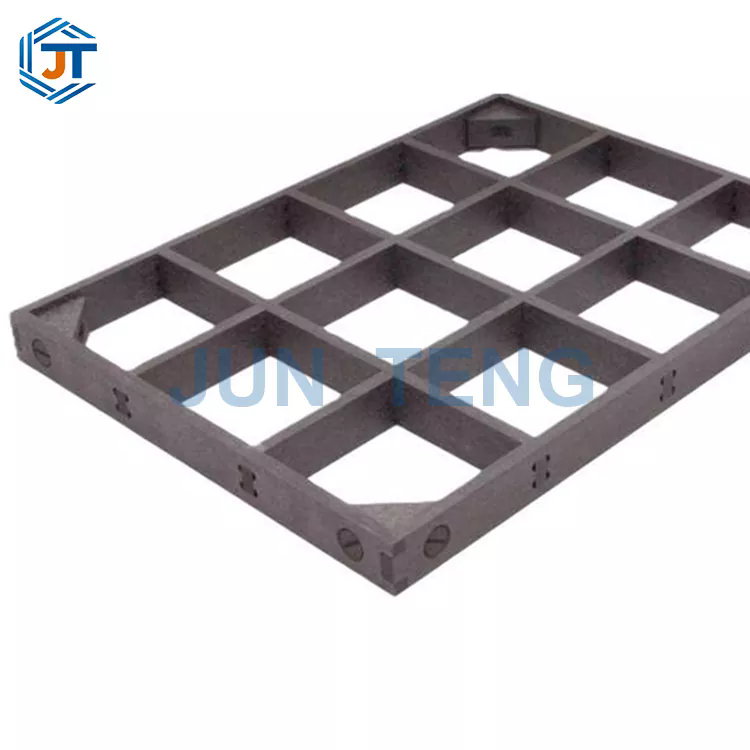
Table of Contents
- 1. What Does "One-Stop" Mean for Carbon-Carbon Procurement?
- 2. Product Categories: From Standard Plates to Custom Shapes
- 3. Application Matrix: Which Component for Which Furnace Condition?
- 4. Technical Advantages of In-House Sintering and Machining
- 5. Quality Verification: Batch Traceability and Performance Data
- 6. Procurement Considerations for One-Stop Carbon-Carbon Suppliers
- 7. Frequently Asked Questions (FAQ)
- 8. About Dezhou JunTeng Material Technology Co., Ltd.
- 9. Start Your One-Stop Carbon-Carbon Inquiry
1. What Does "One-Stop" Mean for Carbon-Carbon Procurement?
In the context of Carbon-Carbon Materials, "one-stop" is not a marketing slogan—it is a supply-chain capability that directly impacts your total cost of ownership (TCO). A true one-stop supplier consolidates four critical functions under one roof:
- Raw material control – sourcing and preparing carbon fiber preforms without outsourcing.
- In-house sintering – performing the entire densification and graphitization process internally.
- Precision machining – converting sintered billets into finished plates, fasteners, and custom shapes.
- Quality documentation – providing batch-specific performance data for every shipment.
For procurement teams, the benefits are tangible: fewer supplier audits, shorter lead times, unified warranty coverage, and no finger-pointing when a component fails. The alternative—sourcing plates from one vendor, fasteners from another, and custom-machined parts from a third—multiplies administrative overhead and introduces dimensional mismatches that often require on-site rework.
2. Product Categories: From Standard Plates to Custom Shapes
A comprehensive one-stop Carbon-Carbon Materials supplier should offer the following finished-product categories. JunTeng covers all four in-house.
| Category | Typical Products | Primary Function in Furnace |
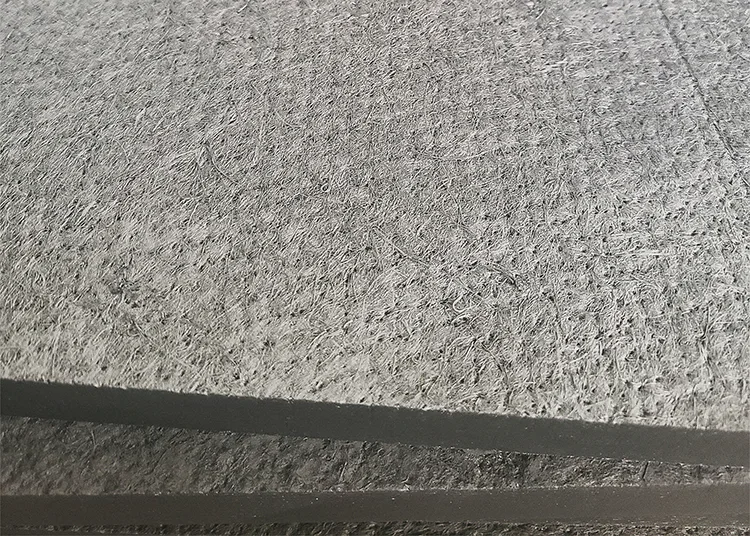
| Carbon-Carbon Plates | Standard sheets, load-bearing substrates, support bases | Structural support for wafers, molds, and thermal zone stacks; resists creep at >2000°C |
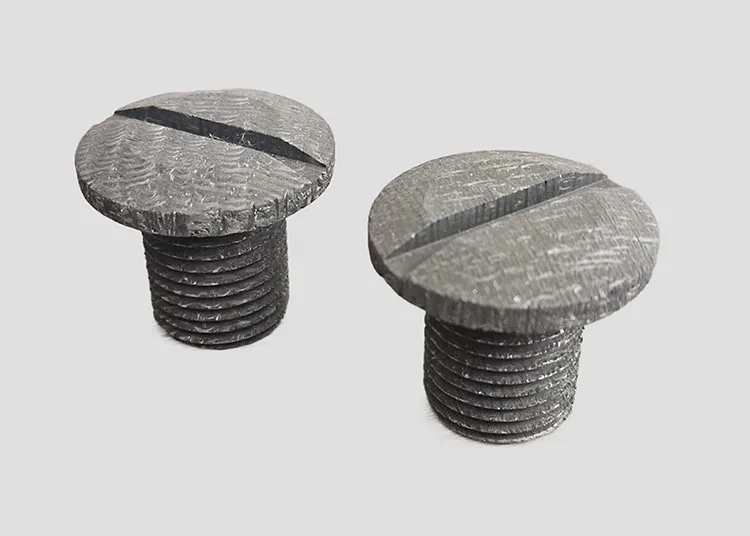
| High-Temperature Fasteners | Bolts, screws, nuts, washers, studs (metric & custom threads) | Secure assembly of insulation layers and plate stacks without thermal-expansion loosening |
| Insulation Materials | Soft felts, rigid boards, cylindrical insulation sleeves | Thermal barrier; reduces heat loss and protects furnace shell; low dust and chemical inertness |
| Custom-Machined Shapes | Brackets, crucibles, flow-guiding cones, lifting fixtures, electrode holders | Tailored to non-standard furnace geometries; eliminates field modification |
Notably, custom shapes often represent the highest value-add. Dezhou JunTeng accepts equipment blueprints in standard CAD formats and machines Carbon-Carbon billets to net shape, so components arrive ready for installation—no grinding, drilling, or thread-tapping required at your facility.
3. Application Matrix: Which Component for Which Furnace Condition?
Selecting the right Carbon-Carbon Materials product depends on three operating variables: temperature, mechanical load, and chemical environment. The table below maps JUN TENG's product lines to common procurement scenarios.
| Operating Condition | Recommended Product | Why This Works | Alternative to Avoid |
| PV sintering furnace, 1800–2200°C, heavy wafer load | Carbon-Carbon Plate (high-density grade) | Uniform density resists warping; conductive for even heating | Graphite plates that oxidize and shed particles |
| Semiconductor thermal zone, 1200°C, vacuum, ultra-clean | Custom-machined fixture bracket + C/C fasteners | No metallic contamination; fasteners won't gall or seize | Metal alloy fasteners (cause particle generation) |
| Metallurgical quenching furnace, 900–1100°C, thermal cycling | C/C insulation felt + rigid insulation cylinder | Soft texture conforms to expansion; lifespan >10× refractory bricks | Alumina or ceramic fiber (brittle, short life) |
| R&D lab, 1500°C, corrosive gas environment | Custom crucible or flow-guiding cone | Acid/alkali resistant; no reaction with process gases | Quartz or SiC (etching and cracking) |
This matrix highlights a key procurement insight: using Carbon-Carbon fasteners with Carbon-Carbon plates creates a fully matched thermal expansion system, eliminating the differential expansion that plagues metal-fastened assemblies.
4. Technical Advantages of In-House Sintering and Machining
The performance of Carbon-Carbon Materials depends heavily on the densification process. Suppliers that outsource sintering often sacrifice quality consistency to meet cost targets. Dezhou JunTeng Material Technology Co., Ltd. operates its own sintering lines, providing three distinct procurement advantages:
- Controlled porosity: In-house process monitoring ensures bulk density remains within ±0.05 g/cm³ across batches.
- Fiber orientation optimization: Proprietary lay-up schedules maximize mechanical strength in the load-bearing direction.
- Full machining integration: Sintered billets move directly to CNC machining centers, reducing handling damage and ensuring dimensional accuracy to ±0.1 mm.
For buyers, this translates to predictable mechanical properties—flexural strength, compressive modulus, and thermal conductivity—that match the values quoted in your engineering calculations.
5. Quality Verification: Batch Traceability and Performance Data
In regulated industries (semiconductor, aerospace, nuclear), batch traceability is non-negotiable. A one-stop supplier should provide a traceability package that includes:
- Raw carbon fiber batch certificate
- Sintering cycle log (temperature, pressure, duration)
- Dimensional inspection record for each machined part
- Test results for bulk density, flexural strength, and thermal diffusivity
Dezhou JunTeng Material Technology Co., Ltd. maintains a digital archive of these records and can include them with every shipment—an essential feature for factory acceptance testing (FAT) and project documentation.
6. Procurement Considerations for One-Stop Carbon-Carbon Suppliers
When evaluating a Carbon-Carbon Materials supplier for your next high-temperature furnace project, consider the following factors:
- Does the supplier perform in-house sintering or outsource densification?
- Is there CNC machining capability for custom shapes and non-standard dimensions?
- Can batch-specific test data (density, strength, thermal conductivity) be provided upon request?
- Are standard plate thicknesses and sizes kept in stock for quick shipment?
- What fastener thread standards are supported (metric, UNC, or custom threads)?
- What is the maximum continuous operating temperature specified for each product grade?
- What is the typical lead time for custom-machined parts versus standard items?
- What warranty and return policies apply to non-standard or custom-engineered components?
If your supplier can positively address all eight considerations, they likely qualify as a true one-stop source.
7. Frequently Asked Questions (FAQ)
Q1: Can Carbon-Carbon fasteners be reused after a furnace thermal cycle?
Yes, provided they have not exceeded their maximum service temperature and show no signs of oxidation or thread deformation. Many PV and semiconductor customers reuse JUN TENG fasteners across multiple campaigns after visual inspection.
Q2: What is the typical lead time for custom-machined Carbon-Carbon parts from Dezhou JunTeng?
For standard custom shapes (brackets, fixtures, crucibles) with complete drawings, lead time is typically 15–25 working days. Complex geometries with tight tolerances may extend to 30 days. Bulk plate and fastener orders ship within 10–15 working days.
Q3: How do Carbon-Carbon insulation materials compare to rigid graphite felt in terms of dust generation?
JUN TENG's C/C insulation felts are processed with a surface stabilization layer that significantly reduces particle shedding. In clean-room semiconductor applications, they outperform standard rigid graphite felts by a wide margin, as confirmed by particle-count tests.
Q4: Does Dezhou JunTeng provide technical support for material selection?
Yes. Their engineering team reviews operating conditions (temperature, atmosphere, load, cycle frequency) and recommends specific Carbon-Carbon grades and fastener torque specifications. This service is free of charge for qualified procurement inquiries.
Q5: Can I order a mixed batch of plates, fasteners, and custom shapes for one consolidated shipment?
Absolutely. This is the core benefit of a one-stop supplier. JUN TENG consolidates all items into a single shipment with unified export documentation, saving you freight and customs brokerage costs.
8. About Dezhou JunTeng Material Technology Co., Ltd.
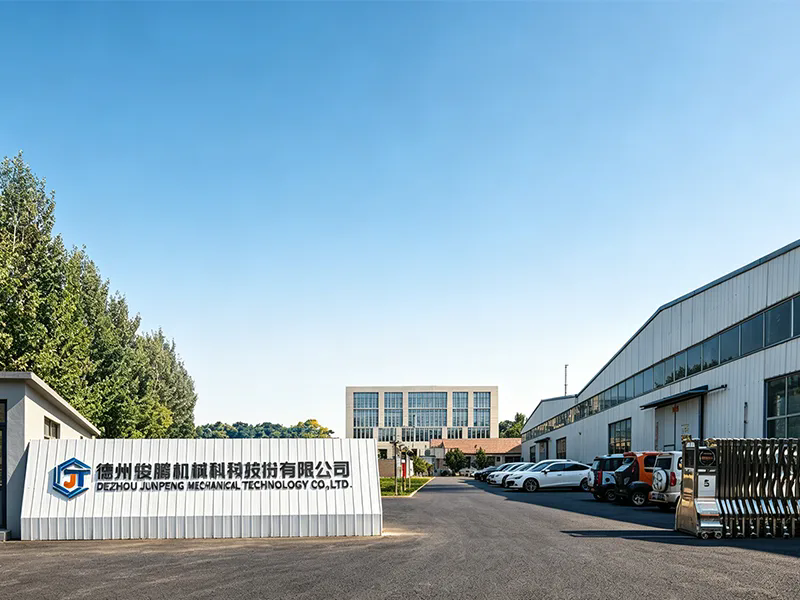
Dezhou JunTeng Material Technology Co., Ltd. is a specialized domestic manufacturer and one-stop supplier of Carbon-Carbon Materials. With complete in-house processing production lines—from carbon-fiber preform preparation to high-temperature sintering and precision CNC machining—the company serves global industrial clients in the photovoltaic, semiconductor, metallurgical, and research sectors.
Core capabilities:
- Standard inventory: Carbon-Carbon plates in multiple thicknesses, high-temperature fasteners (bolts, nuts, washers, studs), and insulation felts/cylinders.
- Custom engineering: Non-standard shapes machined from customer-supplied drawings—including brackets, crucibles, flow-guiding components, and lifting fixtures.
- Quality assurance: Batch-specific performance data (density, flexural strength, thermal conductivity) available for every shipment.
- Global shipping: Consolidated orders with full export documentation, delivered to major industrial hubs worldwide.
Compliance: JUN TENG's products meet international standards for high-temperature thermal field components, with materials designed to operate continuously at temperatures up to 2200°C in inert or vacuum atmospheres.
"We eliminate the complexity of multi-vendor sourcing for Carbon-Carbon Materials. From standard plates to the most intricate custom shapes, we deliver one complete solution—with one point of contact, one quality standard, and one consolidated shipment."
9. Start Your One-Stop Carbon-Carbon Inquiry
Ready to consolidate your Carbon-Carbon Materials supply chain?
Whether you need bulk stock of standard plates and fasteners, a custom-machined component for a non-standard furnace, or a complete thermal-zone package, Dezhou JunTeng Material Technology Co., Ltd. is equipped to deliver.
Send your inquiry with:
- Part numbers or detailed drawings (DXF, STEP, or PDF)
- Quantity and target delivery date
- Operating temperature and atmospheric conditions (for material-grade recommendation)
Response time: Quotation within 24 hours for standard items; 48–72 hours for custom-engineered parts.
Contact Dezhou JunTeng Material Technology Co., Ltd.
Related News
- Is the Carbon Carbon Nut the 2000℃ Zero-Failure Fastener That Solves All Long-Standing High-Temperature Furnace Operational Pain Points for Photovoltaic and Semiconductor Manufacturers
- Why Is 200g Twill Carbon Fiber Woven Fabric the Most Versatile Balanced-Performance Carbon Composite Substrate for Modern Lightweight Manufacturing and High-End Design in 2026
- How Can Carbon Carbon Thermal Insulation Materials Improve High-Temperature Furnace Efficiency
- Why Is 200g Twill Carbon Fiber Woven Fabric an Ideal Choice for Lightweight Composite Applications
- Why Are Carbon Carbon Studs Becoming the Preferred Fastening Solution for Ultra-High-Temperature Applications
- How Does Jacquard Carbon Fiber Fabric Improve Performance and Design Possibilities?
Leave me a message