


6K Bidirectional Carbon Fiber Reinforcement Fabric
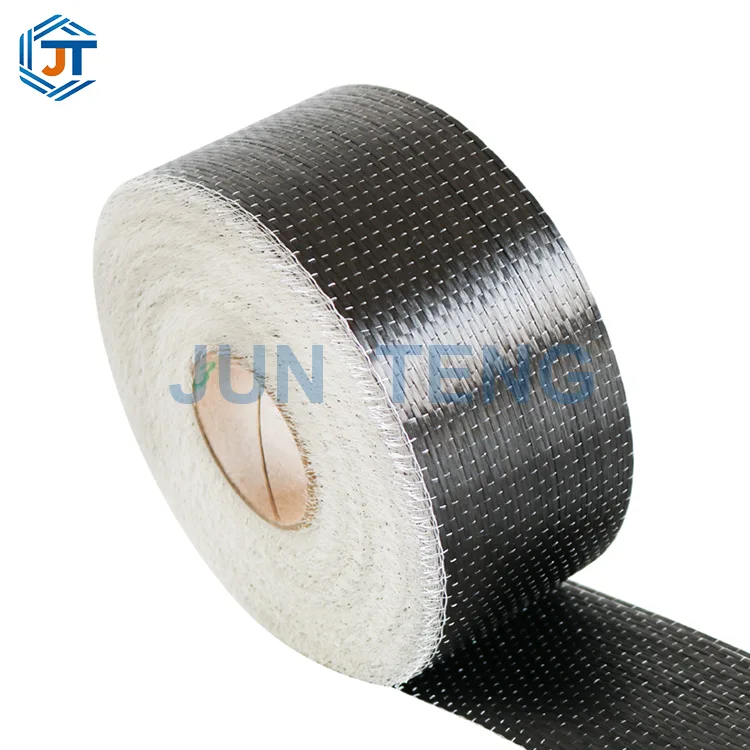
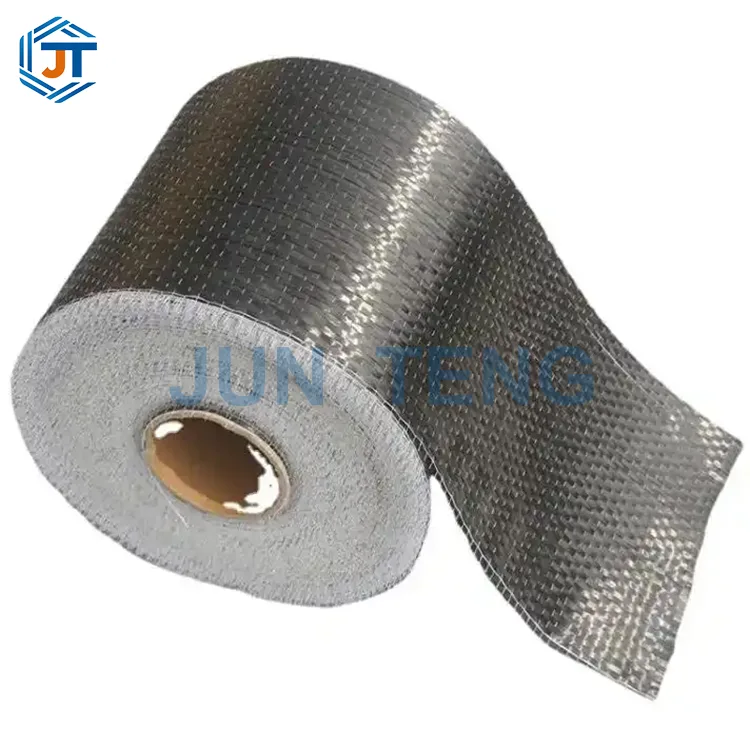
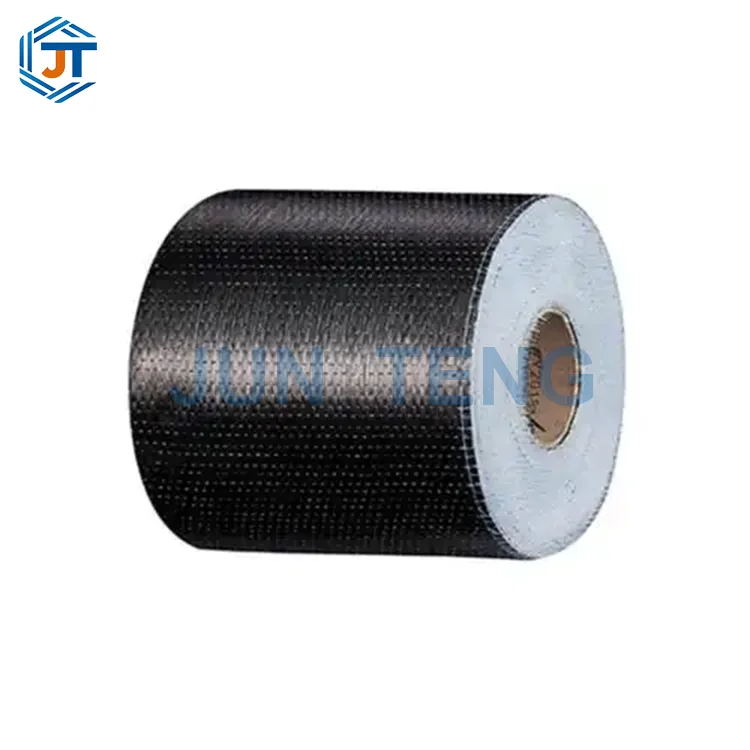
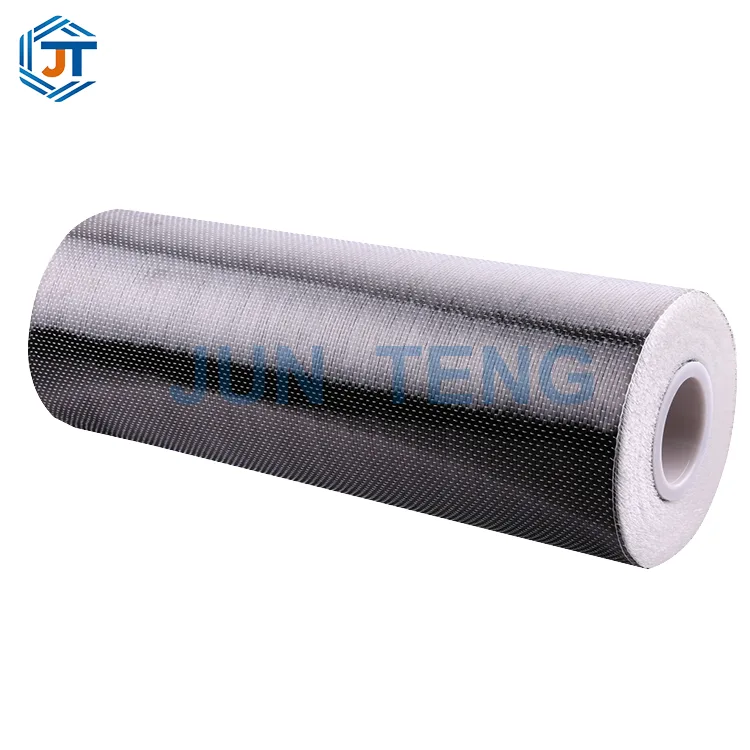
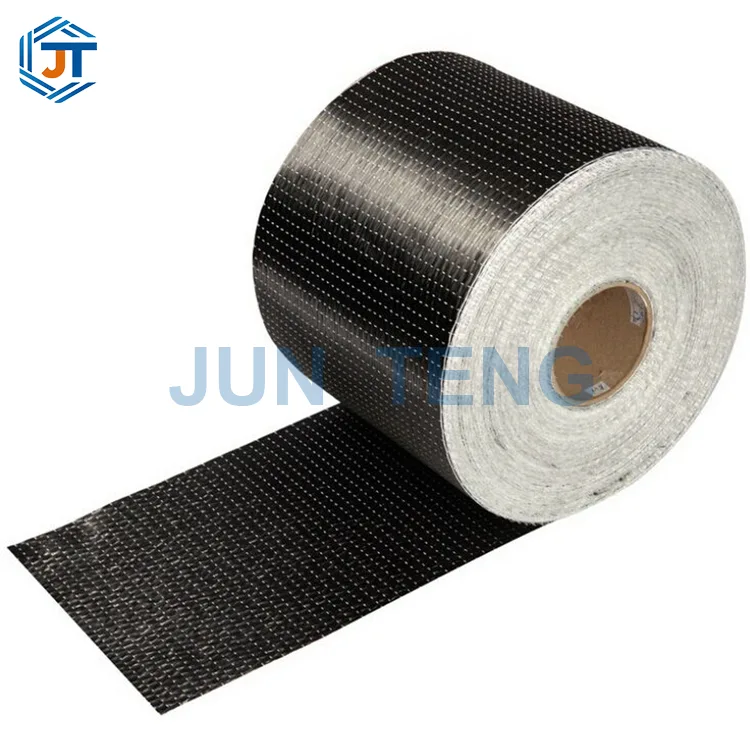
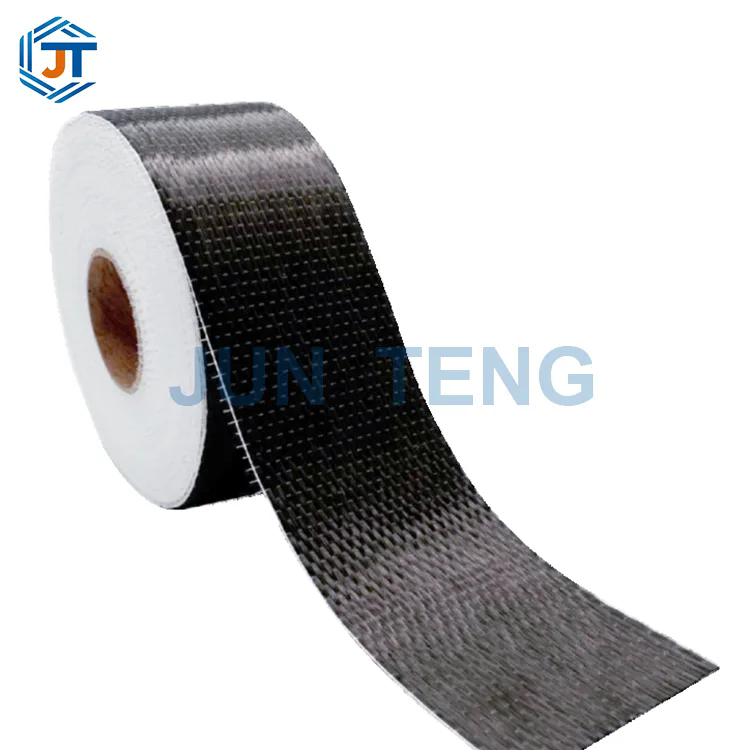
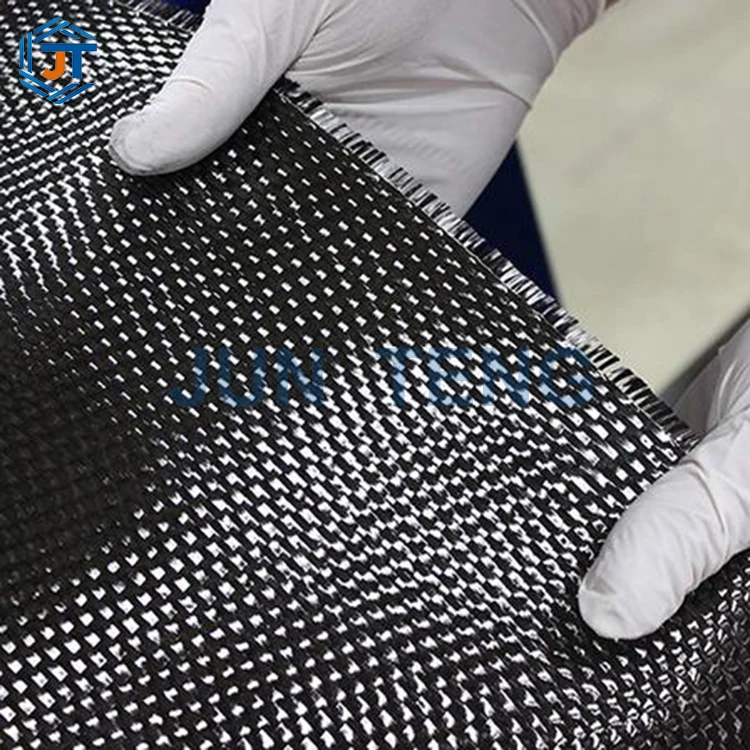
JUN TENG is a specialized Chinese manufacturer of 6K bidirectional carbon fiber reinforcement fabric. Characterized by uniform weaving, excellent resin wettability, and reliable reinforcement performance, our product offers a significant price advantage and exceptional value, meeting procurement needs across sectors such as structural reinforcement, mold making, and lightweighting.
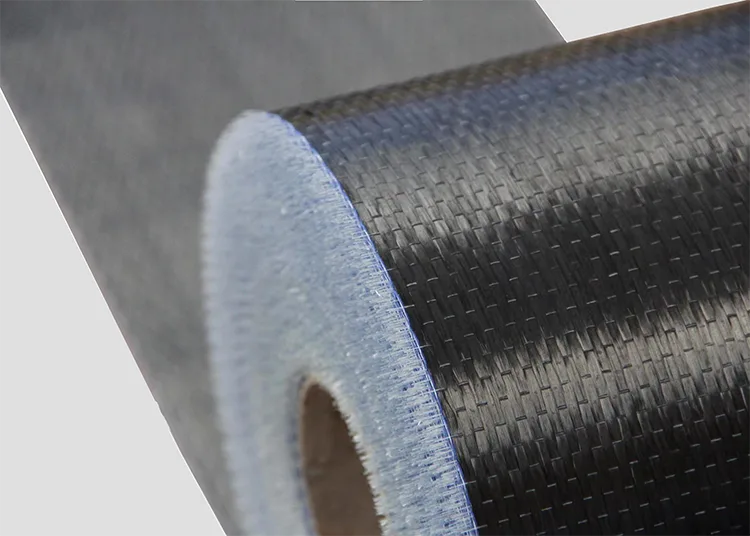
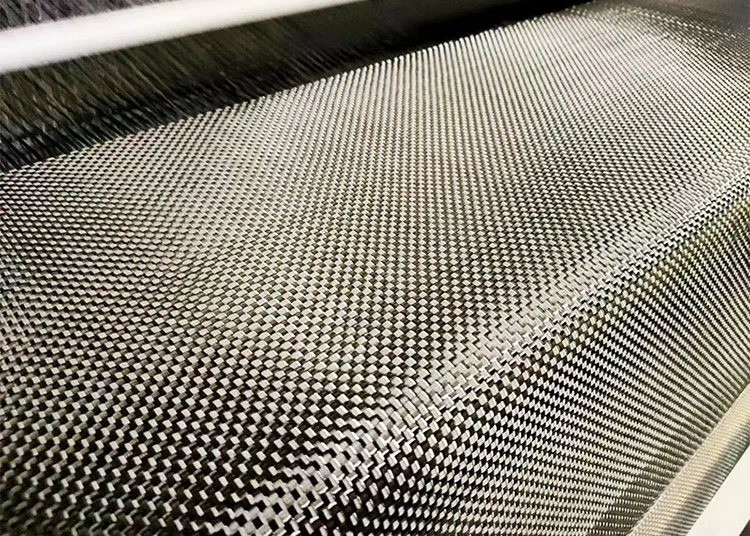
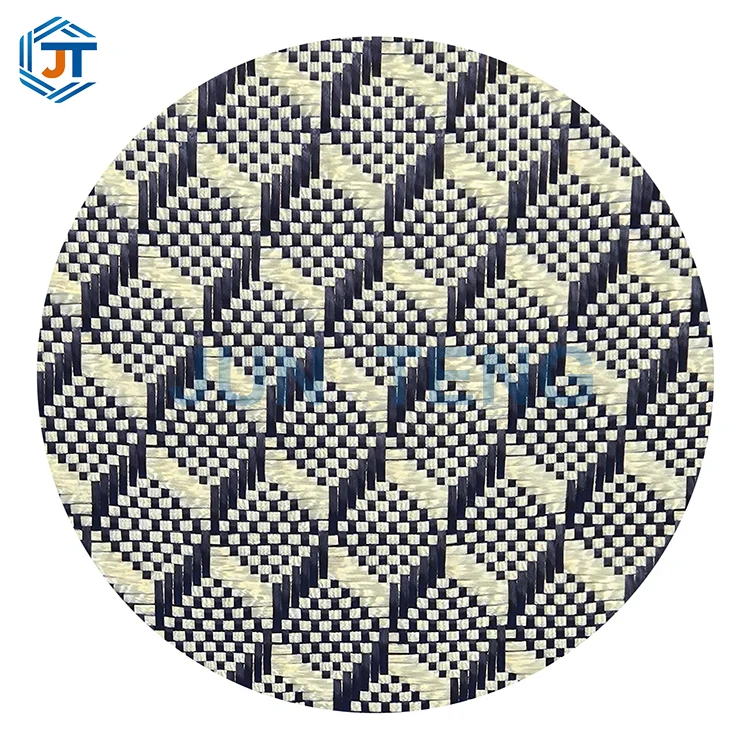
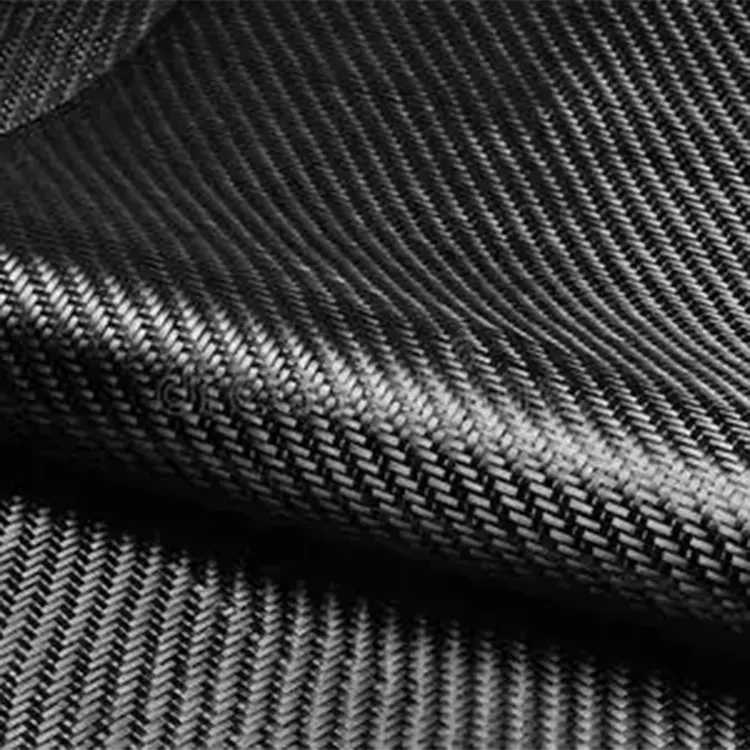
Our 6K bidirectional carbon fiber reinforcement fabric is woven using a 6K filament orthogonal plain weave. Unlike standard 12K coarse-tow fabrics, our material features finer, denser filaments and a uniform surface texture, ensuring superior conformability to curved surfaces while strictly adhering to the Grade I mechanical standards of the GB50367-2013 national standard for concrete reinforcement.
Product Features
Available in mainstream specifications of 200g/m²and 300g/m², the dry fabric is lightweight and pliable. It ensures uniform resin impregnation without air bubbles and provides perfectly balanced bidirectional load-bearing capacity, combining ease of handling during installation with multi-directional shear and torsional resistance.
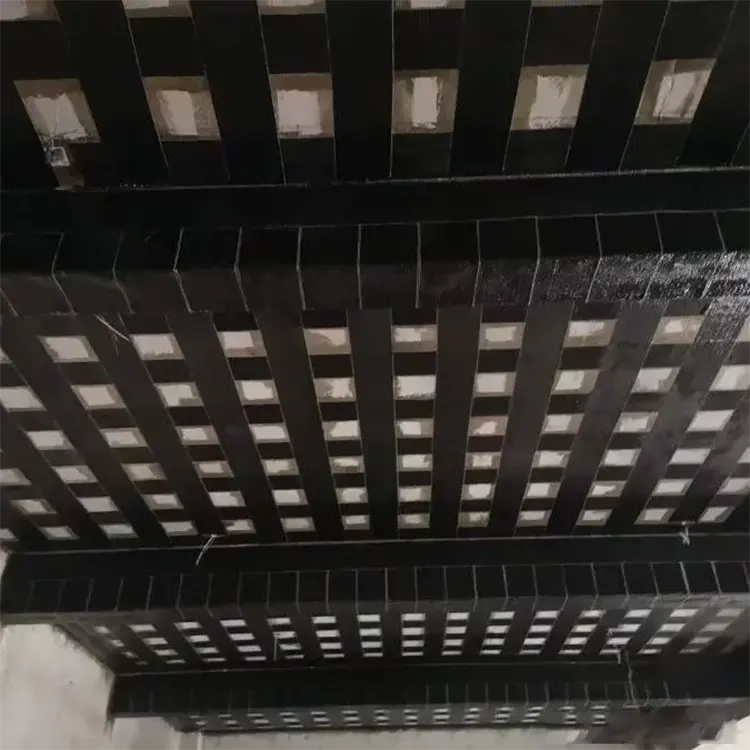
Designed for precision reinforcement applications: historic building restoration, high-end interior renovations, small or complex-shaped beams and columns, precision equipment bases, thin-walled slabs, localized reinforcement of curved components, and repair of fine cracks in bridges.
It resolves common engineering issues associated with 12K coarse-tow fabrics, such as rough texture, buckling at tight corners, bubbling on thin substrates, and uneven surface finishes. The fine-denier fiber tows offer higher tear strength; the fabric does not fray when cut and requires no edge sealing. Its thin profile ensures a smooth finish without protrusions after plastering or painting, enabling discreet, precision reinforcement.
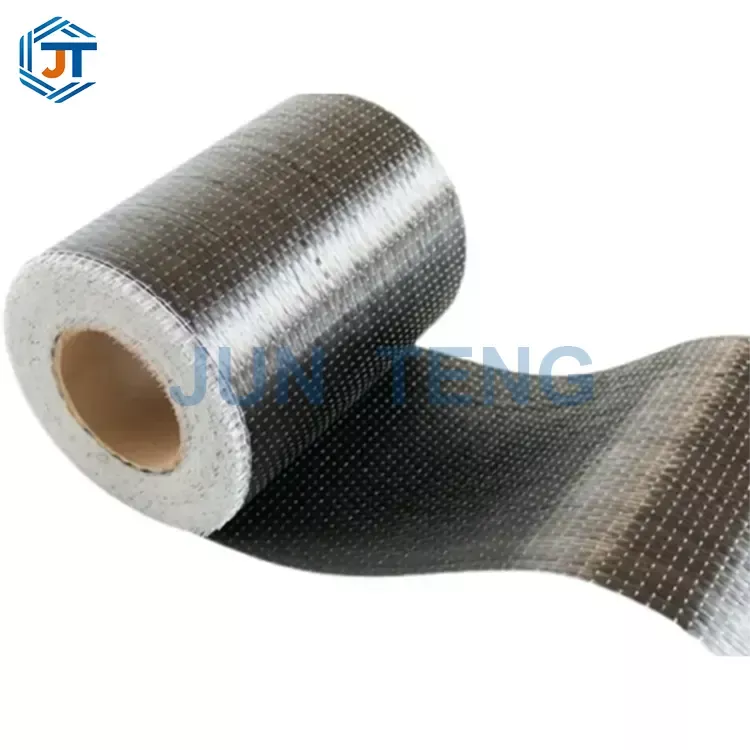
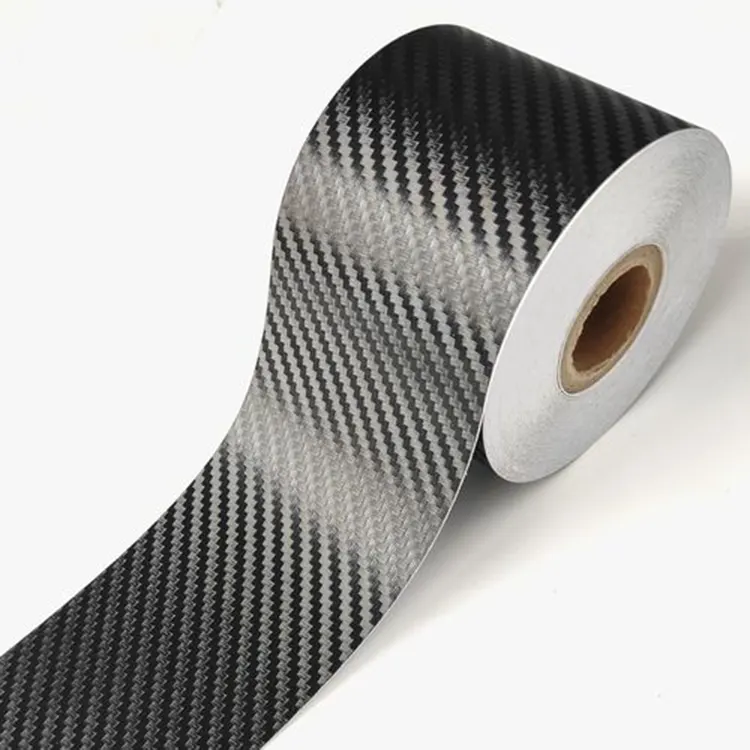
Available in widths from 500mm to 1270mm and standard 100m rolls, supplied as a complete system with matching Grade A impregnation resin. Suitable for diverse applications including structural reinforcement, industrial composites, and marine anti-corrosion.

Product Basic Specifications and Mechanical Parameters Table
1.1 Basic specification parameter table
|
Test Item |
Technical Index |
Execution Standard |
Supplementary Remarks |
|
Product Model |
CF-BI6K-200/300 |
GB50367-2013 |
6K fine denier orthogonal plain weave bidirectional carbon cloth |
|
Raw Fiber |
PAN-based T700 grade continuous 6K carbon fiber |
National Class I raw material |
Each tow contains 6000 fine, uniform monofilaments |
|
Standard Areal Weight |
200g/㎡, 300g/㎡±5g |
General engineering weight |
Custom weight from 150g to 400g available |
|
Theoretical Dry Thickness |
200g: 0.11mm; 300g: 0.167mm |
Measured dry thickness |
Finer and lighter than 12K cloth of equal weight |
|
Weaving Process |
Bidirectional orthogonal plain weave |
Low crimp weaving structure |
Warp & weft fiber ratio 1:1 for balanced stress bearing |
|
Standard Width |
500mm, 1000mm, 1270mm |
Custom arbitrary slitting width |
Narrow widths for small components; wide widths reduce splicing joints |
|
Standard Roll Length |
100m, packed with moisture-proof PE tube |
Moisture-proof storage & transport packaging |
Supported by paper tube to avoid bending, indentations and wrinkles |
|
Sizing Content on Surface |
≤2.5% |
Low-sizing technology |
Full epoxy penetration for higher bonding strength |
1.2 National standard first level mechanical performance testing table
|
Mechanical Test Item |
National Class I Requirement |
Measured Value of 6K Bidirectional Cloth |
Performance Explanation |
|
Warp & Weft Bidirectional Tensile Strength |
≥3400MPa |
3620MPa |
Dense yarn arrangement ensures consistent strength in both directions |
|
Elastic Modulus |
≥2.3×10⁵MPa |
2.41×10⁵MPa |
High modulus minimizes structural deformation after reinforcement |
|
Elongation at Break |
≥1.6% |
1.82% |
Excellent toughness prevents brittle fracture under seismic alternating loads |
|
Interlaminar Bonding Strength |
≥52MPa |
61MPa |
Dense fibers create larger bonding area with resin to avoid delamination |
|
Tear Resistance |
1.6 times that of equal-weight 12K bidirectional cloth |
Third-party comparative test |
Resists local tearing and damage at corners and cutouts |

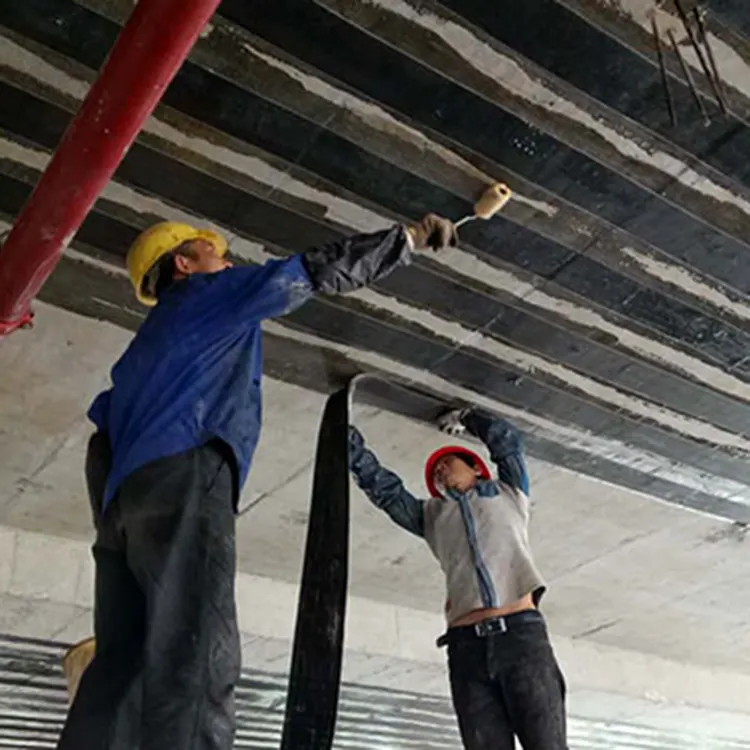
Product advantages
The mainstream reinforced carbon cloth in the market is woven with 12K thick silk, suitable for large-area flat beams and columns; However, there are paving defects in a large number of refined, thin-walled, irregular, and indoor decoration projects. 6K fine denier bidirectional carbon fiber cloth fills the gaps in the industry from four dimensions: fiber fineness, construction adaptation, post finishing, and thin-walled protection. The five core unique advantages are:
1.6K fine denier yarn is densely woven, with curved surfaces and sharp angles covered without arching or hollowing. 12K coarse yarn bundles have a single thick filament and a wide yarn strip, which can easily form hard edges when laying in circular arcs, 90°beam column interior angles, and narrow gaps in floor slabs. Uneven wrapping of the adhesive layer can result in bubble hollowing; 6K single filament bundles are slender and soft, and the fabric surface can tightly adhere to extremely small curvature components without rigid protrusions. The drum can completely remove bubbles by rolling, reducing the rework rate of basement corners, curved balconies, and cylindrical details by 60%.
2.Thin and seamless, suitable for indoor decoration and protection of ancient architectural finishes. Traditional coarse silk carbon cloth reinforcement has obvious surface roughness, and plastering and latex paint brushing are prone to texture penetration; The 6K Bidirectional Carbon Fiber Reinforcement Fabric is finely arranged, and after curing, the composite layer is overall flat. The total thickness of the reinforcement layer is less than 0.5mm, and the finished surface is smooth without the need for thickening the leveling layer. It is perfectly suitable for renovation projects such as homestays, office buildings, cultural relics and ancient buildings that require strict external flatness, truly achieving invisible reinforcement.
3.The 1:1 balanced force distribution in both directions of latitude and longitude prevents stress concentration and cracking in thin-walled components. Thin walled floor slabs, lightweight partition walls, and steel structure thin plates are mostly bidirectional load-bearing components, with weak transverse bearing capacity in unidirectional fabrics. The gaps between ordinary coarse fiber bidirectional fabrics are large, and stress dispersion is uneven; The 6K fine fiber interlaced structure can uniformly conduct oblique, torsional, and biaxial tensile loads, suppress radiating cracks at floor openings, and prevent continuous expansion of intersecting diagonal joints in walls, while also achieving triple reinforcement effects of shear, tensile, and torsional resistance
4.Cutting does not cause loose threads, making on-site construction simple and reducing material loss. After cutting, the edges of 12K coarse threads are prone to loose threads and require additional edge locking treatment, wasting labor and carbon cloth; 6K fine denier fibers are interwoven tightly, and art knives and scissors can directly cut without loose or flying threads. Small spaces such as narrow ceilings and equipment shafts can be quickly cut into small pieces for use, reducing material cutting loss by 20%. Epoxy impregnated adhesive is evenly adsorbed, saving 15% of adhesive consumption compared to 12K fabric in the same area.
5.Resistant to fatigue and corrosion, balancing building reinforcement with special composite scenarios. Carbon fiber itself does not rust, is resistant to acid, alkali, and salt spray, and has a 6K fine woven structure with sufficient colloid penetration. After curing, it has stronger anti-corrosion and sealing properties; Except for civil buildings, it can be used for reinforcing ship bulkheads, chemical equipment bases, and small components of rail transit. It is not easy to peel off under long-term alternating loads and has a designed service life of over 50 years.

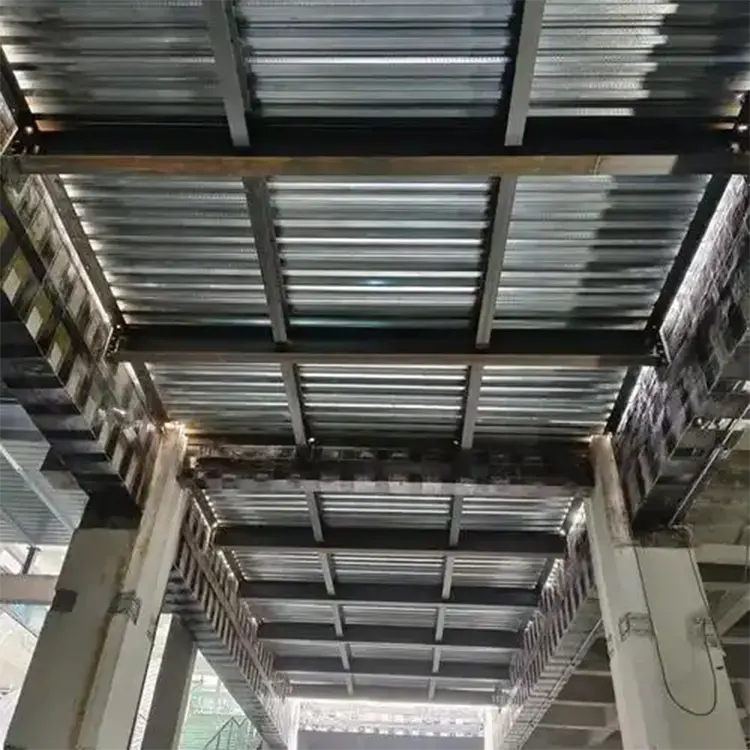
Accurately segmenting application scenarios
Fine reinforcement for indoor civilian use (renovation of fine decoration, installation of elevators in old houses)
1. Reinforcement of local openings in floor slabs: reserved holes for pipelines, small staircase openings, and bi-directional crack resistance reinforcement for thin-walled floor slabs;
2. Repair of irregular beams and columns: shear reinforcement for circular decorative columns, curved secondary beams, and door and window beams;
3. Indoor renovation of old residential areas: reinforcement of balcony thin plate roots, closure of intersecting cracks in interior walls, concealed reinforcement under suspended ceilings;
4. Restoration of cultural relics and ancient buildings: Wooden concrete mixed structure, antique thin-walled walls, without damaging the original decorative surface.
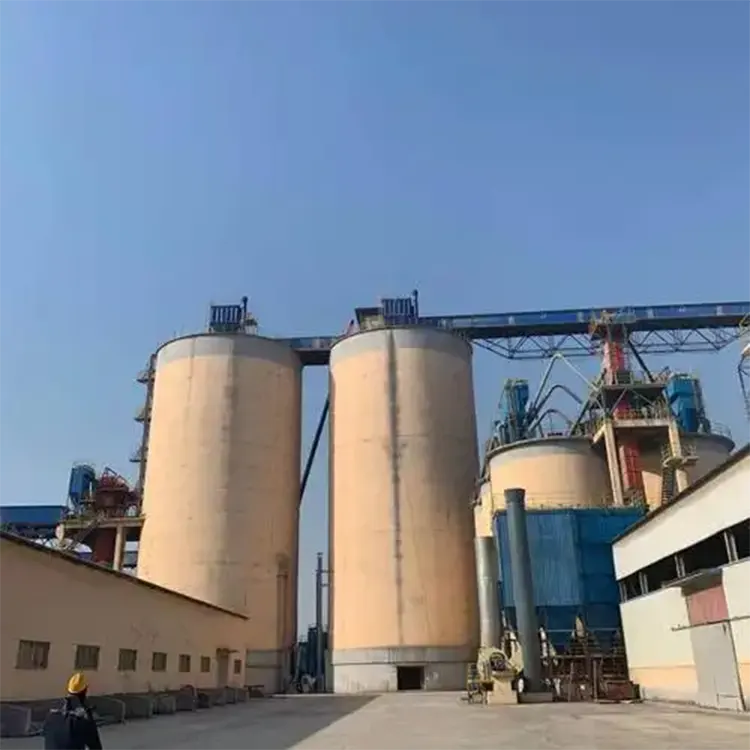
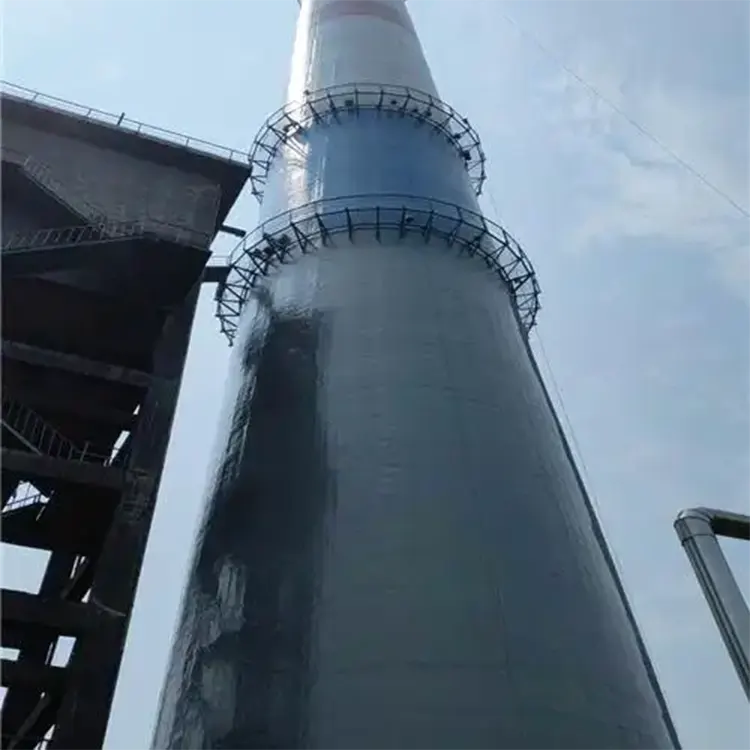
Small industrial equipment and special anti-corrosion reinforcement
Precision machine tool equipment base, thin-walled sewage tank wall, and reinforced lining of small chemical storage tanks, balancing structural reinforcement and acid-base anti-corrosion protection.
Detailed repair of municipal bridges
Bridge railing base, box girder corner diagonal cracks, pedestrian walkway thin plate reinforcement, suitable for small-scale fine repair without increasing self weight load.
Lightweight composite material matching
Ship interior panels, small drone shells, high-end sports equipment substrates, bi-directional balanced lightweight molding.
6KVS12K Bidirectional Carbon Fiber Reinforcement Fabric
|
Comparison Item |
6K Fine Denier Bidirectional Carbon Cloth |
12K Coarse Yarn Bidirectional Carbon Cloth |
Selection Advice |
|
Fiber Tow |
6000 fine monofilaments, compact flat fabric |
12000 thick monofilaments, rough texture with raised yarn strips |
Choose 6K for decoration, special-shaped & thin-wall parts; choose 12K for large flat main beams |
|
Curved Surface Conformability |
Soft, wraps ultra-small corners & arcs without arching |
Relatively rigid, prone to bubbling & ridges in narrow inner corners |
Mandatory 6K bidirectional cloth for beam-column corners and curved components |
|
Post-finish Effect |
Flat reinforcing layer, no texture bleed-through after plastering & painting |
Uneven surface requiring thick leveling layer, easy texture bleed-through |
Only 6K suitable for interior decoration and historic building restoration |
|
Cutting Performance |
Compact cut edges, no loose filaments, no edge locking needed |
Flying loose filaments after cutting, edge locking compulsory |
Choose 6K for scattered small-piece construction and confined spaces |
|
Applicable Load Scenarios |
Thin walls, medium & light loads, local precision reinforcement |
Long-span thick beams & slabs, heavy-load large-area reinforcement |
Prioritize 6K fine denier cloth for openings, thin walls and special-shaped components |

Standardized and simplified construction process
1. Fine polishing of base surface: remove floating slurry and loose concrete, smooth polishing of internal and external corners without sharp edges and corners;
2. Apply base adhesive: Apply a thin layer of A-grade carbon fiber base adhesive to fully penetrate the base layer and enhance bonding;
3. Defect leveling: Fine honeycomb and fine lines are smoothed with delicate leveling glue to ensure a smooth base surface;
4. Immersion glue laying: evenly roll and apply immersion glue, lay 6K Bidirectional Carbon Fiber Reinforcement Fabric flat, and use a soft roller for low-speed rolling and foam removal;
5. Surface coating: secondary thin brushing of surface coating, with fine fibers completely immersed and no dry fibers exposed;
6. Curing: Fully cure at room temperature for 72 hours, and avoid collision, water accumulation, and soaking during the curing period.

Storage, transportation, supporting and customized service instructions
1. Storage conditions: Store upright in a cool and dry warehouse, avoiding direct sunlight, heavy pressure, and folding to prevent permanent creases on the fabric surface;
2. Supporting materials: National standard A-level carbon fiber matching adhesive (base adhesive+leveling adhesive+impregnating adhesive) must be used, and the mixing of ordinary civil epoxy is prohibited;
3. Customization support: cutting with any width of 50-1270mm, cutting according to the required number of meters, and can customize special weight 6K bidirectional diagonal carbon cloth;
4. Quality assurance: Each batch is accompanied by a third-party mechanical testing report, which meets the acceptance standards for reinforcement engineering and can provide a complete set of completion quality inspection materials.
6K Bidirectional Carbon Fiber Reinforcement Fabric is a specialized material developed for fine, thin-walled, irregular, and indoor decorative reinforcement scenarios. It relies on the low bending orthogonal weaving process of 6000 fine denier carbon fiber raw fibers to break the application limitations of 12K coarse fiber bidirectional fabric in narrow curved surfaces, surface smoothness, and thin-walled protection. At mainstream engineering weights of 200g and 300g, it simultaneously achieves four core values: bidirectional balanced force, ultra-high surface adhesion, seamless thin adhesion, easy cutting and low loss. Unlike the thick wire carbon cloth used for heavy load reinforcement of side heavy components, this product focuses on local fine repair and invisible transformation, suitable for projects with high requirements for construction appearance and fitting accuracy such as the installation of elevators in indoor old houses, the repair of ancient buildings, irregular beams and columns, and equipment thin-walled bases. The mechanical properties of the material fully meet the national reinforcement standards, with low construction difficulty, minimal loss of auxiliary materials, and no need for additional thickening and leveling of the finishing material in the later stage. It is the preferred professional substrate for the reinforcement of small and medium-sized fine multi-directional load-bearing components.
Hot Tags: 6K Bidirectional Carbon Fiber Reinforcement Fabric
Send Inquiry
Contact Info
-
Address
East of Chongde 11th Road, East Zone, Economic and Technical Development Zone Project, Dezhou City, Shandong Province, China
-
Tel
-
E-mail
Welcome global purchasers to submit your demand via this inquiry page of JUN TENG carbon fiber supplier in China. You can leave your requirements on carbon fiber reinforcement fabric, woven carbon fiber fabric, carbon-carbon materials, specification customization, sample service and bulk order price. Our professional engineers will reply with tailored solutions and quotation within 24 hours.